Alcalá del Júcar Medieval Castle Meets Carved Cave Dwellings
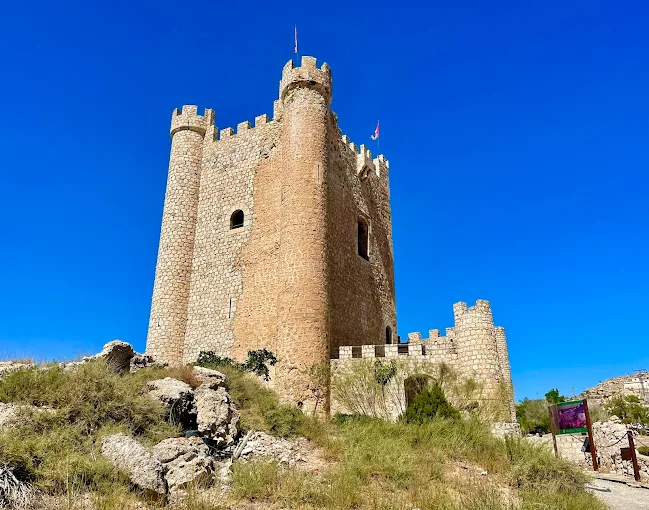
Castillo de Alcalá del Júcar: Where Cliff Fortress Meets Looping River
I stand at the castle gate at ten in the morning. Wind carries the sound of rushing water from far below. Entry costs four euros. I look out — the Júcar river curves in a tight loop around the base, deep green and fast. Whitewashed houses cling to steep slopes beneath the walls. The fortress rises high above everything — towers, battlements, stone worn smooth by centuries. Not everything feels perfect. Steps are steep and uneven. Summer heat gathers heavy in the gorge. The narrow access road slows to a crawl when busy. Yet this place feels almost unreal — nature and fortress locked together, guarding the river bend.
Why Alcalá del Júcar Matters
The river gorge has been a natural stronghold since prehistoric times. Muslim rulers built the first castle here in the 12th century, using the sheer cliff and looping river as defences. Christian forces took it in the 13th century and rebuilt much of what stands today — thick walls, square keep, watchtowers facing every direction. The village grew beneath the walls, houses stacked tier upon tier down to the water. Over time the castle fell into neglect, then saw partial restoration. That work continues. Some sections remain closed. Visitor numbers grow each year. Balancing access with preservation is an ongoing task. Still the river loops below. The walls stand firm. And the view from the ramparts stays unchanged.
The Best Time to Experience Alcalá del Júcar
April through June brings fresh green and mild days — 12°C to 22°C (54°F–72°F). Wildflowers line the gorge edges. September offers golden light and thinner crowds — 14°C to 24°C (57°F–75°F). Summer from July to August feels hottest — 18°C to 32°C (64°F–90°F) — and the gorge traps heat. Winter from November to March stays quiet and cool — 6°C to 14°C (43°F–57°F). Mist fills the river loop on cold mornings. Weekdays beat weekends. Arrive before 09:30 to walk the ramparts alone.
Approximate Budget for a 7-Day Trip
- Accommodation: Guesthouse in village — 45–75 euros per night. Cave house nearby — 50–85 euros per night. Hotel in Albacete — 55–90 euros per night. Campsite by river — 15–22 euros per person.
- Food: River fish lunch — 13–22 euros. Castilian stew — 12–18 euros. Tapas dinner — 10–16 euros. Bakery — 4–8 euros.
- Transport: Car rental — 35–55 euros per day (strongly recommended). Bus from Albacete — 6 euros one way. Parking in village — 3–5 euros daily. Taxi from nearby town — 12–18 euros one way.
- Attractions: Castle — 4 euros. River gorge boat trip — 12–18 euros. Cave house museum — 3 euros. Hiking trails — free.
- Miscellaneous: Sun hat, water, snacks — 8–15 euros daily.
Total estimated for one person, 7 days: 330–620 euros
Drinks and meals right beside the castle entrance cost nearly double what you find at the bottom of the village. Walk downhill to the main square. You will find family-run places serving better food at fairer prices.
Essential Castle Experiences
- Walk the upper ramparts at sunrise. The river glows silver in early light. Mist clings to the gorge. No crowds, no noise — just wind and water. It feels like standing above the world. Skip this if heavy rain falls — stone surfaces stay slippery and unsafe.
- Climb the main keep tower. Narrow steps wind upward. The whole gorge unfolds below — river loop, white village, forested hills stretching far. The height takes your breath away.
- Follow the river path beneath the walls. Trees shade the water. The castle rises sheer above — massive, ancient, carved against the sky. You see its true scale from down here.
- Watch sunset from the outer lookout. The stone turns deep gold. The river reflects warm light. The village lights begin to twinkle one by one. It feels peaceful and timeless.
- Glide the loop by boat. From the water the fortress looks almost impossible — clinging to rock, rising straight from the river bend. You see faces hidden from above.
- Eat fresh fish in the village afterwards. Caught that morning, grilled simple, served with salad and local wine. It tastes of the river below the walls.
Hidden Gems Most Travelers Miss
- The small path to the eastern watchtower. Most visitors stay on the main circuit. Climb the short extra slope. The view opens wider — upstream, downstream, over the whole valley. Almost no one stops here.
- The quiet lane halfway down the village. Runs parallel to the crowded main street. Old doorways, shaded balconies, views up to the castle. It feels calm and private.
- The so-called "iconic shot" at the main viewpoint. It fills instantly. Walk fifty metres along the outer wall. The same castle and river loop appear framed by pine — empty and just as magnificent.
Cultural & Practical Tips
- Arrive early or late. By midday the single access road backs up and the castle fills. The best moments come before the crowds arrive.
- Wear sturdy closed shoes. Castle steps are uneven, worn, and sometimes damp. Flip-flops are unsafe and impractical.
- Carry more water than you think you need. The climb is steep and the gorge holds heat. Dehydration strikes fast.
- Do not climb or lean on unprotected walls. Sections are ancient and fragile. Respect barriers — they protect you and the monument.
- Check boat trip times in advance. They run seasonally and stop when river levels are high. Plan before you climb.
- Book accommodation months ahead in August. Rooms vanish fast. May or September offer better value and thinner crowds.
Essential Visitor Information
Location & Access: Alcalá del Júcar, Albacete province, Castilla–La Mancha, Spain. 45 km northeast of Albacete — 40 minutes by car. 170 km south of Valencia — 2 hours. 300 km southeast of Madrid — 3.5 hours. Public transport is limited — car is strongly recommended.
Tickets & Booking: Adults 4 euros. Discounts for children and seniors. No reservation needed for individuals. Reserve accommodation June–September well ahead.
Operating Hours: Daily 10:00–14:00 and 16:00–19:00. Closed Mondays. Winter afternoon hours shorter.
Visit Duration: Minimum 2–3 hours. Half a day lets you explore castle, village, river path, and viewpoint without rushing.
Family Suitability: Good for older children. Steps are steep and continuous. Strollers work in the village but not inside the castle. Restrooms at entrance and main square.
Timing: Best season — April–June and September. Best time — before 09:30 or 1 hour before sunset.
Highlights: Sunrise ramparts, tower climb, river path, sunset lookout, boat loop, village meal.
Nearby & Day Trip: Albacete — 40 mins. Júcar gorge upstream — 30 mins. Cuenca — 1 hour 30 mins. Valencia — 2 hours.
Conclusion: Travel with Respect, Not Just Height
This castle was built to guard, not to entertain. It stood through wars, floods, and quiet centuries. Before you leave, look at the river looping far below. What will you protect as carefully as these walls?
Post a Comment