
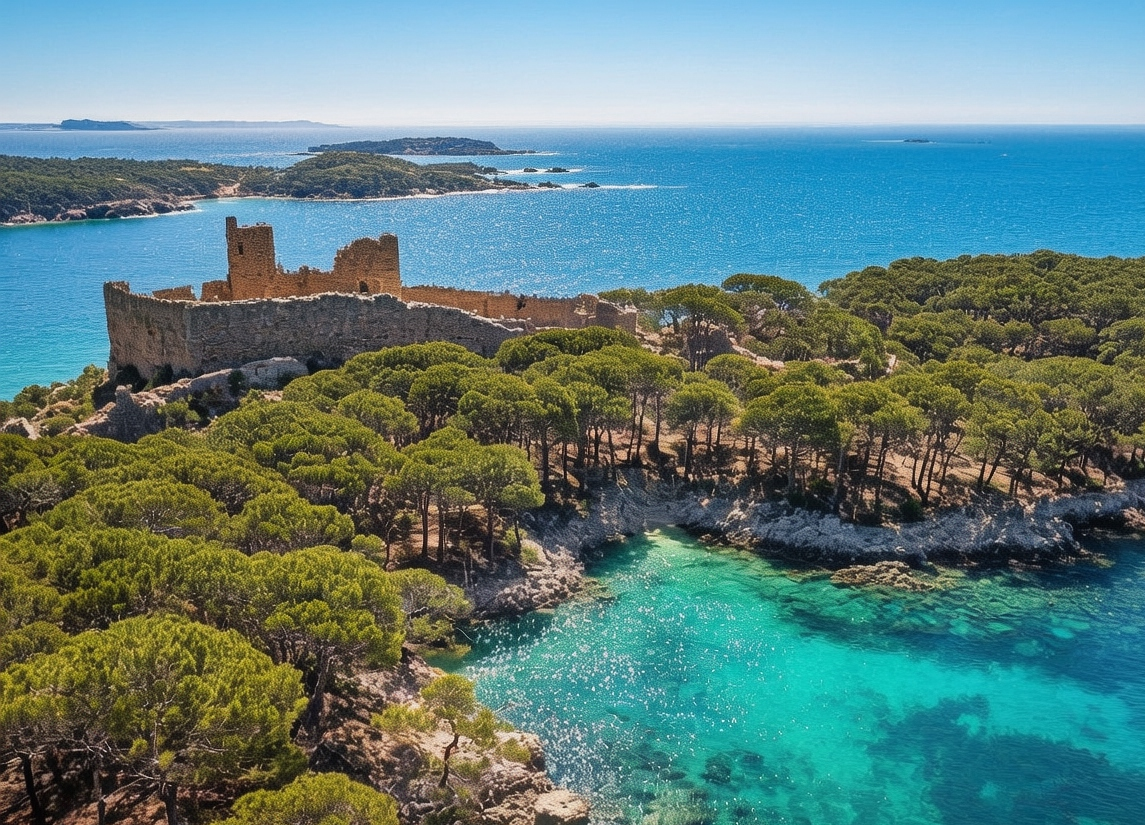
Cabrera Archipelago Untamed Isles Meet Turquoise Seas
The engine cuts, and silence rushes in—a profound, heavy quiet that has blanketed the Cabrera Archipelago for millennia. You stand on the deck of the ferry, 10 kilometers south of Mallorca, where the air smells of wild juniper, salt spray, and sun-baked pine. The water below is not merely blue but a shifting mosaic of sapphire and emerald, revealing the seabed 40 meters down with terrifying clarity. This is not merely a destination but a sanctuary, a National Park since 1991, where human presence is limited to 400 visitors per day to protect the fragile ecosystem. You watch the limestone cliffs rise from the sea, crowned by the ruins of a 14th-century castle that once held Napoleonic prisoners. In 2026, as overtourism degrades coastal paradises globally, the Cabrera Archipelago remains a testament to restraint—a place where nature dictates the terms, demanding you surrender to the rhythm of the waves and the strict rules of conservation to truly witness the Mediterranean as it existed before the modern age.
Why Cabrera Archipelago Embodies Pristine Conservation
The Cabrera Archipelago represents the most significant marine-terrestrial National Park in the Spanish Mediterranean, solving the critical need to preserve a biodiversity hotspot threatened by overfishing and development. Comprising 19 islands and islets covering 10,021 hectares (9,080 hectares of which are marine), the park was established in 1991 to protect the Posidonia oceanica meadows that oxygenate the sea and stabilize the seabed. The geography is rugged: the main island, Cabrera Gran, rises 172 meters at Na Picamosques, featuring steep cliffs that plunge directly into deep water, creating a natural barrier against mass tourism.
The historical significance is anchored by the castle built in the 14th century, which gained infamy during the Peninsular War when it served as a prison for over 9,000 French soldiers between 1809 and 1814. The engineering of the park's management is equally precise: access is strictly controlled via licensed boats from Colònia de Sant Jordi, and anchoring is prohibited to protect the seagrass. This integration of military history, marine biology, and regulatory enforcement makes the Cabrera Archipelago not merely a scenic spot but a functional laboratory of conservation. The density of endemic species per square kilometer is unmatched in the Balearics, with every cove telling a story of isolation and resilience. This concentration of untouched nature makes it a pilgrimage site for eco-travelers, where the evolution of the Mediterranean is traced through the very clarity of the water.
The Best Time to Experience Cabrera Archipelago
For the optimal Cabrera Archipelago experience, target May 15–June 12 or September 10–October 5, when temperatures range between 20–28°C (68–82°F) and the water is warm enough for swimming without the peak summer crowds. The park opens for visitors at 9:30 AM daily; arrive at the port of Colònia de Sant Jordi by 8:45 AM to board the first ferry before the daily cap is reached. Late afternoon visits are not permitted as the last boat returns at 5:00 PM. Spring coincides with the nesting season for the Balearic shearwater, causing demand to surge 40%; book boat tickets two months in advance if visiting during this period.
Avoid July 15–August 25 unless you tolerate extreme heat and maximum capacity; temperatures regularly exceed 32°C (90°F), and the 400-visitor limit is reached by 10:00 AM. The lack of shade on the main island exacerbates the heat, and boat queues can exceed 1 hour. Winter months (November–March) bring mild weather (12–18°C / 54–64°F) but the park is often closed to tourists due to rough seas. Boat schedules reduce frequency in low season; verify current status at www.parquenacionalcabrera.com or contact the park office at info@cabrera.org (+34 971 655 178). Weekday mornings typically see the lowest visitor density, allowing for clearer photography of the castle without obstruction from large tour groups.
Approximate Budget for a 7-Day Trip (2026)
Visiting the Cabrera Archipelago requires a base on mainland Mallorca, typically in the south. The following budget assumes mid-range comfort with a focus on nature and boat excursions, based on 2026 pricing with approximately 3.5% inflation from 2025 figures. Estimates include stays in Colònia de Sant Jordi or Campos for easy access to the departure port.
- Accommodation: €100–€200 per night for a double room in an agroturismo or hotel in Campos; luxury villas command €300–€700 per night
- Food: €50–€80 per day—breakfast €8–€12 (café con leche and pastry), lunch €20–€35 (packed lunch or port meal including paella), dinner €30–€50 (seafood restaurant and local wine)
- Transportation: Flight to Palma de Mallorca Airport: €100–€250 round-trip; rental car: €50 per day; bus to Colònia de Sant Jordi: €5 per ride; Boat to Cabrera: €45 round-trip
- Attractions: Cabrera Archipelago boat ticket: €45; Castle entry: included; Museum entry: included; Kayak rental on island: €20; Guided hike: €30
- Miscellaneous: Sunscreen €12; local wine €10–€25 per bottle; souvenirs €20; waterproof bag €25; binoculars €40
Total estimated cost for 7 days: €1,500–€2,500 per person (based on double occupancy; solo travelers should add 35–45% for single supplements)
7 Essential Cabrera Archipelago Experiences
- Take the Ferry from Colònia: Board the licensed catamaran for the 1-hour journey. The view of the islands emerging from the sea is dramatic. Visit at 9:30 AM departure to maximize time on the island. The ride can be choppy; take motion sickness medication if needed. This is the only access to the Cabrera Archipelago; do not miss the safety briefing.
- Explore the Castle Ruins: Climb the path to the 14th-century fortress overlooking the port. The views over the bay are panoramic. Visit at 11:00 AM when the light illuminates the stone. The museum inside explains the Napoleonic history. Entry is included in the boat ticket. It demonstrates the military heritage of the isles.
- Snorkel at Es Pagès: Swim in the sheltered cove near the port. The water is calm and rich with fish. Visit between 12:00 PM–2:00 PM when the sun penetrates the water. The Posidonia meadows are visible. Bring your own gear. It reveals the marine biodiversity of the park.
- Hike to Na Picamosques: Trek to the highest point of Cabrera Gran. The path takes 45 minutes one way. Visit at 3:00 PM when the heat subsides. The view extends to Mallorca and the open sea. It is free to access. This reveals the geographical context of the archipelago.
- Visit the Lighthouse: Walk to the Far de Cabrera at the southern tip. The structure dates to 1860. Visit at 4:00 PM when the light is soft. The isolation is palpable. Entry is free. It marks the boundary of the reserve.
- See the Napoleonic Cemetery: Pay respects at the memorial for the French prisoners. The site is solemn and shaded. Visit at 2:00 PM when the crowds thin. The history is poignant. It anchors the human cost of the islands' past.
- Swim at Cala Galiota: Take the internal shuttle boat to this secluded cove. The water is turquoise and deep. Visit at 1:00 PM for the best light. The beach is small and rocky. It offers a more secluded experience than the main port.
3 Hidden Gems Most Travelers Miss
- Conillera Islet: Located west of the main island, this small islet features a natural arch. Access via kayak only; open daylight hours. It is often overlooked as visitors stay on Cabrera Gran. The snorkeling is exceptional. Contact: +34 971 655 178. Visit early morning for photography without crowds. The perspective allows you to see the rock formations from below.
- Underwater Museum: Located near the port, this submerged sculpture installation promotes marine life. Entry: Free for snorkelers; open daylight hours. It is often overlooked by those who don't swim. The art integrates with the ecosystem. Contact: +34 971 655 178. Visit mid-morning when light illuminates the sculptures. The perspective allows you to see conservation in action.
- Cala Estells: A 30-minute hike from the port, this rocky cove offers complete silence. Entry is free; open 24 hours. It is often overlooked due to the rough path. The water is crystal clear. Contact: N/A. Visit late afternoon when the light is golden. The perspective allows you to see the untouched coastline.
Cultural & Practical Tips
- Booking requirements: The Cabrera Archipelago limits visitors to 400 per day. Book boat tickets at least 2 weeks in advance, especially for summer. Walk-up tickets are rarely available. Verify availability at www.parquenacionalcabrera.com.
- Master these phrases: "Buenos días" (BWEH-nos DEE-as) for good morning; "Por favor" (por fah-BOR) for please; "¿Cuánto cuesta?" (KWAN-toh KWES-tah) to ask price; "La cuenta, por favor" (lah KWEN-tah) to request the bill.
- Photography guidelines: Drones require special permission from park authorities due to nature reserve status. Flash photography is discouraged in the museum. Respect privacy when photographing other visitors. Early morning offers the best light without crowds. The golden hour lasts approximately 30 minutes.
- Supplies: There are no shops or restaurants on the islands. Bring at least 2 liters of water per person and all food for the day. Pack out all trash; leave no trace. The park is strict on waste management.
- Sun protection: The reflection off the white limestone intensifies UV rays. Use reef-safe sunscreen to protect the Posidonia. Wear a hat and sunglasses. The UV index regularly exceeds 9 in summer. Seek shade between 12:00–4:00 PM.
- Footwear: Wear sturdy hiking shoes for the trails; the rock is sharp and uneven. Sandals are only suitable for the port area. The path to the castle is steep. Comfortable shoes essential for exploring the island.
- Security awareness: While the area is safe, currents can be strong. Swim only in designated areas. Lifeguards are present in summer. Allow an extra 30 minutes for boarding procedures. Report suspicious activity to park rangers.
Conclusion: Travel with Reverence, Not Just Reverie
The Cabrera Archipelago demands more than casual sightseeing—it asks for contemplation of the delicate balance between human curiosity and natural preservation. When you walk these paths in 2026, you're not merely visiting a destination; you're participating in a fragile ecosystem where marine meadows, historic ruins, and sustainable tourism intersect in delicate balance.
Choose to engage deeply: respect the visitor limits that protect the ecosystem, support the licensed boat operators that fund conservation, and understand that this park is a sanctuary, not just a playground. The Cabrera Archipelago survives not as a theme park but as a natural heritage—and its preservation depends on visitors who recognize the difference between appreciation and consumption.
Slow down. Sit on the castle walls after the ferries depart. Listen to the wind moving through the juniper. Watch the sunset paint the sea in shades of gold and violet. The islands reward those who approach them not as a checklist item but as a conversation with nature—a dialogue between the prisoners of the past and modern travelers that continues, like the tides, in perpetual motion.