
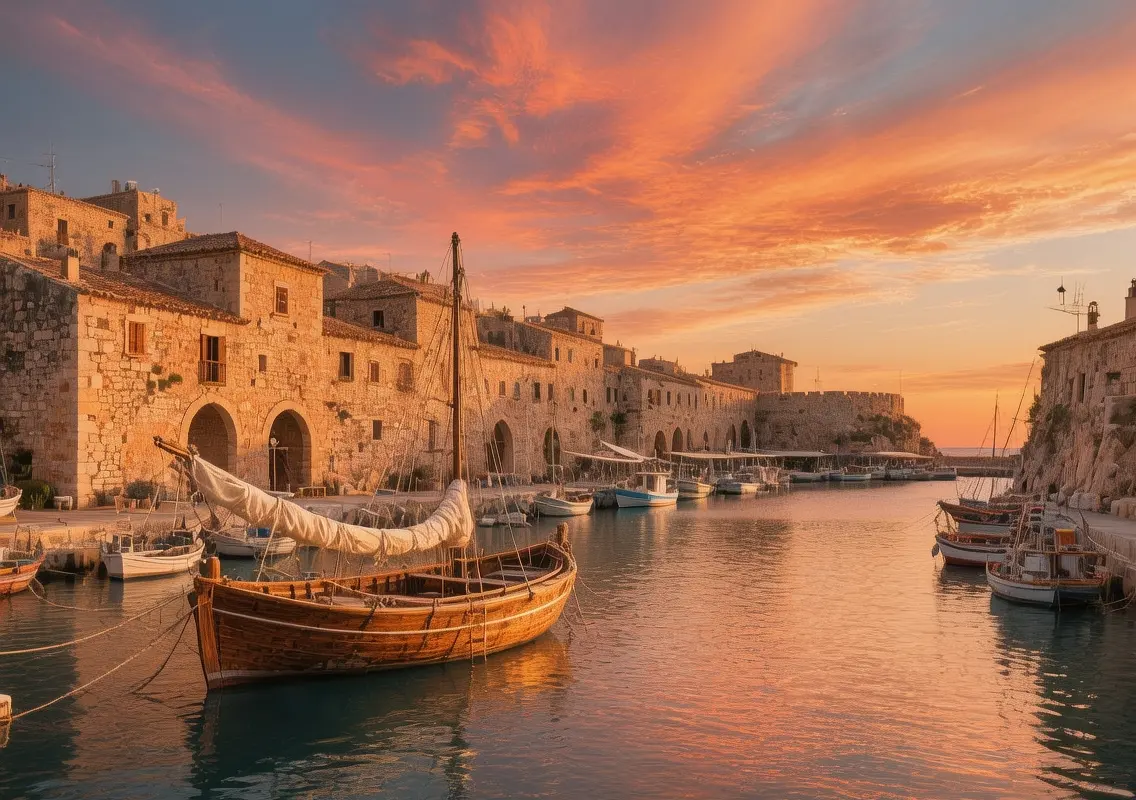
Ciutadella Harbor Historic Stone Meets Mediterranean Azure
The air hangs heavy with the scent of salt and diesel—a sharp, briny tang that has defined the Ciutadella harbor for centuries. You stand on the Moll de Pescadors, where the limestone buildings glow honey-gold under the late afternoon sun, reflecting off the calm waters of the inlet. The sound of rigging clinking against masts mixes with the distant murmur of diners at waterfront tables; the light filters through the rigging of fishing boats that have docked here since the 14th century. This is not merely a port but the historic heart of Menorca, the capital until 1722, where 800 meters of quayside are lined with palaces built by merchant families who once ruled the western Mediterranean. You trace the rough texture of the sandstone, feeling the coolness of the shade against the warmth of the day. In 2026, as coastal destinations face the pressures of mass tourism, the Ciutadella harbor remains a sanctuary of authenticity—a place where the rhythm of life is dictated by the tides and the siesta, demanding you slow down to truly respect the delicate balance of history and sea.
Why Ciutadella Harbor Embodies Maritime Heritage
The Ciutadella harbor represents the pinnacle of Menorcan maritime history, solving the critical need for a defensible port that could protect the island from pirates and invaders. Designated the capital of Menorca in 1343, the city retained its status until the British moved the capital to Mahón in 1722, yet the harbor remained the cultural and economic hub. The architecture addresses a fundamental engineering challenge: how to build a permanent settlement on a narrow inlet susceptible to storms and sieges. The solution lies in the marjades of the port—stone quays constructed from local marés sandstone that glows golden in the afternoon light, resistant to erosion and salt corrosion.
The harbor's layout is a natural fjord-like inlet stretching 1 kilometer inland, providing shelter from the prevailing north winds. This geography created a unique microclimate, allowing the city to thrive as a trading post for grain, cheese, and leather. The integration of geography, defense, and commerce makes the Ciutadella harbor not merely a scenic spot but a functional organism. The density of historical structures per square kilometer is unmatched in the Balearics, with the Cathedral of Santa Maria and the Plaça del Born anchoring the skyline. This concentration of heritage makes it a pilgrimage site for historians, where the evolution of naval power is traced through the very stones that define the waterfront. The harbor remains active today, with fishing boats and leisure yachts sharing the water, maintaining a continuity of use that spans over 700 years.
The Best Time to Experience Ciutadella Harbor
For the optimal Ciutadella harbor experience, target May 15–June 12 or September 10–October 5, when temperatures range between 20–28°C (68–82°F) and the water is warm enough for swimming without the peak summer crowds. The waterfront is accessible 24 hours, but the ideal viewing window is 6:00–8:00 PM when the sun hits the western facades directly, illuminating the stone carvings without harsh shadows. Sunset at the Moll—specifically 8:00–9:30 PM in summer—offers magical lighting as the sun dips below the horizon, though the restaurants fill up quickly. Spring coincides with the Sant Joan festival in late June, causing accommodation prices to increase 50–70%; book lodging four months in advance if visiting during this period.
Avoid July 15–August 25 unless you tolerate extreme heat and crowds; temperatures regularly exceed 32°C (90°F), making the stone plaza radiate intense thermal energy. The narrow streets become congested with tourists, and parking near the port is nearly impossible. Winter months (December–February) bring mild weather (12–18°C / 54–64°F) but increased rainfall and some restaurants close for the season. Some boat tours reduce frequency in low season; verify current status at www.menorca.es or contact the tourist office at info@menorca.es (+34 971 352 022). Weekday evenings typically see the lowest visitor density, allowing for clearer photography of the harbor without obstruction from large tour groups.
Approximate Budget for a 7-Day Trip (2026)
Menorca is one of the Mediterranean's more exclusive destinations, with prices reflecting its protected status and limited supply. The following budget assumes mid-range comfort with a focus on sustainability and local experiences, based on 2026 pricing with approximately 3.5% inflation from 2025 figures. Estimates include stays in Ciutadella for easy access to the Ciutadella harbor attractions.
- Accommodation: €120–€250 per night for a double room in an agroturismo or boutique hotel in Ciutadella; luxury fincas command €400–€1,000 per night
- Food: €50–€80 per day—breakfast €10–€15 (café con leche and pastry), lunch €20–€35 (waterfront meal including caldereta and salad), dinner €30–€50 (restaurant seafood and local wine)
- Transportation: Flight to Menorca Airport: €100–€300 round-trip from European cities; local bus: €3.50 per ride; bicycle rental: €15 per day; car rental: €50 per day; taxi from airport: €40
- Attractions: Harbor walk: free; Cathedral entry: €6; Boat tour: €40; Museum of Menorca: €5; Guided heritage tour: €30
- Miscellaneous: Local crafts from €20; hierbas liqueur €15–€30 per bottle; sunscreen €12; artisan jewelry €40–€100; beach towel €25
Total estimated cost for 7 days: €2,000–€3,500 per person (based on double occupancy; solo travelers should add 40–50% for single supplements)
7 Essential Ciutadella Harbor Experiences
- Walk the Moll de Pescadors: Stroll the 800-meter quayside lined with restaurants and boats. The stone glows golden in the evening light. Visit at 7:00 PM when the atmosphere is lively. The view over the inlet is panoramic. It is free to access. This is the anchor of the Ciutadella harbor; do not miss the sunset.
- Visit the Cathedral: Explore the Gothic cathedral overlooking the port. The facade dates to the 14th century. Visit between 10:00 AM–12:00 PM when lighting accentuates the stone. Entry costs €6. It demonstrates the religious history of the city.
- Dine at a Waterfront Restaurant: Eat at a terrace directly on the harbor. The seafood paella is legendary. Visit at 9:00 PM for dinner when the atmosphere is lively. Reservations essential: +34 971 380 022. This combines culinary tradition with scenic views.
- Take a Boat Tour: Board a vessel for a tour of the inlet and nearby coves. The perspective from the water is stunning. Visit at 10:00 AM when the sea is calmest. Tours last 2 hours and cost €40. It adds a marine dimension to the trip.
- Explore Plaça del Born: Wander the main square at the head of the harbor. The obelisk commemorates the 1558 siege. Visit at 5:00 PM when the light is soft. The cafes are perfect for people-watching. It reveals the civic heart of the city.
- Watch Sunset at the Lighthouse: Drive to the Far de Cavalleria nearby. The view over the coast is dramatic. Visit at 8:00 PM in summer. The light is golden. Access is free. This creates a magical end to the day.
- Shop the Local Market: Browse the stalls in the plaza near the port. The produce and crafts are local. Visit at 9:00 AM when the selection is best. The atmosphere is lively. It reveals the agricultural heart of the region.
3 Hidden Gems Most Travelers Miss
- Church of Sant Nicolàs: Located at the end of the Moll, this 13th-century church is the oldest in the city. Entry: €3; open 10:00 AM–6:00 PM. It is often overlooked as visitors focus on the Cathedral. The architecture is simple and pure. Contact: +34 971 352 022. Visit early morning for photography without crowds. The perspective allows you to see the harbor from the altar.
- Palace of Olivar: A 5-minute walk from the harbor at Carrer de Sant Roc, this 18th-century mansion features a stunning courtyard. Entry: €5; open 10:00 AM–6:00 PM. It is often overlooked by tourists rushing to the beach. The architecture is Baroque. Contact: +34 971 352 022. Visit mid-morning when light illuminates the tiles. The perspective allows you to see merchant life of the era.
- Cala'n Bosch: A 10-minute drive from Ciutadella, this urban beach offers calm waters. Entry is free; open 24 hours. It is often overlooked as visitors focus on the south coast coves. The facilities are excellent. Contact: N/A. Visit late afternoon when the light is soft. The perspective allows you to see the harbor lights in the distance.
Cultural & Practical Tips
- Respect the siesta: The Ciutadella harbor maintains traditional hours; many shops close between 2:00–5:00 PM. Use this time to rest or visit indoor attractions. Evening activity resumes after 8:30 PM when locals return to the streets for dinner.
- Master these phrases: "Buenos días" (BWEH-nos DEE-as) for good morning; "Por favor" (por fah-BOR) for please; "¿Cuánto cuesta?" (KWAN-toh KWES-tah) to ask price; "La cuenta, por favor" (lah KWEN-tah) to request the bill.
- Photography guidelines: Tripods are allowed in public squares but not inside churches without permission. Drone usage is strictly prohibited over the harbor. Flash photography is discouraged inside religious sites. Respect privacy when photographing locals. Early morning offers the best light without crowds.
- Dress code: Shoulders and knees must be covered to enter the Cathedral. Security enforces this strictly. Fines for inappropriate dress can reach €50. Respect the sanctity of the space. Wear comfortable shoes for cobblestones.
- Water scarcity: Menorca has limited fresh water; showers should be short. Do not leave taps running. The tap water is desalinated and safe but salty; drink bottled water. You'll save €2–€3 by carrying a refillable bottle. Purchase water from kiosks if needed.
- Weather considerations: The stone plaza provides little shade; wear a hat and sunscreen during summer months. Winter evenings can be chilly; bring a light jacket even if the day is warm. Rain is rare but possible in November; the stone surfaces become slick when wet.
- Security awareness: While the area is generally safe, theft can occur from unlocked rental cars. Keep valuables out of sight. Do not leave bags on viewpoint access points. Allow an extra 15 minutes for parking in villages. Report suspicious activity to local police.
Conclusion: Travel with Reverence, Not Just Reverie
The Ciutadella harbor demands more than casual sightseeing—it asks for contemplation of the delicate balance between human heritage and natural grandeur. When you walk these quays in 2026, you're not merely visiting a destination; you're participating in a fragile ecosystem where stone walls, maritime history, and sustainable tourism intersect in delicate balance.
Choose to engage deeply: respect the traditional hours that protect local life, support local restaurants alongside international brands, and understand that this harbor is a living community, not just a backdrop. The Ciutadella harbor survives not as a theme park but as a cultural landscape—and its preservation depends on visitors who recognize the difference between appreciation and consumption.
Slow down. Sit on a terrace after the day-trippers depart. Listen to the wind moving through the rigging. Watch the sunset paint the stone in shades of gold and violet. The harbor rewards those who approach it not as a checklist item but as a conversation between past and present—a dialogue between the merchants of the 14th century and modern travelers that continues, like the tides, in perpetual motion.