
Haro Wine Battles Crimson Torrents Meet Rioja Tradition
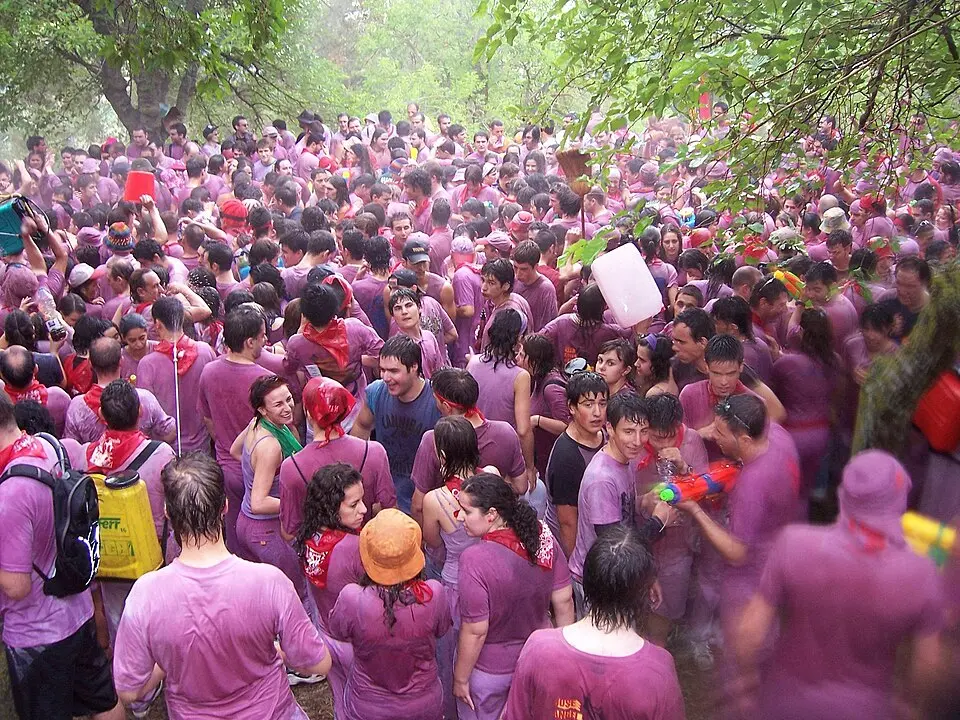
The clock strikes 10:00 AM on the Bilibio Cliffs as a rocket explodes into the morning sky—your white t-shirt remains pristine for exactly three seconds before the first crimson torrent arcs through the air, soaking fabric and skin alike in a deluge of young Rioja wine. Held annually on June 29th, the Haro Wine Battles transform the rugged landscape of La Rioja into a chaotic canvas of purple and red, a ritual where over 100,000 liters of wine are sprayed in celebration of San Felices de Bilibio. You stand shoulder-to-shoulder with 40,000 other participants, the air thick with the sweet, fermented scent of crushed grapes and the raucous sound of laughter echoing off the limestone rock face. The light is bright and harsh, reflecting off the wet stones and the plastic bottles wielded like weapons by revelers of all ages. In 2026, as mass tourism often sanitizes local traditions, this place matters now more than ever: it remains one of the last authentic urban festivals where chaos is curated, demanding that you surrender to the messiness of community celebration rather than observing it from a sterile distance.
Why Haro Wine Battles Embodies Unrestrained Celebration
The Haro Wine Battles represent far more than a drinking festival—they stand as a historical anomaly where a medieval boundary dispute evolved into Spain's most iconic wine ritual. Originating in the 13th century, the event began as a conflict between the towns of Haro and Miranda de Ebro over land rights on the Bilibio Cliffs. The solution was unconventional: rather than continuing the violence, the neighbors agreed to share the land and celebrate with wine, transforming a potential war into a peaceful, albeit messy, communion. This tradition solved the immediate need for conflict resolution while creating a cultural anchor that draws 40,000 visitors annually to a town of only 11,000 residents. The battle takes place on a 2-hectare plateau, utilizing the natural slope of the cliffs to drain the excess wine into the Ebro River below, preventing the site from becoming a swamp.
The logistical specifics reveal the scale of the operation: the town council provides 100,000 liters of wine, typically young Rioja not suitable for aging, transported in 16-liter plastic jugs known as garrafas. Participants utilize water guns, spray bottles, and even fire hoses to project the liquid up to 10 meters. The event is strictly timed, beginning with a procession at 9:00 AM and the battle commencing precisely at 11:00 AM after the mayor's signal. Safety measures implemented in 2024 include mandatory eye protection zones and designated dry areas for children, ensuring the festival remains inclusive. Today, the battle fulfills a dual need: functioning as a massive marketing engine for the Rioja Denominación de Origen while serving as a rite of passage for locals. With strict regulations enforced by the Haro Town Council to prevent glass breakage, the Haro Wine Battles remain a safe environment for revelry, preserving a dialogue between historical grievance and modern joy that defines the spirit of La Rioja.
The Best Time to Experience Haro Wine Battles
While the Haro Wine Battles occur on a fixed date, your experience depends heavily on accommodation availability and the specific timing of the festival rituals. The event takes place strictly on June 29th, honoring San Felices de Bilibio. For optimal conditions, target June 28–30, 2026, when daytime temperatures average 24–30°C (75–86°F) and the risk of rain is low. During this window, you'll participate in the battle comfortably without the extreme heat waves that sometimes hit the Ebro Valley in July. The light is harsh at midday, so morning participation is essential.
For the most atmospheric experience, arrive in Haro on the evening of June 28th to witness the Procesión de las Tejas (Procession of the Tiles), where locals throw tiles from balconies. On the day of the battle, be at the Bilibio Cliffs by 9:30 AM to secure a spot for the procession, ensuring you are in position before the 11:00 AM start. Avoid visiting Haro during July 15–August 25 if you plan to return for other wine tours, as accommodation prices remain inflated post-festival and many bodegas close for staff holidays. For real-time festival updates and road closures, check the official town website at www.aytoharo.org or call +34 941 301 001 before your visit.
Approximate Budget for a 7-Day Trip (2026)
La Rioja offers moderate value, but the Haro Wine Battles cause a significant price surge in accommodation during the festival week. This budget assumes moderate comfort—clean, well-located accommodation; authentic meals at traditional restaurants; and selective paid tastings. Prices reflect 2026 rates with approximately 4% annual inflation factored into estimates. This budget covers a 7-day stay based in Haro or nearby Logroño with the festival as the centerpiece.
Accommodation: €150–€350 per night for a double room in Haro during festival week (prices spike 200%); €80–€140 per night in Logroño (30-minute drive)
Food: €50–€90 per day
-
• Breakfast: €6–€10 (café con leche €3.50, pastry €4)
• Lunch: €25–€40 (festival picnic €20, restaurant meal €35)
• Dinner: €30–€60 (celebratory dinner €45, bottle of Rioja €15)
Transportation:
-
• Train from Madrid to Logroño: €45–€65 one-way (Renfe, 3 hours 30 minutes)
• Bus from Logroño to Haro: €5 one-way (ALSA, 45 minutes)
• Taxi during festival: €20–€40 (surge pricing applies)
• Car rental for week: €60/day
Attractions:
-
• Wine Battle Entry: Free (wine provided)
• Bodega Tasting (Average): €25–€50 per person
• Wine Museum (Vivanco): €12
• Guided Haro Tour: €20
• Festival T-shirt: €15
Miscellaneous:
-
• Local wine bottle (Reserva): €15–€40
• Waterproof phone case: €10
• Travel insurance: €60 for week
• Souvenir gourmet basket: €40–€80
Total for 7 days (per person, double occupancy): €1,500–€2,500 (Higher due to festival accommodation surge)
7 Essential Haro Wine Battles Experiences
- Join the Battle at Bilibio: Stand on the cliffs between 11:00 AM–12:30 PM when the spraying is most intense. The smell of wine is overwhelming. The ground becomes slippery. This is the core experience of the festival and should not be missed. Allow 2 hours to fully participate.
- Watch the Procession: Follow the statue of San Felices from the town square to the cliffs. Access: Plaza de la Paz, starts 9:00 AM. Free entry. Insider tip: Wear your white outfit here before it gets stained. It provides context for the religious origin you're experiencing. The hymns are moving.
- Visit the Station Quarter: Explore the historic bodega district in Haro. The 1-kilometer walk is flat and shaded, making it suitable for families. You will see 19th-century wineries. Allow 2 hours for the walk. Bring water as there are limited services along the trail. The connection between history and wine is striking here.
- Dine on Riojan Specialties: Reserve a table at a restaurant in Haro old town. Order the local specialty patatas a la riojana (potatoes with chorizo) while watching the light change on the stone facades. Evening dining (9:30 PM) allows you to see the town illuminated against the night sky. The hearty stew is perfect after a day of fasting.
- Take a Bodega Tour: Visit a winery like La Rioja Alta or CVNE before the battle. The 2-hour session is indoors, making it suitable for all visitors. You will taste aged wines. Allow extra time to ask questions. The connection between terroir and taste is remarkable here.
- Attend the Tile Throwing (If Safe): Witness the Procesión de las Tejas on the evening of June 28th. The balconies fill with locals, tiles, and cheers. Book accommodation 6 months in advance as hotels fill completely. The tradition is spectacular. This event showcases the community spirit that keeps the tradition alive.
- Relax at the Ebro River: Wash off the wine at the designated washing stations near the river. Access: Base of cliffs, open 1 PM–6 PM. Free entry. Insider tip: Bring a change of clothes. It provides context for the cleanup you're experiencing. The water is cold.
3 Hidden Gems Most Travelers Miss
- Bodegas Bilbaínas: While most visitors focus on the big names, this bodega offers intimate tours near the battle site. Access: Barrio de la Estación, open 10 AM–6 PM, €30 entry. Insider tip: Book weeks in advance. The isolation is unmatched. It provides context for the production you're experiencing. It is often overlooked by those rushing to the battle.
- Santo Domingo de la Calzada: Located 20 kilometers away, this medieval town is often overshadowed by Haro during the festival. Access: Bus from Haro, open 24 hours. Insider tip: The cathedral chickens are legendary. It provides context for the Camino history you're experiencing. The architecture is stunning. It is often overlooked by those focused solely on wine.
- Mirador de la Atalaya: A specific viewpoint located above Haro, accessible via a steep path often overlooked by tour groups. This rocky outcrop offers a secluded spot for reflection away from tourist crowds. Access: Follow the signs from the old town, look for the marked trail. Insider tip: Bring binoculars. Vultures frequently soar on the thermal updrafts here. Best visited late afternoon when the light hits the valley. The views of the vineyards are breathtaking.
Cultural & Practical Tips
- Photography etiquette: Protect your camera with waterproof cases—wine damage is not covered by insurance. Street photography of locals requires verbal consent; a simple "¿Puedo?" (PWEH-doh) shows respect. Flash photography is prohibited inside bodegas to protect the wine.
- Dress code for the battle: Wear white clothing and red scarves (pañuelos). Shoulders and knees should be covered for church visits in the Old Town. Remove hats when entering religious spaces.
- Respect the wine: Do not drink the wine being sprayed during the battle (hygiene reasons). Share tables if necessary. Quiet hours are enforced in residential areas after 2 AM during the festival.
- Essential phrases: "Buenos días" (BWEH-nos DEE-as) before 2 PM; "¿Dónde está el baño?" (DON-deh es-TAH el BA-nyo) = "Where is the bathroom?"; "La cuenta, por favor" (la KWEEN-ta por fa-BOR) = "The bill, please."
- Weather preparedness: The region experiences hot summers. Nights can be 15°C cooler than days. Bring layers and a waterproof jacket for the wine. Wear sturdy shoes for potentially slick stone paths near the cliffs.
- Tipping customs: Round up restaurant bills or leave 5–10% for exceptional service. Not tipping is acceptable but leaving small change shows appreciation. Taxi drivers appreciate small change rounded up to the nearest euro.
- Accessibility information: The battle site is uneven and muddy. Some bodegas are wheelchair accessible. Contact the tourism office for adapted route maps along the main festival areas.
Conclusion: Travel with Reverence, Not Just Checklist Tourism
The Haro Wine Battles have witnessed nearly 800 years of human history—medieval neighbors arguing, pilgrims resting, modern revelers celebrating. When you stand on these cliffs in 2026, you're not just capturing images for your gallery; you're stepping into a living narrative of conflict transformed into joy. The limestone rocks holding this landscape never imagined they would support visitors from every corner of the globe; the farmers who grew the grapes never conceived their harvest would become a weapon of mass celebration.
But here's what separates meaningful travel from tourism: this festival doesn't need your footprint—it needs your reverence, your willingness to understand the complexity of cultural heritage, to recognize that each visitor adds pressure to a town that cannot be easily expanded. In an age of overtourism, Haro offers a masterclass in balance—showing us that some wonders demand we subordinate our desire for access to the greater need for preservation. Fight the battle, yes, but emerge with something deeper than stained clothes: carry forward a commitment to protect not just this festival, but all the fragile, irreplaceable treasures that connect us to our shared human history.