
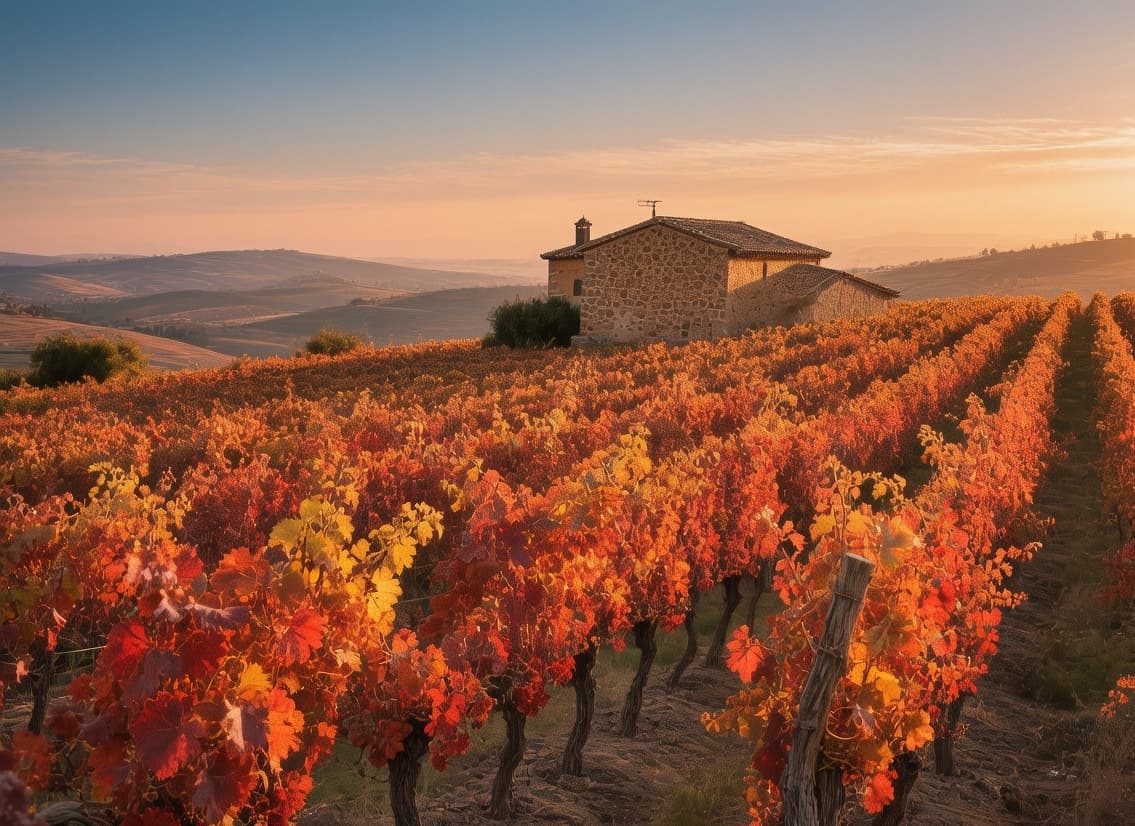
La Rioja Vineyards Ancient Tempranillo Meets Modern Architecture
The air hangs heavy with the scent of crushed grapes and oak as dawn breaks over the Ebro Valley—your boots crunch on dry earth while the distant hum of harvest machinery provides a rhythmic backdrop to the morning silence. Stretching over 65,000 hectares across three autonomous communities, the La Rioja vineyards stand as Spain's most prestigious wine region, a landscape where the Tempranillo grape has thrived since the Phoenicians first planted vines in the 8th century BC. You stand before the undulating rows of vines in Rioja Alavesa, the Sierra de Cantabria mountains rising like a protective wall in the distance, while the first light strikes the titanium curves of the Marqués de Riscal bodega designed by Frank Gehry. The light is golden and diffuse, filtering through the autumn mist that sustains the region's intense viticulture. In 2026, as industrial agriculture homogenizes flavors globally, this place matters now more than ever: it remains a sanctuary of terroir where tradition battles innovation, demanding that you taste the land with respect for the hands that nurtured it through centuries of change.
Why La Rioja Vineyards Embodies Viticultural Excellence
The La Rioja vineyards represent far more than a production zone—they stand as a benchmark for quality control and the delicate balance between heritage and modernity. When the Phylloxera plague devastated French vineyards in 1860, Rioja faced a critical opportunity: how to supply Europe with wine while protecting its own fragile ecosystem. The solution was regulatory: establishing the Denominación de Origen Calificada (DOCa) in 1991, the first and only region to achieve this highest status in Spain. This designation solved the immediate need for quality assurance while creating a legal framework that strictly limits yields to 6,500 kilograms per hectare, ensuring concentration and complexity in every bottle. The region is divided into three sub-zones—Rioja Alta, Rioja Alavesa, and Rioja Oriental—each offering distinct microclimates that influence the final blend.
The viticultural specifics reveal the depth of the tradition: the dominant Tempranillo grape accounts for 75% of plantings, requiring 120 days of maturation to reach optimal phenolic ripeness. The aging process utilizes American and French oak barrels, with Crianza requiring 12 months in wood, Reserva 12 months, and Gran Reserva a minimum of 24 months. The famous calados (underground cellars) in Haro maintain a constant temperature of 14°C (57°F) and 80% humidity, allowing wine to evolve slowly without artificial intervention. Today, the region fulfills a dual need: functioning as an economic engine exporting 250 million bottles annually while serving as a cultural heritage site protected by the Regulatory Council. With strict sustainability certifications enforced since 2020 to combat climate change, the La Rioja vineyards remain ecologically viable through continuous monitoring, preserving a dialogue between ancient farming methods and cutting-edge enology that defines the Spanish wine identity.
The Best Time to Experience La Rioja Vineyards
While the La Rioja vineyards remain accessible year-round, your experience depends heavily on the viticultural cycle and the continental climate of the Ebro Valley. For optimal visiting conditions, target September 15–October 15 during the harvest (vendimia), when daytime temperatures average 18–25°C (64–77°F) and the vines turn vibrant shades of red and gold. During these windows, you'll explore the bodegas comfortably without the scorching heat of summer or the dormancy of winter. The light during these months also enhances the landscape colors, creating ideal photography conditions for the vine rows against the mountains.
For the most atmospheric experience, arrive between 9:00–10:30 AM when the morning mist lifts off the vines and the winemakers are sorting grapes, or during golden hour (7:30–9:00 PM in summer, 6:00–7:30 PM in winter) when the sun sets behind the Sierra de Cantabria. Early morning visits offer the clearest air for viewing the landscape without haze. Winter months (December–February) bring colder temperatures of 4–12°C (39–54°F) and occasional frost, which dramatically reduces crowds but requires warm clothing for outdoor viewing. The vineyards look dramatic under grey skies, though some bodegas may close for maintenance.
Avoid July 25–August 25 and Spanish national holidays (August 15 Assumption Day) when daily visitor numbers spike and accommodation prices in Laguardia increase by 50-70%. Midday visits during peak season create bottlenecks at popular bodegas like Ysios. For real-time harvest dates and booking availability, .
Approximate Budget for a 7-Day Trip (2026)
La Rioja offers moderate value compared to other European wine regions, though prices have risen 24% since 2020 due to tourism growth and inflation. This budget assumes moderate comfort—clean, well-located accommodation; authentic meals at traditional restaurants; and selective paid tastings. Prices reflect 2026 rates with approximately 4% annual inflation factored into estimates. This budget covers a relaxed 7-day stay based in Haro or Laguardia with day trips to the vineyards.
Accommodation: €90–€180 per night for a double room in a wine hotel in Rioja Alavesa or Haro; budget hostels from €50/night
Food: €45–€75 per day
-
• Breakfast: €6–€10 (café con leche €3.50, pastry €4)
• Lunch: €20–€35 (menú del día includes soup, main course like chuletillas, dessert, wine/water)
• Dinner: €25–€50 (grilled lamb €22, seafood platter €35, glass of Reserva €6)
Transportation:
-
• Train from Madrid to Logroño: €40–€60 one-way (Renfe, 3 hours 30 minutes)
• Local buses within Rioja: €5 per ride
• Taxi from station to accommodation: €15–€25
• Car rental for vineyard tours: €55/day
Attractions:
-
• Bodega Tasting (Average): €25–€50 per person
• Wine Museum (Vivanco): €12
• Hot Air Balloon Ride: €220
• Guided Vineyard Tour: €30
• Medieval Cellars (Haro): €5
Miscellaneous:
-
• Local wine bottle (Reserva): €15–€40
• Handcrafted ceramics: €30–€70
• Travel insurance: €60 for week
• Souvenir gourmet basket: €40–€80
Total for 7 days (per person, double occupancy): €1,300–€2,000
7 Essential La Rioja Vineyards Experiences
- Walk the Vine Rows at Sunrise: Stroll through the vines between 8:00–9:00 AM when the dew is still on the leaves. The smell of earth and grapes is intense. The light is perfect for photography. This is the core experience of the region and should not be rushed. Allow 1 hour to absorb the atmosphere.
- Taste at Marqués de Riscal: Visit this historic bodega designed by Frank Gehry. Access: Elciego, open 10 AM–6 PM, €35 entry. Insider tip: Book the premium tasting in the hotel bar. It provides context for the architectural innovation you're experiencing. The wine is exceptional.
- Explore the Vivanco Museum: Located in Briones, this is the world's largest wine culture museum. Access: N-232 Highway, open 10 AM–7 PM, €12 entry. Insider tip: Visit the barrel room for a tasting. It provides context for the history you're experiencing. The exhibits on cork production are excellent.
- Drive the Wine Route: Navigate the LR-111 road connecting Haro to Laguardia. The 20-kilometer drive is scenic and shaded, making it suitable for all visitors. You will see medieval villages. Allow 2 hours for the drive with stops. Bring water as there are limited services along the trail. The connection between landscape and wine is striking here.
- Dine on Riojan Specialties: Reserve a table at a restaurant in Haro. Order the local specialty pimientos asados (roasted peppers) while watching the light change on the bodega facades. Evening dining (9:30 PM) allows you to see the town illuminated against the night sky. The lamb is exceptional, raised on the surrounding hills.
- Take a Hot Air Balloon Ride: Float over the vineyards at dawn. Access: Laguardia airfield, open 7 AM–9 AM, €220 entry. Insider tip: Visit during harvest for colorful views. It provides context for the scale of the region you're experiencing. The silence is unique.
- Attend the Harvest Festival (If Visiting in October): If visiting during the first week of October, witness the traditional grape stomping festivities. The towns fill with music, dancers, and wine fountains. Book accommodation 6 months in advance as hotels fill completely. The grape stomping is spectacular. This event showcases the community spirit that keeps the tradition alive.
3 Hidden Gems Most Travelers Miss
- San Vicente de la Sonsierra: While most visitors focus on Laguardia, this medieval village offers a quieter experience with its own hilltop hermitage. Access: 5-kilometer drive from Laguardia, open 24 hours, free. Insider tip: Climb to the Santa Cruz hermitage for views. The isolation is unmatched. It provides context for the religious history you're experiencing. It is often overlooked by those rushing to the big bodegas.
- Calados de Haro: Located underground in Haro, these 19th-century wine caves are often overshadowed by modern bodegas. Access: Calle de la Estación, open 11 AM–2 PM, €5 entry. Insider tip: The stone tunnels maintain natural humidity. It provides context for the aging process you're experiencing. The smell of old oak is intoxicating. It is often overlooked by those focused solely on tasting rooms.
- Bodega Ysios: A specific bodega located near Laguardia, accessible via a scenic path often overlooked by tour groups. This architectural masterpiece by Santiago Calatrava offers a secluded spot for reflection away from tourist crowds. Access: Follow the signs from Laguardia, look for the marked trail. Insider tip: Bring binoculars. Vultures frequently soar on the thermal updrafts here. Best visited late afternoon when the light hits the cedar roof. The views of the Sierra de Cantabria are breathtaking.
Cultural & Practical Tips
- Photography etiquette: Drones require permission from the bodega—fines up to €500 for violations. Street photography of winemakers requires verbal consent; a simple "¿Puedo?" (PWEH-doh) shows respect. Flash photography is prohibited inside barrel rooms to protect the wine.
- Dress code for venues: Shoulders and knees should be covered for church visits in medieval villages. Carry a lightweight scarf even in summer. Remove hats when entering religious spaces.
- Respect tasting culture: Do not wear perfume as it interferes with the wine aroma. Spit if tasting multiple wines. Quiet hours are enforced in residential areas after 11 PM.
- Essential phrases: "Buenos días" (BWEH-nos DEE-as) before 2 PM; "¿Dónde está el baño?" (DON-deh es-TAH el BA-nyo) = "Where is the bathroom?"; "La cuenta, por favor" (la KWEEN-ta por fa-BOR) = "The bill, please."
- Weather preparedness: The region experiences rapid weather changes. Nights can be 15°C cooler than days. Bring layers and a waterproof jacket. Winter visits require sturdy shoes for potentially muddy paths in the vineyards.
- Tipping customs: Round up restaurant bills or leave 5–10% for exceptional service. Not tipping is acceptable but leaving small change shows appreciation. Taxi drivers appreciate small change rounded up to the nearest euro.
- Accessibility information: Many modern bodegas are wheelchair accessible. The medieval cellars are not. Contact the tourism office for adapted route maps along the main wine route.
Conclusion: Travel with Reverence, Not Just Checklist Tourism
The La Rioja vineyards have witnessed nearly 3,000 years of human history—Romans planting vines, monks aging wine, modern architects reshaping the skyline. When you walk these rows in 2026, you're not just capturing images for your gallery; you're stepping into a living narrative of cultivation and patience. The soil holding these vines never imagined it would support tourists from every corner of the globe; the farmers who pruned the branches never conceived their work would become a global icon.
But here's what separates meaningful travel from tourism: this region doesn't need your footprint—it needs your reverence, your willingness to understand the fragility of agricultural ecosystems, to recognize that each visitor adds pressure to a land that cannot be easily expanded. In an age of overtourism, La Rioja offers a masterclass in sustainability—showing us that some wonders demand we subordinate our desire for access to the greater need for preservation. Taste the wine, yes, but emerge with something deeper than souvenirs: carry forward a commitment to protect not just this region, but all the fragile, irreplaceable treasures that connect us to our shared natural heritage.