
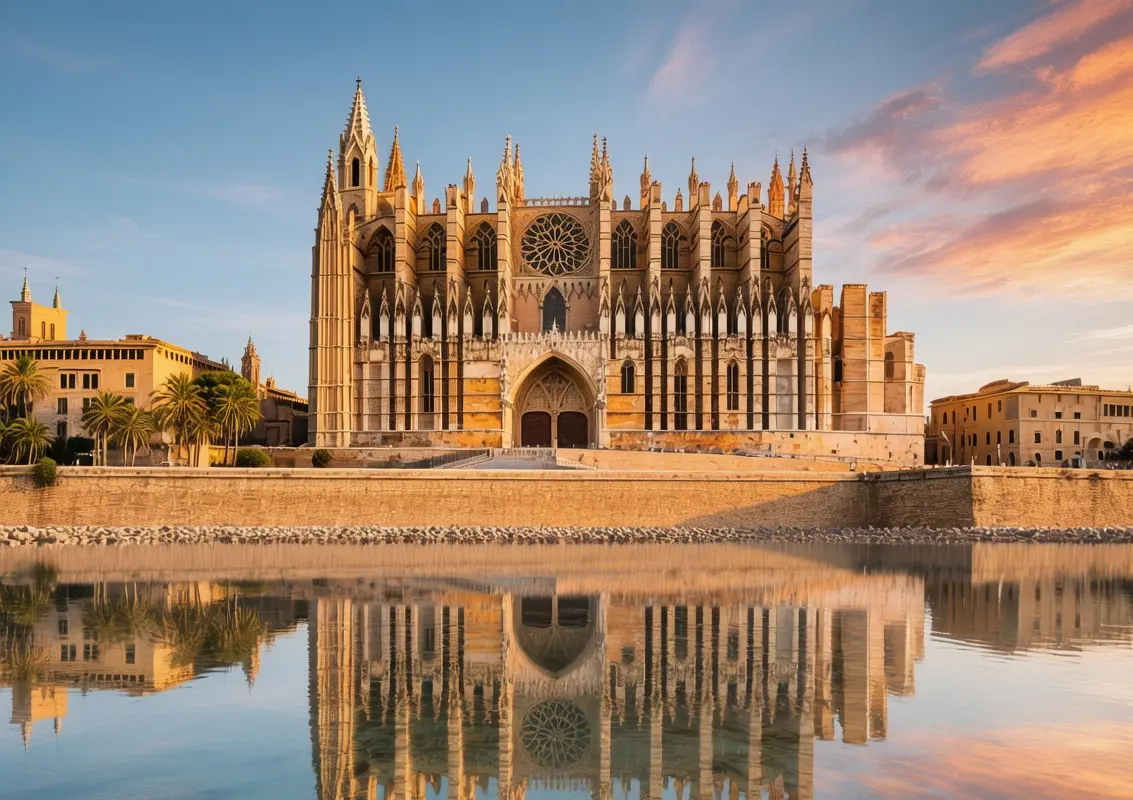
Mallorca Palma Cathedral Gothic Stone Meets Mediterranean Light
The morning sun strikes the golden sandstone, turning the Mallorca Palma Cathedral into a glowing beacon against the deep blue of the bay. You stand on the edge of the Parc de la Mar, where the artificial lake mirrors the 44-meter-high nave, creating a double image of architectural grandeur. The air smells of salt and old stone; the distant sound of ferry horns mixes with the silence of the sacred space within. This is La Seu, a Gothic masterpiece begun in 1229 by King James I of Aragon, dominating the Palma skyline with a rose window known as the "Eye of the Gothic" that measures 11 meters in diameter. You trace the flying buttresses that hold the weight of the vaulted ceiling, feeling the engineering ambition of the 13th century. In 2026, as historic sites face the pressures of mass tourism, the Mallorca Palma Cathedral remains a sanctuary of light—a place where the divine is captured in glass and stone, demanding you slow down to truly witness the spectacle of the sun aligning with the rose window.
Why Mallorca Palma Cathedral Embodies Gothic Mastery
The Mallorca Palma Cathedral represents one of the tallest and most luminous Gothic structures in Europe, solving the critical need for a spiritual monument that asserted Christian dominance after the Reconquista of the island. Construction began in 1229 on the site of a former mosque, utilizing sandstone quarried from Santanyí on the southeast coast. The engineering challenge was immense: how to build a nave 44 meters high—taller than many French cathedrals—on a coastal foundation susceptible to erosion and seismic activity. The solution involved massive flying buttresses and walls 2.5 meters thick at the base, tapering as they rise to support the ribbed vaulting.
The cathedral's defining feature is the main rose window, containing 1,236 pieces of stained glass, which creates a spectacular light show twice a year (February 2 and November 11) when the sunrise aligns perfectly with the main portal. In 1904, Antoni Gaudí was commissioned to renovate the interior, adding a wrought-iron canopy and rearranging the choir to open up the space, a controversial move that emphasized the building's horizontal vastness. This integration of medieval engineering, royal patronage, and modernist intervention makes the Mallorca Palma Cathedral not merely a church but a timeline of architectural evolution. The building measures 121 meters in length and 55 meters in width, creating a volume of space that overwhelms the visitor. This concentration of history and light makes it a pilgrimage site for architects and believers alike, where every stone tells a story of faith and power.
The Best Time to Experience Mallorca Palma Cathedral
For the optimal Mallorca Palma Cathedral visit, target April 15–June 10 or September 15–October 25, when temperatures range between 18–26°C (64–79°F) and the light is soft enough to appreciate the stained glass without glare. The cathedral opens at 10:00 AM Monday through Saturday; arrive at 9:45 AM to enter with the first group before cruise ship crowds converge. The miraculous light alignment occurs on February 2 (Candlemas) and November 11; book tickets six months in advance for these dates as demand surges 200%. Sunset views from the Parc de la Mar—specifically 7:30–9:00 PM in summer—offer dramatic lighting on the facade, though the interior closes at 6:00 PM.
Avoid July 15–August 25 unless you tolerate extreme heat and crowds; temperatures regularly exceed 32°C (90°F), making the stone plaza radiate intense thermal energy. The lack of shade in the square exacerbates the heat, and queue times can exceed 60 minutes. Winter months (December–February) bring mild weather (12–18°C / 54–64°F) but shorter daylight hours. The cathedral closes for religious services on Sunday mornings; verify current liturgical schedules at www.catedraldemallorca.org or contact the ticket office at info@catedraldemallorca.org (+34 971 713 133). Weekday mornings typically see the lowest visitor density, allowing for clearer photography of the nave without obstruction from tour groups.
Approximate Budget for a 7-Day Trip (2026)
Mallorca offers a range of options, though Palma city center commands premium prices during peak season. The following budget assumes mid-range comfort with a focus on culture and gastronomy, based on 2026 pricing with approximately 3.5% inflation from 2025 figures. Estimates include stays in Palma for easy access to the Mallorca Palma Cathedral and day trips to explore the island.
- Accommodation: €100–€200 per night for a double room in a boutique hotel or apartment in Palma Center or Santa Catalina; luxury seafront resorts command €300–€600 per night
- Food: €50–€80 per day—breakfast €8–€12 (café con leche and ensaimada), lunch €20–€35 (menú del día including sobrassada and salad), dinner €30–€50 (seafood paella and local wine)
- Transportation: Flight to Palma de Mallorca Airport: €100–€250 round-trip from European cities; EMT Bus in Palma: €2 per ride or €5 daily pass; taxi from airport: €25 fixed rate; car rental: €40 per day
- Attractions: Mallorca Palma Cathedral entry: €13; Royal Palace of La Almudaina: €10; Bellver Castle: €8; Train to Sóller: €25; Guided cathedral tour: €20
- Miscellaneous: Ceramic souvenirs from €15; local wine €8–€20 per bottle; hierbas liqueur €12; artisan leather goods €40–€90; museum catalog €10
Total estimated cost for 7 days: €1,400–€2,200 per person (based on double occupancy; solo travelers should add 35–45% for single supplements)
7 Essential Mallorca Palma Cathedral Experiences
- Witness the Light Show: Visit on February 2 or November 11 to see the sunrise align with the rose window. The reflection creates a figure-eight shape on the opposite wall. Arrive by 7:30 AM for the best view from outside. The phenomenon lasts 30 minutes. This is the iconic Mallorca Palma Cathedral event; do not miss the alignment.
- Explore the Royal Chapel: Enter the chapel featuring the altar designed by Antoni Gaudí. The wrought-iron canopy is intricate and modernist. Visit between 11:00 AM–1:00 PM when lighting accentuates the metalwork. The chapel houses a relic of the True Cross. Entry is included in the ticket. It demonstrates the 20th-century intervention.
- Climb the Rooftop Tour: Book the guided tour to walk the terraces and flying buttresses. The view over Palma and the bay is panoramic. Visit at 10:00 AM when the light is clear. The tour lasts 1 hour and costs €25. It reveals the engineering of the Gothic structure.
- Visit the Museum: Explore the sacred art collection housed in the cathedral galleries. The pieces include goldsmith work and paintings from the 15th century. Visit at 2:00 PM when the crowds thin. Entry is included. It provides context for the religious history.
- Walk the Nave: Stroll the 121-meter length of the main hall. The height of 44 meters creates a sense of verticality. Visit in late afternoon when the sun filters through the stained glass. The acoustics are exceptional. Entry costs €13. This provides a physical sense of the scale.
- View from Parc de la Mar: Walk to the artificial lake south of the cathedral. The reflection of the facade in the saltwater is stunning. Visit at 6:00 PM when the temperature cools. The park is free to enter. It offers the best photographic angle.
- Attend Evening Mass: Sit in the nave during the 7:00 PM mass (Sunday). The liturgy brings the space to life. Visit to experience the acoustic resonance of the choir. It is free to attend. This reveals the living function of the cathedral.
3 Hidden Gems Most Travelers Miss
- The Crypt: Located beneath the main altar, this burial site houses the remains of Mallorcan kings. Entry: Included with special tour; open by appointment. It is often overlooked as visitors focus on the upper levels. The atmosphere is solemn and cool. Contact: +34 971 713 133. Visit early morning for access. The architecture is Romanesque.
- Palace of La Almudaina: Located 200 meters east at Carrer del Palau Reial, this 14th-century royal residence sits adjacent to the cathedral. Entry: €10; open 10:00 AM–6:00 PM. It is often overlooked by tourists rushing to the beach. The gardens feature orange trees and fountains. Contact: +34 971 214 134. Visit mid-morning when light illuminates the throne room. The perspective allows you to see the cathedral from the palace walls.
- Banys Àrabs (Arab Baths): A 10-minute walk uphill at Carrer de Serra, 7, these 10th-century baths are the only remaining Moorish structure in Palma. Entry: €3; open 9:30 AM–7:00 PM. It is often overlooked as visitors focus on the Gothic center. The garden features lush vegetation. Contact: +34 971 721 549. Visit late afternoon when the light is soft. The perspective allows you to understand the pre-Christian history.
Cultural & Practical Tips
- Dress code: The Mallorca Palma Cathedral is an active place of worship. Shoulders and knees must be covered. No hats or sleeveless tops. Security enforces this strictly. Fines for inappropriate dress can reach €50. Respect the sanctity of the space.
- Master these phrases: "Buenos días" (BWEH-nos DEE-as) for good morning; "Por favor" (por fah-BOR) for please; "¿Cuánto cuesta?" (KWAN-toh KWES-tah) to ask price; "La cuenta, por favor" (lah KWEN-tah) to request the bill.
- Photography guidelines: Photography is permitted without flash in most areas. Tripods require special permission. Video recording is prohibited during mass. Respect "no fotos" signs in the museum. Early morning offers the best light without crowds.
- Ticket strategy: Purchase tickets online at least 48 hours in advance during peak season. On-site queues can exceed 45 minutes. Combined tickets with the Museum offer savings. Verify times on the official website before arriving.
- Hydration strategy: Palma's coastal location means humidity; carry a refillable bottle. Public fountains (fuentes) are available in the plazas. The water is potable. You'll save €2–€3 daily and reduce plastic waste. Purchase water from kiosks if fountains are unavailable.
- Weather considerations: The stone plaza provides little shade; wear a hat and sunscreen during summer months. Winter evenings can be chilly; bring a light jacket even if the day is warm. Rain is rare but possible in November; the stone surfaces become slick when wet.
- Security awareness: While the area is generally safe, pickpockets operate in crowded tourist zones. Keep bags zipped and valuables secure. Do not leave phones on café tables. Allow an extra 15 minutes for security checks at the entrance. Report suspicious activity to local police.
Conclusion: Travel with Reverence, Not Just Reverie
The Mallorca Palma Cathedral demands more than casual observation—it asks for contemplation of the layers of history embedded in every sandstone block, every piece of stained glass, every vault carved by hands long turned to dust. When you walk this nave in 2026, you're not merely touring a monument; you're walking through a fragile ecosystem of memory where Gothic ambition, royal power, and modern tourism intersect in delicate balance.
Choose to engage deeply: hire a local guide from Palma rather than a large tour company; purchase tickets directly to support preservation efforts; respect the silence of the halls that have hosted centuries of prayer. The Mallorca Palma Cathedral survives not as a museum exhibit but as a living spiritual center—and its preservation depends on visitors who recognize the difference between appreciation and consumption.
Slow down. Sit in the Parc de la Mar after the tour buses depart. Listen to the bells ringing over the bay. Watch the sunset paint the stone in shades of gold and amber. The cathedral rewards those who approach it not as a checklist item but as a conversation across time—a dialogue between the builders of 1229 and modern travelers that continues, like the tide, in perpetual motion.