
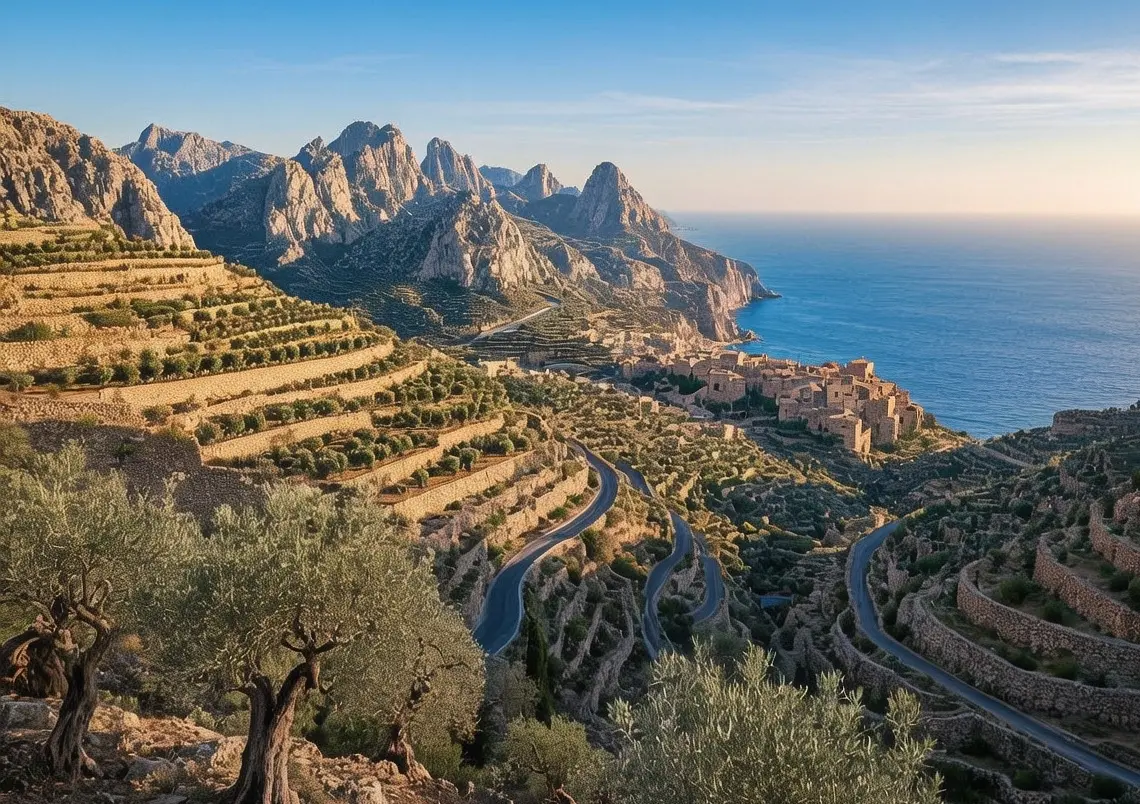
Serra de Tramuntana, Mallorca Limestone Peaks Meet Mediterranean Azure
The wind whispers through the olive groves—a dry, rustling sound that has swept across the Serra de Tramuntana for millennia. You stand on the edge of a cliff at Cap de Formentor, 384 meters above the churning sea, watching the limestone peaks rise like jagged teeth against the horizon. The air smells of wild thyme, salt spray, and ancient pine; the light filters through the branches, casting dappled shadows on the dry stone walls that terrace the mountainside. This is not merely a mountain range but a cultural landscape, designated a UNESCO World Heritage Site in 2011, where human engineering has shaped the geology over 1,000 years. You trace the path of the GR 221, a 136-kilometer trail that connects stone villages nestled in the valleys, feeling the weight of history in every step. In 2026, as overtourism threatens fragile ecosystems, the Serra de Tramuntana remains a sanctuary of endurance—a place where the balance between nature and agriculture is preserved in stone, demanding you tread lightly to respect the labor of generations past.
Why Serra de Tramuntana Embodies Cultural Engineering
The Serra de Tramuntana represents a masterpiece of hydraulic and agricultural engineering, solving the critical need to cultivate steep, arid slopes in a Mediterranean climate. Stretching 90 kilometers along the northwest coast of Mallorca, the range features peaks rising over 1,400 meters, with Puig Major standing as the highest point at 1,445 meters. The landscape is defined by the marjades—terraced fields built using dry stone construction techniques dating back to the Moorish period in the 10th century. These walls, constructed without mortar, allow water to filter through while preventing soil erosion, creating microclimates for olive and almond trees.
The engineering extends to water management: a network of channels, cisterns, and aqueducts captures rainwater from the high peaks and distributes it to the terraces below. This system, maintained for centuries, allows agriculture to thrive in an environment with less than 500mm of annual rainfall. The stone villages—Valldemossa, Deià, Sóller—are integrated into this system, built from the same limestone quarried from the mountains. This integration of geology, hydrology, and architecture makes the Serra de Tramuntana not merely a scenic route but a functional organism. The density of historical structures per square kilometer is unmatched in the Balearics, with every wall telling a story of survival against gravity and drought. This concentration of heritage makes it a pilgrimage site for hikers and historians, where the evolution of land use is traced through the very stones that define the skyline.
The Best Time to Experience Serra de Tramuntana
For the optimal Serra de Tramuntana experience, target April 15–June 10 or September 15–October 25, when temperatures range between 16–24°C (61–75°F) and the wildflowers are in bloom. The hiking trails open at sunrise, but the ideal walking window is 8:00–10:00 AM when the light is soft and the heat is manageable. Sunset views from Sa Calobra—specifically 7:30–9:00 PM in summer—offer dramatic lighting over the cliffs, though the road closes to private cars during peak season. Spring coincides with the almond blossom in February, causing accommodation prices to increase 30–50%; book lodging three months in advance if visiting during this period.
Avoid July 15–August 25 unless you tolerate extreme heat and traffic; temperatures regularly exceed 32°C (90°F), making the exposed limestone trails dangerously hot. The narrow mountain roads become congested with tour buses, and parking in villages like Deià is nearly impossible. Winter months (December–February) bring mild weather (10–16°C / 50–61°F) but increased rainfall and the risk of snow on Puig Major. Some mountain huts close in low season; verify current status at www.mallorcaweb.net or contact the tourist office at info@mallorcaturisme.com (+34 971 176 666). Weekday mornings typically see the lowest visitor density, allowing for clearer photography of the terraces without obstruction from tour groups.
Approximate Budget for a 7-Day Trip (2026)
The Serra de Tramuntana region offers a range of options, though the UNESCO status drives premium pricing in key villages. The following budget assumes mid-range comfort with a focus on hiking and local gastronomy, based on 2026 pricing with approximately 3.5% inflation from 2025 figures. Estimates include stays in mountain villages like Valldemossa or Sóller for easy access to the trails.
- Accommodation: €120–€250 per night for a double room in an agroturismo or boutique hotel in Valldemossa; luxury fincas command €400–€800 per night
- Food: €50–€80 per day—breakfast €8–€12 (café con leche and pa amb oli), lunch €20–€35 (mountain restaurant including sobrassada and salad), dinner €30–€50 (traditional Mallorcan stew and local wine)
- Transportation: Flight to Palma de Mallorca Airport: €100–€250 round-trip; rental car (essential for mountains): €50 per day; fuel: €60 total; public bus (Line 210): €5 per ride
- Attractions: Hiking GR 221: free; Monastery of Valldemossa: €10; Train to Sóller: €25; Sa Calobra boat trip: €30; Guided hiking tour: €60
- Miscellaneous: Olive oil from €15; local wine €10–€25 per bottle; hiking poles €20; artisan ceramics €40–€100; map guide €15
Total estimated cost for 7 days: €1,500–€2,500 per person (based on double occupancy; solo travelers should add 35–45% for single supplements)
7 Essential Serra de Tramuntana Experiences
- Hike the GR 221 Dry Stone Route: Walk a section of the 136-kilometer long-distance trail. The path connects stone villages and follows ancient mule tracks. Visit at 8:00 AM when the light illuminates the terraces. The terrain is rocky and steep. Allow 6 hours for a full stage. This is the iconic Serra de Tramuntana experience; do not miss the stone shelters.
- Drive the Sa Calobra Road: Navigate the 14-kilometer road with 26 hairpin bends. The engineering is spectacular, built in the 1930s. Visit at 10:00 AM before tour buses arrive. The view of the Torrent de Pareis gorge is stunning. Parking costs €10. It demonstrates the human conquest of the landscape.
- Visit Valldemossa Monastery: Explore the charterhouse where Chopin and Sand stayed in 1838. The cells are preserved as museums. Visit between 11:00 AM–1:00 PM when lighting accentuates the artifacts. Entry costs €10. It reveals the cultural history of the mountains.
- Ride the Wooden Train to Sóller: Board the vintage train from Palma to Sóller. The journey takes 1 hour through tunnels and orchards. Visit at 9:00 AM for the morning departure. Tickets cost €25 one-way. It adds a historical dimension to the trip.
- Swim at Sa Calobra Beach: Access the pebble beach at the end of the gorge. The water is cold and clear. Visit at 4:00 PM when the sun hits the canyon walls. The beach is 500 meters long. Entry is free. It reveals the coastal beauty of the range.
- Explore Deià Village: Wander the narrow streets of the artists' haven. The stone houses are covered in bougainvillea. Visit at 5:00 PM when the light is soft. The cemetery offers panoramic views. It is the most atmospheric spot in the Serra de Tramuntana; arrive early to avoid crowds in your shot.
- Watch Sunset at Cap de Formentor: Drive to the northernmost point of the island. The lighthouse stands 210 meters above the sea. Visit at 8:00 PM in summer. The views over the Menorca channel are panoramic. Access is restricted in summer; use the shuttle bus. This creates a magical end to the day.
3 Hidden Gems Most Travelers Miss
- Monastery of Lluc: Located in the heart of the range at 525 meters altitude, this sanctuary is a pilgrimage site. Entry: €5; open 10:00 AM–6:00 PM. It is often overlooked as visitors focus on the coast. The boys' choir is famous. Contact: +34 971 871 505. Visit early morning for the service. The architecture is Baroque.
- Banyalbufar Terraces: A 10-minute drive from Valldemossa, these ancient agricultural steps rise 600 meters from the sea. Entry is free; open 24 hours. It is often overlooked by tourists rushing to beaches. The engineering is visible from the road. Contact: N/A. Visit mid-morning when light illuminates the walls. The perspective allows you to see the labor involved.
- Oldest Olive Tree in Europe: Located near Fartàritx in the east (technically outside but related heritage), or seek out the ancient trees in Orient. Entry: free; open 24 hours. It is often overlooked as visitors focus on views. Some trees are over 1,000 years old. Contact: N/A. Visit late afternoon when the light is soft. The perspective allows you to see the living history.
Cultural & Practical Tips
- Respect the trails: The Serra de Tramuntana is a working landscape. Do not climb dry stone walls. They are fragile and essential for erosion control. Fines for damage can reach €300. Stay on marked paths. Keep the trails clean; use provided bins.
- Master these phrases: "Buenos días" (BWEH-nos DEE-as) for good morning; "Por favor" (por fah-BOR) for please; "¿Cuánto cuesta?" (KWAN-toh KWES-tah) to ask price; "La cuenta, por favor" (lah KWEN-tah) to request the bill.
- Photography guidelines: Drones require special permission from local authorities due to nature reserve status. Flash photography is discouraged in monasteries. Respect privacy when photographing locals. Early morning offers the best light without crowds. The golden hour lasts approximately 30 minutes.
- Driving warnings: Mountain roads are narrow and winding. Speed limits are strictly enforced (often 40 km/h). Buses have right of way on hairpin bends. Parking is limited in villages. Use designated lots to avoid fines.
- Hiking safety: Carry at least 2 liters of water per person. There are few sources on the trails. Wear sturdy boots with ankle support. The limestone is slippery when wet. Check weather forecasts; flash floods occur in gorges.
- Weather considerations: The mountains create their own microclimate; fog can roll in quickly. Bring layers even in summer. Winter temperatures can drop to 5°C (41°F) at night. Rain is common in November; the stone paths become slick when wet.
- Security awareness: While the area is safe, theft can occur from unlocked rental cars. Keep valuables out of sight. Do not leave bags on beach access points. Allow an extra 15 minutes for parking in villages. Report suspicious activity to local police.
Conclusion: Travel with Reverence, Not Just Reverie
The Serra de Tramuntana demands more than casual sightseeing—it asks for contemplation of the delicate balance between human labor and natural grandeur. When you walk these trails in 2026, you're not merely visiting a destination; you're participating in a fragile ecosystem where stone walls, olive trees, and sustainable tourism intersect in delicate balance.
Choose to engage deeply: respect the dry stone structures that prevent erosion, support local agroturismos that maintain the land, and understand that this range is a living heritage, not just a backdrop. The Serra de Tramuntana survives not as a theme park but as a cultural landscape—and its preservation depends on visitors who recognize the difference between appreciation and consumption.
Slow down. Sit on a terrace after the hikers depart. Listen to the wind moving through the olive leaves. Watch the sunset paint the limestone in shades of gold and violet. The mountains reward those who approach them not as a checklist item but as a conversation between past and present—a dialogue between the builders of the terraces and modern travelers that continues, like the seasons, in perpetual motion.