
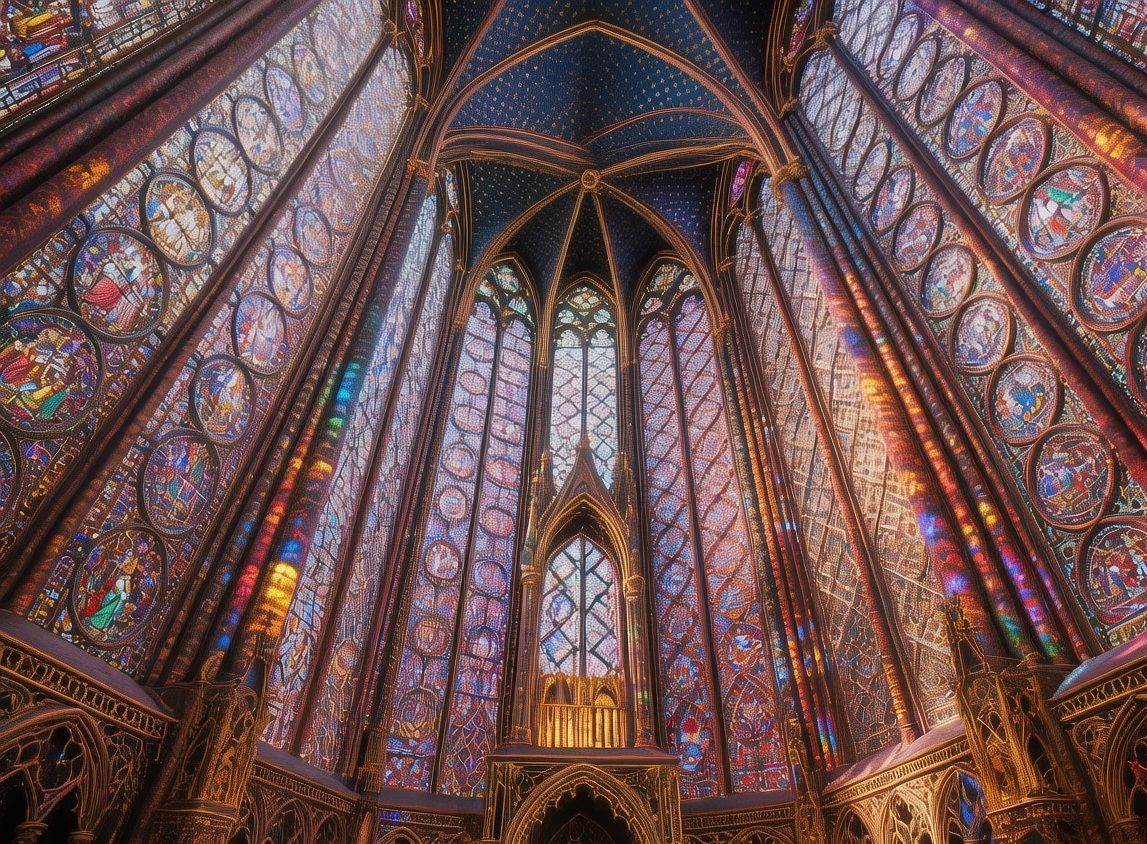
Sainte-Chapelle Stained Glass : Where Light Becomes Sacred Narrative
When sunlight first strikes the stained glass of Sainte-Chapelle, the transformation is neither gradual nor subtle—it is revelation. One moment you stand in a stone chamber; the next, you are immersed in liquid light. Over 1,100 biblical scenes rendered in sapphire, ruby, emerald, and gold dissolve the walls entirely, leaving only color and story suspended in air. The air itself seems to vibrate with chromatic energy as light filters through 6,458 square feet of 13th-century glass—the most extensive ensemble of medieval stained glass on Earth. This is not passive viewing; it is sensory immersion in a theology of light conceived by King Louis IX to house his collection of Passion relics. In 2026, nearly eight centuries after its consecration, Sainte-Chapelle remains Europe's most profound demonstration that architecture can transcend structure to become pure luminous experience.
Why Sainte-Chapelle Stained Glass Transcends Ordinary Beauty
Sainte-Chapelle's stained glass represents more than artistic achievement—it embodies a medieval cosmological vision where light was divine manifestation. Commissioned by Louis IX between 1242 and 1248 to enshrine Christ's Crown of Thorns, the chapel functions as a reliquary turned inside out: instead of hiding sacred objects within walls, it dissolves walls entirely into luminous narrative. The upper chapel's fifteen towering windows (each 15 meters high) depict 1,113 scenes from Genesis to Revelation in chronological sequence—a "Poor Man's Bible" for an illiterate age. Unlike later Gothic structures where glass complements stone, here glass *is* the architecture: walls reduced to skeletal tracery supporting the most ambitious glazing program of the Middle Ages. Following near-destruction during the French Revolution and meticulous 19th-century restoration, the windows survived World War II removal and 21st-century conservation that cleaned centuries of grime without compromising original glass. Today, standing beneath this chromatic canopy remains one of humanity's most direct encounters with medieval spirituality—not as historical artifact, but as living light.
The Best Time to Experience Sainte-Chapelle Stained Glass
For optimal chromatic intensity and contemplative atmosphere, visit on a Tuesday or Thursday between 10:30 AM and 12:30 PM from April 15 to June 10. During these hours, direct sunlight streams through the eastern windows depicting Genesis and Exodus, igniting blues and reds with particular vibrancy while avoiding the harsh overhead glare of midday. Crucially, arrive precisely at opening (9:00 AM October–March; 9:30 AM April–September) to experience the chapel in near-solitude before tour groups arrive—a 20-minute window of profound quiet when light falls unimpeded across empty benches. Avoid weekends and French school holidays when queues exceed 90 minutes and interior crowding diminishes the immersive quality. For photography without flash (strictly prohibited), position yourself in the western apse between 3:00–4:30 PM when afternoon light backlights the Passion cycle windows, creating dramatic silhouettes against jewel-toned glass. Note that overcast days offer surprisingly rich color saturation—diffused light eliminates harsh shadows while intensifying glass transparency.
Approximate Budget for a 7-Day Trip (2026)
Based on 2025 benchmarks adjusted for 4% inflation (per INSEE and Paris Île-de-France Tourism Office projections), here's a realistic mid-range budget for a Paris itinerary centered on medieval heritage:
- Accommodation: €115–€165 per night for a 3-star hotel in Le Marais or Latin Quarter—neighborhoods within 15-minute walk of Sainte-Chapelle with authentic character.
- Food: €95–€110 per day—breakfast at bakery (€7), lunch of quiche and salad at neighborhood café (€20–€25), dinner featuring seasonal French cuisine (€50–€65).
- Transportation: €36 for a weekly Navigo Découverte pass (covers all Metro lines including Cité station, 2-minute walk to Sainte-Chapelle). Walking is optimal for medieval Paris exploration.
- Attractions: Sainte-Chapelle entry: €14. Conciergerie (medieval palace beneath chapel): €11. Cluny Museum (medieval baths/tapestries): €10. Allocate €90 total for related sites.
- Miscellaneous: €50 for artisanal chocolates from nearby shops, reproduction prints of stained glass details, or donations to ongoing conservation efforts.
Total Estimated Cost: €1,250–€1,750 for seven days, excluding international flights.
5 Essential Experiences Beyond the Glass
- Upper Chapel Morning Light: The main event—arrive at opening to witness sunlight progressively illuminating biblical narratives from Creation to Apocalypse across fifteen windows in chronological sequence.
- Lower Chapel Intimacy: Often overlooked, this space served palace staff with richly painted columns and surviving 13th-century frescoes—best visited immediately after upper chapel while crowds remain upstairs.
- Conciergerie Connection: Explore the medieval royal palace beneath Sainte-Chapelle where Marie Antoinette was imprisoned—understanding this layered history deepens appreciation for the chapel's original context.
- Spire Climb (Limited Access): On first Sundays monthly (reservation essential), climb the 33-meter spire for unique downward views into the chapel's rose window and panoramic Île de la Cité vistas.
- Organ Recitals: Attend free 30-minute concerts held most Tuesdays/Thursdays at 5:30 PM when music resonates through the stone, transforming light into synesthetic experience.
3 Hidden Gems Most Travelers Miss
- Chapelle des Jésuites (Rue Saint-Antoine): A 17th-century hidden chapel with exceptional Baroque stained glass depicting Ignatius Loyola's visions—accessible through the courtyard of Lycée Charlemagne (ring bell at 24 Rue Charlemagne, request permission politely).
- Sorbonne Chapel Rose Window: Behind the historic university's main courtyard, a lesser-known 19th-century rose window by master glassmaker Henri Feur creates chromatic effects rivaling Sainte-Chapelle—open weekdays 2:00–4:00 PM.
- Atelier Loire (Chartres): While not in Paris, this contemporary stained glass workshop 80km southwest offers intimate tours where master Jacques Le Chevallier demonstrates medieval techniques—book months ahead via atelier-loire.com for transformative context.
Cultural & Practical Tips
- Book Timed Entry Online: Reserve tickets 3–4 weeks ahead via sainte-chapelle.fr—same-day availability rarely exists April–October. Select "skip-the-line" option even with reservation.
- Security Protocol: Expect airport-style screening at Conciergerie entrance (shared access point). Allow 25 minutes pre-entry time; large bags/backpacks prohibited inside chapel.
- Photography Ethics: Never use flash—UV radiation degrades pigments over time. Tripods prohibited. Best shots captured handheld between 10:30–11:30 AM when light streams horizontally through eastern windows.
- Respect Sacred Space: Maintain silence in upper chapel. Remove hats. Never touch glass or stone—oils from skin accelerate deterioration of 800-year-old surfaces.
- Contextual Preparation: Study biblical narratives beforehand via the official app's free window guide—recognizing Moses receiving tablets or Christ's Passion transforms passive viewing into active reading of light.
Conclusion: Witness with Reverence, Not Just a Lens
Sainte-Chapelle endures not as museum piece but as functioning spiritual instrument where light remains the primary medium of meaning. As a conscious traveler, your presence carries responsibility: to move quietly through spaces where others seek contemplation, to support conservation through official channels rather than touching fragile surfaces, and to understand that your 30-minute visit represents a fleeting moment in an 800-year continuum of light and faith. Purchase tickets directly from official sources to fund preservation. Visit during off-peak hours to reduce crowding stress on medieval structures. Most importantly, sit silently for five minutes without photographing—allow the glass to work on you rather than capturing it for others. By approaching Sainte-Chapelle not as content to be consumed but as experience to be absorbed, you participate in its enduring purpose: to remind us that beauty, like light, exists not to be owned, but to be witnessed—and in witnessing, transformed.