
Santander Beaches Belle Époque Elegance Meets Cantabrian Waves
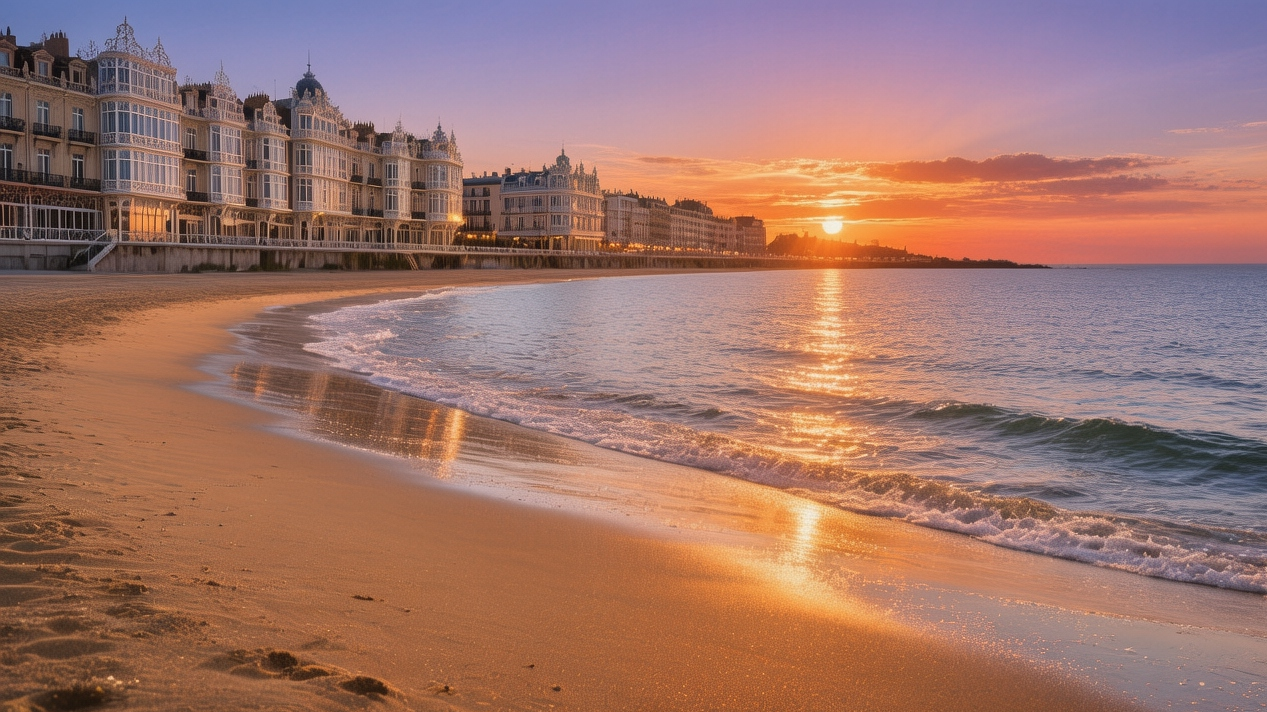
The afternoon sun glints off the white-capped waves as they roll onto the crescent-shaped sands of El Sardinero—your toes sink into the fine golden grains while the distant laughter of children mingles with the rhythmic crash of the Cantabrian Sea. Stretching over 1,200 meters along the northern coast, the Santander beaches stand as a testament to over a century of seaside sophistication, where Queen María Cristina once strolled along the promenade in the early 1900s, establishing this as Spain's premier summer retreat. You stand before the iconic Gran Casino and the elegant Belle Époque villas that line the waterfront, their pastel facades glowing warmly in the coastal light. The air carries the briny scent of the Atlantic mixed with the aroma of fresh churros from nearby cafés; the light is soft and diffused, typical of this northern latitude. In 2026, as mass tourism transforms coastal destinations into generic resorts, this place matters now more than ever: it preserves an authentic dialogue between urban refinement and natural beauty, demanding that you experience a beach culture where history is not forgotten but celebrated in every architectural detail and local tradition.
Why Santander Beaches Embodies Coastal Sophistication
The Santander beaches represent far more than a swimming destination—they stand as a living monument to Spain's Golden Age of seaside leisure and architectural ambition. When the city began developing El Sardinero in the late 19th century, following a devastating fire in 1893 that destroyed much of the old town, planners faced a critical challenge: how to rebuild not just a city, but a destination that could rival the great European coastal resorts. The solution was visionary: creating a beachfront district that combined natural beauty with Belle Époque elegance, featuring wide promenades, ornate gardens, and luxurious hotels designed to attract aristocracy from across Europe. This approach solved the immediate need for economic recovery while establishing Santander as the "Pearl of the North" for over a century.
The engineering specifics reveal the dedication to creating a sustainable coastal environment: the beaches are protected by a series of breakwaters and groynes constructed between 1920 and 1960, designed to combat the powerful Atlantic currents while maintaining the natural sand flow. El Sardinero beach is divided into two sections—Playa Primera and Playa Segunda—by a central jetty that extends 150 meters into the sea, creating calm swimming areas on both sides. The promenade, widened in 2015 to 12 meters, utilizes permeable paving materials that allow rainwater drainage while providing a smooth surface for the 30,000 daily visitors during peak season. The nearby Magdalena Peninsula, connected to the city by a narrow isthmus, provides natural protection from northern storms while offering 110 hectares of parkland that serves as a green lung for the urban area. Today, the beaches fulfill a dual need: functioning as a public recreational space while serving as the anchor for a tourism economy that generates over €400 million annually for Cantabria. With strict preservation laws enforced by the Cantabrian government, the Santander beaches remain architecturally cohesive, preserving a dialogue between nature and culture that defines the city's unique character.
The Best Time to Experience Santander Beaches
While the shores of Santander beaches remain accessible year-round, your experience depends heavily on the maritime climate of the Cantabrian coast and the tourism calendar. For optimal visiting conditions, target June 15–July 10 or September 5–25, when daytime temperatures average 20–25°C (68–77°F) and rainfall is moderate. During these windows, you'll explore the beaches and promenade comfortably without the heavy rains of winter or the overwhelming crowds of peak summer. The light during these months also enhances the turquoise water, creating ideal photography conditions for the Belle Époque architecture.
For the most atmospheric experience, arrive between 8:00–9:30 AM when the beach is being prepared for the day and the light is soft, or during golden hour (8:30–10:00 PM in summer, 6:30–8:00 PM in winter) when the sun sets over the bay. Early morning visits offer the clearest air for viewing the distant Picos de Europa mountains on clear days. Winter months (December–February) bring colder temperatures of 10–14°C (50–57°F) and frequent rain, which dramatically reduces crowds but requires warm clothing for outdoor viewing. The beaches look dramatic under stormy skies, though swimming is not recommended.
Avoid July 25–August 20 and Spanish national holidays (August 15 Assumption Day, Semana Santa) when daily visitor numbers exceed 50,000 and accommodation prices increase by 40-60%. Midday visits during peak season create bottlenecks on the promenade and at beach facilities. For real-time water quality, flag status, and weather alerts,.
Approximate Budget for a 7-Day Trip (2026)
Santander offers moderate value compared to other European coastal destinations, though prices have risen 25% since 2020 due to tourism growth and inflation. This budget assumes moderate comfort—clean, well-located accommodation; authentic meals at local restaurants; and selective paid attractions. Prices reflect 2026 rates with approximately 4% annual inflation factored into estimates. This budget covers a relaxed 7-day stay based in Santander with day trips to nearby coastal towns.
Accommodation: €95–€180 per night for a double room in a hotel near El Sardinero or city center; budget hostels from €55/night
Food: €45–€75 per day
-
• Breakfast: €6–€10 (café con leche €3.50, churros con chocolate €5)
• Lunch: €20–€35 (menú del día includes soup, main course like rabas or cocido montañés, dessert, wine/water)
• Dinner: €25–€50 (fresh seafood platter €40, glass of white wine €6)
Transportation:
-
• Train from Madrid to Santander: €50–€75 one-way (Renfe, 5 hours)
• Local buses within Santander: €1.30 per ride
• Taxi from airport to city center: €25–€35 (15 minutes)
• Day trip to Santillana del Mar: €10 bus round-trip
Attractions:
-
• Magdalena Palace entry: €6
• Maritime Museum: €8
• Cable car to Mataleñas: €5 round-trip
• Botanical Garden: €4
• Guided city tour: €18
Miscellaneous:
-
• Local anchovies (anchas): €15–€25 per tin
• Handcrafted ceramics: €30–€70
• Travel insurance: €60 for week
• Souvenir sobao pasiego: €8–€15
Total for 7 days (per person, double occupancy): €1,200–€1,850
7 Essential Santander Beaches Experiences
- Walk the El Sardinero Promenade: Stroll along the 1.2-kilometer paseo between 8:00–9:00 AM to avoid crowds. The Belle Époque buildings glow in the morning light, and the beach is freshly raked. The sound of waves is soothing without the daytime noise. This is the best time to photograph the iconic architecture without tourists in the frame.
- Swim at Playa Primera: Enter the water near the central jetty where conditions are calmest. Spend 45 minutes floating in the gentle waves protected by the breakwater. The water temperature averages 20°C (68°F) in summer. The contrast between the cool Atlantic and the warm sun creates a unique sensory experience. Lifeguards are on duty from June to September.
- Visit the Magdalena Peninsula: This 110-hectare park sits at the end of the bay. Access: Bus line 1 or 20-minute walk from city center, open 24 hours, free entry. Insider tip: Visit early morning when the palace gardens are misty. It provides the best opportunity for photography without the crowds. The royal palace dates back to 1908.
- Explore Playa de la Concha: This smaller beach near the city center offers a more local atmosphere. Access: 10-minute walk from Plaza de Porticada, open 24 hours. Free entry. Insider tip: Visit at low tide to explore the rock pools. It provides context for the beach culture you're experiencing beyond the tourist areas. The views of the cathedral are stunning.
- Dine on Fresh Seafood: Reserve a table at a restaurant in the Puerto Chico area. Order the local specialty rabas (fried squid) or anchoas del Cantábrico while watching the light change on the harbor. Evening dining (9:30 PM) allows you to see the port illuminated against the night sky. The fish is exceptional, caught daily by the local fleet.
- Ride the Cable Car to Mataleñas: This funicular climbs to the clifftop viewpoint. Access: Avenida de los Castros, operates 10 AM–8 PM (summer), €5 round-trip. Insider tip: Visit at sunset for panoramic views of the bay. The 4-minute ride offers stunning vistas of the coastline. The connection between transport and scenery is remarkable.
- Attend the Semana Grande (If Visiting in August): If visiting during the second week of August, witness the traditional festivities honoring the Assumption. The beaches fill with concerts, sports competitions, and fireworks. Book accommodation 6 months in advance as hotels fill completely. The fireworks display over the bay is spectacular. This event showcases the community spirit that keeps the tradition alive.
3 Hidden Gems Most Travelers Miss
- Playa de Mataleñas: While most visitors focus on El Sardinero, this secluded beach at the base of the cliffs offers privacy and natural beauty. Access: Cable car or 30-minute walk from Magdalena Peninsula, open daylight hours, free. Insider tip: Visit at low tide when the beach is largest. Bring sturdy shoes as the access path is steep. The seclusion is unmatched. It provides context for the natural coastline you're experiencing beyond the urban beaches.
- Jardines de Piquío: Located near the entrance to El Sardinero, these terraced gardens are often overlooked by beachgoers. Access: Paseo de Pérez Galdós, open 24 hours, free entry. Insider tip: The viewpoint at the top offers the best panorama of the bay. It provides context for the landscape architecture you're experiencing. The gardens date back to 1905 and feature exotic plants. It is often overlooked by those rushing to the sand.
- Cueva de la Virgen del Mar: A specific chapel carved into the cliffs near Playa de la Concha, accessible via a narrow path often missed by tour groups. This sanctuary offers a secluded spot for reflection away from tourist crowds. Access: Follow the coastal path from Playa de la Concha, look for the marked trail. Insider tip: Visit during low tide for easier access. Best visited late afternoon when the light filters through the cave entrance. The spiritual atmosphere is profound.
Cultural & Practical Tips
- Photography etiquette: Drones require permission from the city council—fines up to €500 for violations. Street photography of locals requires verbal consent; a simple "¿Puedo?" (PWEH-doh) shows respect. Flash photography is prohibited inside museums to protect the artwork.
- Dress code for venues: Shoulders and knees should be covered for church visits in the old town. Carry a lightweight scarf even in summer. Remove hats when entering religious spaces.
- Respect beach culture: Do not occupy excessive space with umbrellas. Keep noise levels moderate. Quiet hours are enforced in residential areas after 11 PM. Clean up after yourself.
- Essential phrases: "Buenos días" (BWEH-nos DEE-as) before 2 PM; "¿Dónde está el baño?" (DON-deh es-TAH el BA-nyo) = "Where is the bathroom?"; "La cuenta, por favor" (la KWEEN-ta por fa-BOR) = "The bill, please."
- Weather preparedness: The region experiences frequent rain year-round. Nights can be 10°C cooler than days. Bring layers and a waterproof jacket. Winter visits require sturdy shoes for potentially slick promenades.
- Tipping customs: Round up restaurant bills or leave 5–10% for exceptional service. Not tipping is acceptable but leaving small change shows appreciation. Taxi drivers appreciate small change rounded up to the nearest euro.
- Accessibility information: The main promenade is fully wheelchair accessible with ramps. Some beaches have wooden walkways. Contact the tourism office for adapted route maps and beach access points.
Conclusion: Travel with Reverence, Not Just Checklist Tourism
The Santander beaches have witnessed nearly 150 years of transformation—royal carriages turning into bicycles, fishing boats sharing the horizon with yachts, a village becoming a cosmopolitan destination. When you walk these sands in 2026, you're not just capturing images for your gallery; you're stepping into a living narrative of elegance and resilience. The waves crashing against the breakwaters never imagined they would lap at the feet of tourists from every corner of the globe; the architects who designed the Belle Époque facades never conceived their work would become icons of coastal sophistication.
But here's what separates meaningful travel from tourism: these beaches don't need your footprint—they need your reverence, your willingness to understand the complexity of coastal preservation, to recognize that each visitor adds wear to structures that cannot be easily replaced. In an age of overtourism, Santander offers a masterclass in balance—showing us that some wonders demand we subordinate our desire for access to the greater need for protection. Walk the promenade, yes, but emerge with something deeper than souvenirs: carry forward a commitment to protect not just these beaches, but all the fragile, irreplaceable treasures that connect us to our shared human history.
Image Description: Santander Sardinero beach golden sands meeting Cantabrian Sea at sunset in Cantabria, Spain with Belle Époque architecture backdrop