
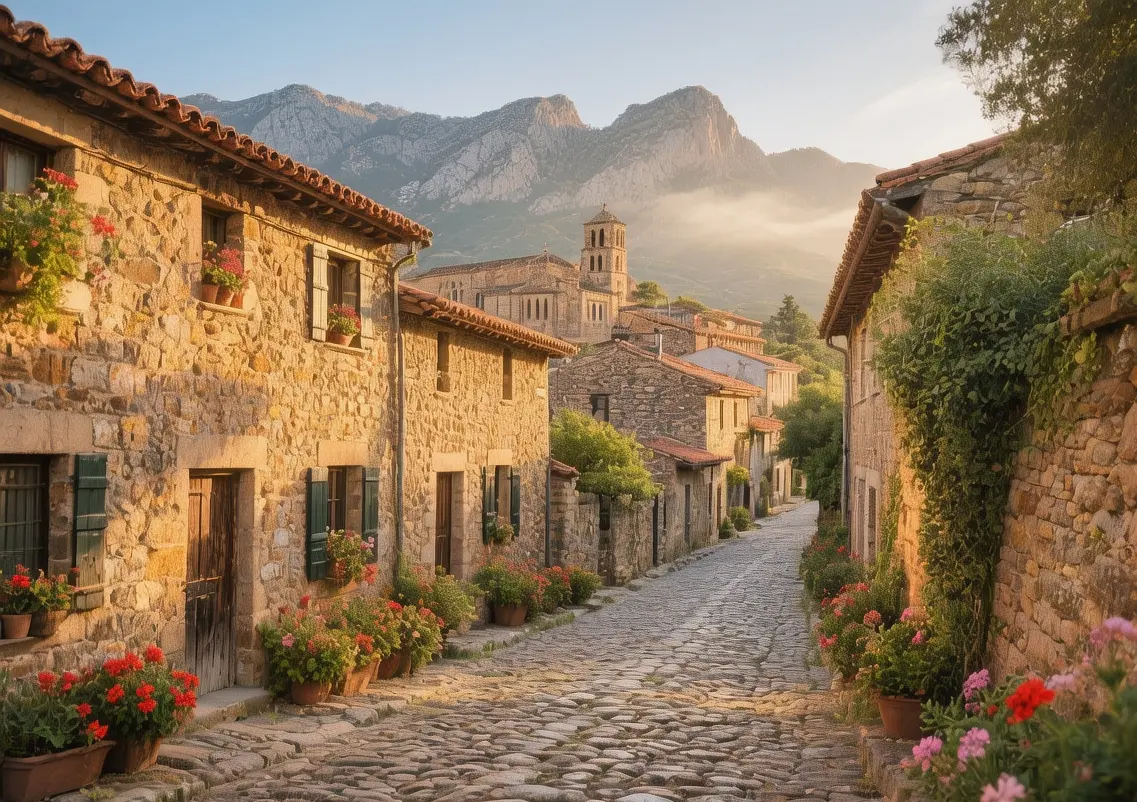
Valldemossa Village Golden Stone Meets Mountain Silence
The wind whispers through the cypress trees—a dry, rustling sound that has swept across the Valldemossa village for centuries. You stand on the cobblestones of Carrer de la Constitució, where the golden sandstone glows under the morning sun, 400 meters above the Mediterranean Sea. The air smells of wild thyme, old paper, and baking pastry; the distant sound of church bells mixes with the silence of the mountains that cradle the valley. This is not merely a tourist stop but a sanctuary of memory, where the Royal Charterhouse stands as a monument to a winter spent by Frédéric Chopin and George Sand in 1838. You trace the dry stone walls that terrace the slopes, feeling the weight of history in every block. In 2026, as overtourism threatens fragile mountain ecosystems, the Valldemossa village remains a testament to endurance—a place where the balance between heritage and nature is preserved in stone, demanding you tread lightly to respect the quiet that inspired the masters.
Why Valldemossa Village Embodies Mountain Heritage
The Valldemossa village represents the pinnacle of Mallorcan mountain culture, solving the critical need for a spiritual and agricultural hub in the rugged Serra de Tramuntana. Founded in the 13th century as a royal palace for King Sancho I, it was converted into a Carthusian monastery in 1399, shaping the village's layout around the religious complex. The architecture addresses a fundamental engineering challenge: how to build a permanent settlement on steep, unstable slopes. The solution lies in the marjades—terraced fields built using dry stone construction techniques that prevent erosion while capturing rainwater for olive and almond trees.
The cultural significance is anchored by the winter of 1838–1839, when composer Frédéric Chopin and writer George Sand stayed in Cell 4 and Cell 2 of the monastery. Their presence transformed the Valldemossa village from a remote religious site into a pilgrimage destination for artists and musicians. The monastery's cloisters, measuring 50 meters per side, are constructed from local limestone, creating a microclimate that remains cool in summer and mild in winter. This integration of geology, spirituality, and artistic history makes the village not merely a scenic spot but a living museum. The density of historical structures per square kilometer is unmatched in the Balearics, with every street telling a story of faith and creativity. This concentration of heritage makes it a pilgrimage site for culture lovers, where the evolution of mountain life is traced through the very stones that define the skyline.
The Best Time to Experience Valldemossa Village
For the optimal Valldemossa village visit, target April 15–June 10 or September 15–October 25, when temperatures range between 16–24°C (61–75°F) and the almond trees are either blooming or bearing fruit. The monastery opens at 9:30 AM daily; arrive at 9:15 AM to enter with the first group before tour buses converge from Palma. Late afternoon visits between 4:00–6:00 PM offer the best lighting for photography, though the monastery closes at 6:00 PM. Spring coincides with the Chopin Festival in July and August, causing accommodation prices to increase 40–60%; book lodging three months in advance if visiting during this period.
Avoid July 15–August 25 unless you tolerate extreme heat and crowds; temperatures regularly exceed 32°C (90°F), making the cobblestone streets radiate intense thermal energy. The narrow roads become congested with tour buses, and parking is nearly impossible. Winter months (December–February) bring mild weather (10–16°C / 50–61°F) but increased rainfall and the risk of fog on the mountain pass. Some shops reduce hours in low season; verify current status at www.valldemossa.net or contact the tourist office at info@valldemossa.net (+34 971 612 016). Weekday mornings typically see the lowest visitor density, allowing for clearer photography of the monastery without obstruction from large tour groups.
Approximate Budget for a 7-Day Trip (2026)
Valldemossa is one of Mallorca's more exclusive destinations, with prices reflecting its UNESCO status and limited supply. The following budget assumes mid-range comfort with a focus on culture and gastronomy, based on 2026 pricing with approximately 3.5% inflation from 2025 figures. Estimates include stays in the village or nearby Sóller for easy access to the Valldemossa village attractions.
- Accommodation: €150–€300 per night for a double room in an agroturismo or boutique hotel in Valldemossa; luxury fincas command €400–€800 per night
- Food: €50–€80 per day—breakfast €8–€12 (café con leche and ensaïmada), lunch €20–€35 (restaurant meal including sobrassada and salad), dinner €30–€50 (traditional Mallorcan stew and local wine)
- Transportation: Flight to Palma de Mallorca Airport: €100–€250 round-trip; rental car (essential for mountains): €50 per day; fuel: €60 total; public bus (Line 210 from Palma): €5 per ride
- Attractions: Royal Charterhouse Museum: €10; Chopin Museum: included; Mirador entrance: free; Train to Sóller: €25; Guided village tour: €20
- Miscellaneous: Royal Carthusian pastry: €2 per piece; local wine €10–€25 per bottle; hiking poles €20; artisan ceramics €40–€100; map guide €15
Total estimated cost for 7 days: €1,600–€2,600 per person (based on double occupancy; solo travelers should add 35–45% for single supplements)
7 Essential Valldemossa Village Experiences
- Visit the Royal Charterhouse: Explore the monastery where Chopin stayed. The cells are preserved with original furniture. Visit at 9:30 AM opening time to experience the silence before crowds obscure the view. The cloisters feature Gothic arches. Allow 90 minutes for the full tour. This is the anchor of the Valldemossa village; do not miss Cell 4.
- Walk the Stone Streets: Stroll the Carrer de la Constitució and surrounding alleys. The sandstone glows golden in the morning light. Visit at 10:00 AM when shops open. The streets are narrow and winding. It is the most atmospheric spot in the village; arrive early to avoid crowds in your shot.
- Taste the Royal Carthusian: Buy the traditional pastry at the monastery bakery. The recipe dates to the 19th century. Visit at 11:00 AM when they are fresh. The pastry is filled with cream and candied fruit. Cost is €2 per piece. It reveals the culinary heritage of the monks.
- Hike to Mirador de Ses Barques: Climb to the viewpoint overlooking the valley. The path takes 30 minutes from the center. Visit at 5:00 PM when the light is soft. The view extends to the sea. It is free to enter. This reveals the geographical context of the village.
- Explore the Parish Church: Visit the 13th-century church of San Bartomeu. The baroque altarpiece is striking. Visit at 12:00 PM when the light illuminates the interior. Entry is free. It anchors the religious life of the community. The architecture rivals Palma's.
- Attend a Chopin Concert: Experience music in the monastery courtyard. The acoustics are exceptional. Events typically start at 8:00 PM in summer. Tickets range €30–€50 depending on the venue. The atmosphere is intimate and passionate. Follow local listings for schedule updates.
- Drive the Ma-1130 Road: Navigate the winding mountain road from Palma. The engineering is spectacular, with hairpin bends. Visit at 9:00 AM before traffic builds. The view of the valley is panoramic. It demonstrates the human conquest of the landscape.
3 Hidden Gems Most Travelers Miss
- Cemetery of Valldemossa: Located uphill from the center, this small graveyard offers stunning views over the valley. Entry is free; open daylight hours. It is often overlooked as visitors focus on the monastery. The iron crosses are artistic. Contact: N/A. Visit late afternoon when the light is soft. The perspective allows you to see the village from above.
- Olive Oil Mill (Oli de Valldemossa): A 10-minute walk from the center, this family-run mill produces award-winning oil. Entry: €5; open 10:00 AM–6:00 PM. It is often overlooked by tourists rushing to the monastery. The tasting includes fresh bread. Contact: +34 971 612 016. Visit mid-morning when light illuminates the press. The perspective allows you to understand the agricultural economy.
- Path of the Dry Stone (GR 221): A section of the long-distance trail starts in the village. Entry is free; open 24 hours. It is often overlooked as visitors focus on sights. The engineering of the walls is visible. Contact: N/A. Visit early morning for hiking without crowds. The perspective allows you to see the labor involved in the terraces.
Cultural & Practical Tips
- Parking strategy: The Valldemossa village has limited parking. Use the designated lots at the entrance; do not park on narrow streets. Fines for violations can reach €100. Shuttle buses are available from parking areas to the center. Allow an extra 15 minutes to find a spot.
- Master these phrases: "Buenos días" (BWEH-nos DEE-as) for good morning; "Por favor" (por fah-BOR) for please; "¿Cuánto cuesta?" (KWAN-toh KWES-tah) to ask price; "La cuenta, por favor" (lah KWEN-tah) to request the bill.
- Photography guidelines: Tripods are allowed in public squares but not inside the monastery without permission. Drone usage is strictly prohibited over the village. Flash photography is discouraged inside religious sites. Respect privacy when photographing locals. Early morning offers the best light without crowds.
- Dress code: Shoulders and knees must be covered to enter the monastery and church. Security enforces this strictly. Fines for inappropriate dress can reach €50. Respect the sanctity of the space. Wear comfortable shoes for cobblestones.
- Hiking safety: Carry at least 1 liter of water per person. There are few sources on the trails. Wear sturdy boots with ankle support. The limestone is slippery when wet. Check weather forecasts; flash floods occur in gorges.
- Weather considerations: The mountains create their own microclimate; fog can roll in quickly. Bring layers even in summer. Winter temperatures can drop to 5°C (41°F) at night. Rain is common in November; the stone paths become slick when wet.
- Security awareness: While the area is safe, theft can occur from unlocked rental cars. Keep valuables out of sight. Do not leave bags on viewpoint access points. Allow an extra 15 minutes for parking in villages. Report suspicious activity to local police.
Conclusion: Travel with Reverence, Not Just Reverie
The Valldemossa village demands more than casual sightseeing—it asks for contemplation of the delicate balance between human heritage and natural grandeur. When you walk these streets in 2026, you're not merely visiting a destination; you're participating in a fragile ecosystem where stone walls, musical history, and sustainable tourism intersect in delicate balance.
Choose to engage deeply: respect the silence that inspired Chopin, support local artisans that maintain the traditions, and understand that this village is a living community, not just a backdrop. The Valldemossa village survives not as a theme park but as a cultural landscape—and its preservation depends on visitors who recognize the difference between appreciation and consumption.
Slow down. Sit on a terrace after the tour buses depart. Listen to the wind moving through the cypress trees. Watch the sunset paint the stone in shades of gold and violet. The village rewards those who approach it not as a checklist item but as a conversation between past and present—a dialogue between the monks of the 14th century and modern travelers that continues, like the seasons, in perpetual motion.