
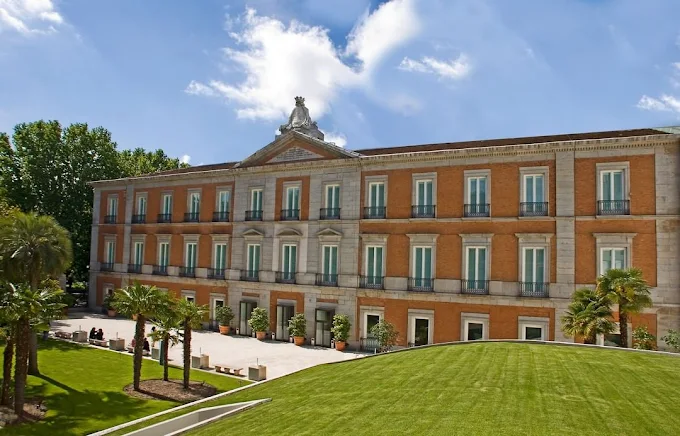
Thyssen-Bornemisza Museum, Madrid Private Collection Meets Public Grandeur
The morning light filters through the skylights of the Palacio de Villahermosa, illuminating dust motes that dance above a canvas painted by Degas in 1880. You stand in the Thyssen-Bornemisza Museum, Madrid, a neoclassical palace built in 1805, where the air smells of floor wax and old oil paint. The silence is profound—broken only by the soft shuffle of footsteps on polished stone and the distant hum of traffic from the Paseo del Prado. This is not merely a gallery but a former aristocratic residence, transformed in 1992 to house one of the world's most significant private art collections. You walk through rooms where Baron Hans Heinrich Thyssen-Bornemisza once lived, tracing the evolution of Western art from the 13th century to the late 20th. In 2026, as digital reproductions flood our screens, the Thyssen-Bornemisza Museum, Madrid remains a sanctuary of the original—a place where the brushstroke is tangible, and the presence of the artist feels immediate, demanding a slowness that the modern world rarely affords.
Why Thyssen-Bornemisza Museum Embodies Artistic Continuity
The Thyssen-Bornemisza Museum, Madrid represents the final piece of Madrid's "Golden Triangle of Art," solving the critical gap in art historical narrative left between the Prado and the Reina Sofía. While the Prado focuses on masters up to Goya and the Reina Sofía on modernism from Picasso onward, the Thyssen-Bornemisza Museum, Madrid fills the void with Impressionism, Expressionism, and 20th-century American art. The collection was assembled by the Thyssen family over three generations, finally finding a permanent home in the Palacio de Villahermosa in 1992 after negotiations with the Spanish state.
The building itself, designed by Rafael Moneo during the 1990 renovation, utilizes a sensitive restoration approach that preserves the 19th-century neoclassical facade while inserting modern gallery spaces internally. The main hall features a vaulted ceiling spanning 15 meters, supported by iron trusses that allow for natural light without UV damage. With over 1,600 paintings on display across 4,500 square meters, the museum functions as a visual encyclopedia of Western art. This concentration of diverse styles—from Gothic altarpieces to Pop Art—makes the Thyssen-Bornemisza Museum, Madrid not merely a repository but a narrative bridge, where the evolution of technique and vision is traced through the very canvases that defined the medium.
The Best Time to Experience Thyssen-Bornemisza Museum
For the optimal Thyssen-Bornemisza Museum, Madrid visit, target April 10–June 5 or September 20–November 15, when temperatures range between 15–25°C (59–77°F) and the light in the galleries is clearest. The museum opens at 10:00 AM Tuesday through Sunday; arrive 15 minutes before opening to enter with the first group, as school tours converge by 11:00 AM. Free entry hours—Mondays 12:00–4:00 PM—draw significant crowds; purchase tickets in advance to bypass queues. Sunset light through the western windows—specifically 5:00–6:30 PM in winter—creates dramatic shadows across the sculpture hall.
Avoid July 15–August 25 unless you tolerate heat and crowds; temperatures regularly exceed 35°C (95°F), making the queue outdoors uncomfortable despite air-conditioned interiors. The museum is busiest during Art Week (ARCO) in February; accommodation prices surge 40–60% during this period. Winter months (December–February) bring fewer tourists but shorter daylight hours for traveling to the site. Verify current exhibition schedules at www.museothyssen.org or contact the information desk at informacion@museothyssen.org (+34 917 911 370). Tuesday mornings typically see the lowest visitor density, allowing for contemplative viewing of the masterpieces without obstruction from crowds.
Approximate Budget for a 7-Day Trip (2026)
Madrid offers excellent value for cultural travelers, though costs fluctuate during major events like ARCO or San Isidro Festival. The following budget assumes mid-range comfort with a focus on local experiences, based on 2026 pricing with approximately 3.5% inflation from 2025 figures. Estimates include stays near the historic center for easy access to the Thyssen-Bornemisza Museum, Madrid.
- Accommodation: €80–€150 per night for a double room in a boutique hotel or renovated apartment in Centro, Sol, or Jerónimos neighborhoods; luxury options near the museum command €200–€400 per night
- Food: €45–€65 per day—breakfast €5–€9 (café con leche and churros con chocolate), lunch €15–€25 (menú del día including cocido madrileño, salad, and wine), dinner €25–€35 (tapas selection including calamari and jamón ibérico)
- Transportation: Train from Barcelona Sants to Madrid Atocha: €50–€80 high-speed AVE (2.5 hours); Metro single ticket: €1.50 or €18.50 10-trip pass; taxi from airport: €35 fixed rate; bike rental: €15 per day
- Attractions: Thyssen-Bornemisza Museum, Madrid entry: €13; Prado Museum: €16; Reina Sofía: €10; Retiro Park boat rental: €6; Royal Palace: €13
- Miscellaneous: Art books from €20; local wine €8–€20 per bottle; horchata drink €3; artisan leather goods €30–€70; guided museum tour €25
Total estimated cost for 7 days: €1,050–€1,450 per person (based on double occupancy; solo travelers should add 35–45% for single supplements)
7 Essential Thyssen-Bornemisza Museum Experiences
- View Van Eyck's Saint Francis: Enter Room 1 on the ground floor to face the Annunciation and Saint Francis Receiving the Stigmata, painted around 1430. The detail in the oil glaze is microscopic; stand 2 meters back to see the light refract through the layers. Visit at 10:00 AM opening time to experience the space before crowds obscure the view. The panels measure only 29 by 33 centimeters, yet contain immense detail. Allow 20 minutes to observe the texture of the saint's robe. This is the anchor of the early Netherlandish collection; do not rush past it.
- Explore the Impressionist Gallery: Walk through the rooms housing Monet, Renoir, and Degas on the second floor. The light in these galleries is calibrated to protect the sensitive pigments. Visit between 2:00–4:00 PM when lighting accentuates the brushwork. Les Meules by Monet demonstrates the study of light at different times of day. Audio guides explain the context of the French art market. This collection defines the transition to modernism.
- Examine Hopper's New York Office: Locate New York Office (1962) in the American Art section. The solitary figure gazing out the window captures urban isolation. Visit when sunlight streams through the windows to illuminate the glaze. The painting measures 102 by 152 centimeters. It demonstrates the realist tradition in 20th-century America. Do not touch the protective glass; oils damage the surface.
- Walk the Grand Staircase: Ascend the main staircase where natural light floods from the skylight above. The marble steps were restored in 1992 to match the original 19th-century design. Visit in late afternoon when the sun angles through the windows. The space connects the three floors of the palace. Entry is free in this section. This provides a peaceful retreat from the crowded painting halls.
- View Sorolla's Portrait: Find Young Woman at a Window by Joaquín Sorolla in the Spanish Art room. The light on the white dress is rendered with rapid, visible brushstrokes. Visit at 11:30 AM when the guide explains the Valencian light technique. The canvas measures 105 by 90 centimeters. It is one of the most popular works in the Thyssen-Bornemisza Museum, Madrid; allow 15 minutes to decode the imagery.
- Attend Temporary Exhibitions: During your visit, check the schedule for special shows in the ground floor halls. The museum hosts major retrospectives throughout the year. Tickets cost €13 and include the permanent collection. Events run during standard opening hours. The temperature is climate-controlled for loaned artworks. This experience emphasizes the museum's role as a research center. It appeals to serious viewers seeking new contexts.
- Trace the Renaissance Rooms: Walk through the galleries featuring Titian, Tintoretto, and El Greco. The wood-paneled walls mimic the atmosphere of a private collection. Visit at 1:00 PM when the light wells illuminate the staircases. The space houses 16th-century paintings and sculptures. The architecture itself is worth studying. It reveals the museum's ongoing evolution beyond the 18th-century core.
3 Hidden Gems Most Travelers Miss
- The Garden Courtyard: Located in the center of the palace, this interior garden features a fountain and orange trees. Entry is free; open 10:00 AM–6:00 PM. It is often overlooked as visitors focus on the paintings. The neoclassical arches surround the green space. Contact: +34 917 911 370. Visit early morning for private guided tours that access areas closed to general public. The connection tunnel allows seamless access from the museum.
- The Audio Guide Specific Tracks: Tucked in the digital menu, the "Masterpieces" track focuses on 20 key works often skipped by tourists rushing to the Impressionists. Entry included with ticket; open 10:00 AM–6:00 PM. It is quieter than the main halls. The commentary is deeper than the general overview. Look for the tracks on women artists. It provides context for the transition to modernism.
- Café Carmen: Located inside the museum under the Rotunda, this café features a terrace overlooking the garden. Entry requires museum ticket; open 10:00 AM–6:00 PM. It is often overlooked by tourists rushing to eat outside. The menu features traditional Spanish dishes at museum prices. Look for the ceiling details above the counter. It provides a restful pause without exiting the security perimeter. The coffee is superior to typical museum fare.
Cultural & Practical Tips
- Security checks: Expect airport-style security screening at the entrance. Large backpacks and suitcases are not permitted; use the left luggage facility at Atocha station or your hotel. Allow an extra 15 minutes for security processing during peak hours.
- Master these phrases: "Buenos días" (BWEH-nos DEE-as) for good morning; "Por favor" (por fah-BOR) for please; "Una entrada, por favor" (OO-nah en-TRAH-dah) to buy a ticket; "¿Dónde está el baño?" (DON-deh es-TAH el BA-nyo) to find the restroom.
- Photography guidelines: Flash photography is prohibited inside the museum to protect artwork. Tripods require special permission from the administration (+34 917 911 370). Mobile phones must be silenced. Respect "no fotos" signs in temporary exhibition areas.
- Free entry times: Mondays 12:00–4:00 PM offer free admission but draw large crowds. Arrive 45 minutes early to queue. Students under 25 and children under 18 enter free with ID all day. Seniors over 65 receive discounted rates (€8).
- Hydration strategy: Madrid's inland location means dry heat; carry a refillable water bottle. Public fountains (fuentes) are available in the Retiro Park nearby. The water is potable and sourced from local springs. You'll save €2–€3 daily and reduce plastic waste.
- Ticket strategy: Purchase tickets online at least 48 hours in advance during peak season (April–June, September–October). On-site queues can exceed 60 minutes. Combined passes with Prado offer savings. Verify times on the official website before arriving.
- Weather considerations: The museum offers climate control but queues are outdoors; wear a hat and sunscreen during summer months. Winter evenings can be chilly; bring a light jacket even if the day is warm. Rain is rare but possible in November; the stone surfaces become slick when wet.
Conclusion: Travel with Reverence, Not Just Reverie
The Thyssen-Bornemisza Museum, Madrid demands more than casual observation—it asks for contemplation of the layers of history embedded in every brushstroke, every frame, every gallery wall carved by hands long turned to dust. When you walk these halls in 2026, you're not merely touring a monument; you're walking through a fragile ecosystem of memory where private passion, public access, and modern tourism intersect in delicate balance.
Choose to engage deeply: hire a local guide from the Jerónimos neighborhood rather than a large tour company; purchase tickets directly to support preservation efforts; respect the silence of the halls that house national treasures. The Thyssen-Bornemisza Museum, Madrid survives not as a museum exhibit but as a living archive—and its preservation depends on visitors who recognize the difference between appreciation and consumption.
Slow down. Sit in the Garden Courtyard after the tour buses depart. Listen to the fountain water flowing through centuries-old channels. Taste the sweetness of a churro from a nearby café. The museum rewards those who approach it not as a checklist item but as a conversation across time—a dialogue between past and present that continues, like the light on the canvases, in perpetual motion.