
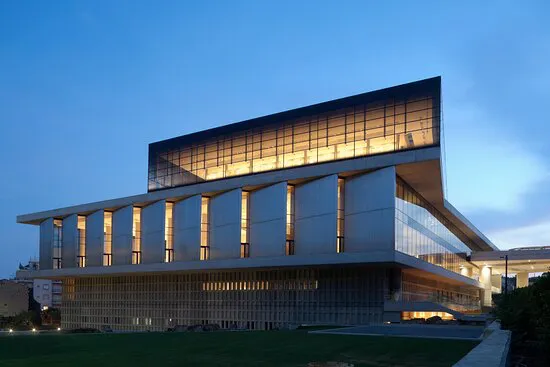
Acropolis Museum: Where Ancient Sculptures Meet Modern Architectural Light
The morning sun filters through floor-to-ceiling glass walls as you step into the Acropolis Museum, where 4,000 square meters of exhibition space cradle artifacts that once adorned the Parthenon's pediments and friezes. Beneath your feet, a glass floor reveals an ongoing archaeological excavation—2,500 years of Athenian history laid bare in stratified layers of pottery shards, marble fragments, and ancient foundations. The air carries the subtle scent of climate-controlled preservation mixed with the faint mineral tang of Pentelic marble. Above you, on the third floor, the Parthenon Gallery rotates slowly on motorized bearings, aligning its sculptures with the actual temple 280 meters away on the Acropolis hill. Natural light floods the space through automated louvers that adjust throughout the day, mimicking the exact illumination the ancient craftsmen intended when they carved these masterpieces. This is not merely a repository of antiquities; it is a dialogue between past and present, a architectural poem that solves the century-old problem of how to display the Parthenon's scattered treasures while advocating for their reunification. Standing before the Caryatids—six draped female figures bearing the weight of history on their shoulders—you understand: this museum matters because it gives voice to stones that have waited twenty-five centuries to tell their story.
Why the Acropolis Museum Embodies Architectural Innovation
The Acropolis Museum represents a revolutionary solution to a complex curatorial challenge: how to house and display the Acropolis's scattered artifacts while creating an unassailable argument for the repatriation of the Parthenon Marbles from London's British Museum. Designed by Swiss-French architect Bernard Tschumi and opened to the public in 2009, the 25,000-square-meter structure sits atop a seismic base of 100 triple friction pendulum bearings that allow the building to move independently during earthquakes—critical protection for irreplaceable artifacts in a seismically active region. The museum's three-level design follows a precise choreographic sequence: the ground floor slopes gently upward, mirroring the ascent to the Acropolis itself, while displaying Archaic period finds from the sanctuary's slopes.
The building's most audacious feature—the top-floor Parthenon Gallery—measures 68 meters long by 32 meters wide, matching the exact dimensions of the Parthenon's cella. This glass-enclosed space rotates on a precision motorized system, completing one full revolution every 24 hours, ensuring that each sculpture receives natural light from the same angle and intensity it experienced on the ancient temple. The gallery displays 480 square meters of frieze, 17 metopes, and 28 statues from the pediments, all positioned at the precise orientation they held in the original structure. The museum solved the fundamental problem of context: instead of isolating artifacts in sterile vitrines, it recreates their spatial relationships, allowing visitors to understand the sculptural program as an integrated narrative of Athenian religious and civic identity.
Built over the archaeological site of Roman and Byzantine Athens, the museum's pilotis (support columns) elevate the structure above ongoing excavations visible through glass panels in the entrance hall. The building uses 10,000 square meters of glass, 20,000 cubic meters of concrete, and 3,000 tons of steel, yet achieves a weight of only 1.2 tons per square meter—light enough to preserve the archaeological layers beneath while strong enough to withstand magnitude 7.0 earthquakes. This is architecture as advocacy: every design decision, from the building's orientation to the Parthenon Gallery's rotation, serves the dual purpose of preservation and persuasion, making the case that these sculptures belong in dialogue with the temple that inspired them.
The Best Time to Experience the Acropolis Museum
Timing your visit transforms the Acropolis Museum from crowded attraction to contemplative sanctuary. The optimal windows stretch from May 18–June 12 and September 15–October 20, when Athens temperatures hover between 18–25°C (64–77°F), and natural light in the Parthenon Gallery achieves that crystalline Mediterranean quality that reveals the marble's subtle color variations. During these shoulder seasons, visitor numbers remain manageable, allowing you to study the Caryatids and frieze panels without jostling crowds.
Arrive precisely at 8:00–9:00 AM when the museum opens—this golden hour delivers the softest light for photography, cooler temperatures for the walk from nearby hotels, and crucially, freedom from the tour groups that descend by 10:30 AM. The museum operates Tuesday through Sunday from 8:00 AM to 8:00 PM (April–October) and 9:00 AM to 5:00 PM (November–March), with Monday opening at 8:00 AM year-round. Last entry occurs 30 minutes before closing. Winter months (November–February) offer minimal crowds and dramatic overcast skies that create moody, contemplative lighting in the galleries, though temperatures drop to 10–13°C (50–55°F).
Avoid July 15–August 31 unless absolutely necessary: temperatures regularly exceed 32°C (90°F), cruise ship schedules create crushing midday crowds, and the combination of heat and humanity makes extended gallery exploration uncomfortable. Also skip Greek Orthodox Easter week, August 15 (Dormition of the Virgin), and major public holidays when domestic tourism swells visitor numbers. For the most current information on hours, ticket availability, and special exhibitions, always check the official museum website at www.theacropolismuseum.gr before your visit.
Approximate Budget for a 7-Day Trip
Athens remains one of Europe's most accessible cultural destinations, offering world-class museums and archaeological sites without the premium pricing of Paris or Rome. The following breakdown reflects mid-range travel—comfortable three-star accommodations, authentic taverna dining mixed with occasional upscale meals, and comprehensive museum visits—based on current pricing for a single traveler exploring the Acropolis Museum and surrounding treasures.
- Accommodation: €80–€150 per night in Plaka, Makrygianni, or Koukaki neighborhoods (€560–€1,050 total). Budget hostels start at €25; luxury boutique hotels with Acropolis views run €200+.
- Food: €45–€65 per day total. Breakfast: €5–€8 (Greek coffee €3, tyropita pastry €2.50, fresh orange juice €3). Lunch: €12–€18 (gyros pita €3.50–€4.50, Greek salad €8–€10, moussaka €12). Dinner: €20–€35 (grilled octopus €16, lamb chops €18, house wine €5/glass, baklava €6).
- Transportation: €35 total. Metro from airport: €9 one-way (€18 round-trip on Line 3). 5-day unlimited transit pass: €8.20. Occasional taxi rides: €10–€15 each.
- Attractions: €85 total. Acropolis Museum: €15 (€10 reduced). Acropolis combo ticket: €36 (includes Ancient Agora, Temple of Olympian Zeus, Roman Agora, Hadrian's Library, Kerameikos, and Lyceum). National Archaeological Museum: €12. Day trip to Cape Sounion: €20 including transport.
- Miscellaneous: €100 total. Water/snacks €5/day, museum guidebook €12, handmade jewelry €40–€80, olive oil soap €8, tips €20.
Total: €1,300–€1,600 for 7 days (excluding international airfare)
7 Essential Acropolis Museum Experiences
- Ascend through chronological layers: Begin at the ground floor's sloping gallery, which displays Archaic period sculptures (7th–5th century BCE) found on the Acropolis slopes. Notice the progressive refinement in marble carving technique—from the rigid kouros figures to the fluid drapery of the Kritios Boy. The upward slope mirrors your physical and temporal journey toward classical perfection. Allow 45 minutes for this foundational level.
- Contemplate the Caryatids in climate-controlled glory: On the second floor, encounter the six original Caryatids from the Erechtheion's south porch, displayed in a circular gallery that allows 360-degree viewing. These 2.3-meter-tall figures, carved around 420 BCE, bear the weight of the porch roof on their elaborately braided hair. Notice how each statue's weight-bearing leg creates subtle contrapposto, distributing 2.5 tons through classical engineering. The museum's humidity-controlled environment (55% relative humidity, 20°C) preserves the marble that outdoor exposure had nearly destroyed.
- Experience the Parthenon Gallery's 360-degree narrative: Ascend to the third floor and walk the exact perimeter of the Parthenon's frieze. The 160-meter continuous sculptural band depicts the Panathenaic procession with 350 human and 125 animal figures. Stand in the gallery's center as it rotates slowly, watching how natural light reveals different details throughout the day. The east pediment's surviving figures—Athena's birth from Zeus's head—occupy the eastern end, maintaining their original orientation.
- Study the glass floor excavations: Return to the entrance hall and descend the ramp to view the archaeological site beneath the museum. Through 1,200 square meters of glass panels, observe Roman baths, Byzantine streets, and early Christian basilicas excavated during construction. The stratified layers reveal 3,000 years of continuous habitation. Visit between 10:00–11:00 AM when angled sunlight illuminates the pottery sherds and foundation stones most dramatically.
- Photograph the Parthenon through glass: Position yourself at the Parthenon Gallery's south wall at sunset. Frame the actual temple on the Acropolis hill through the glass, creating a visual dialogue between the 2,500-year-old structure and its displaced sculptures. The museum's automated louvers adjust to prevent glare, but the golden hour (7:00–8:30 PM in summer) provides the most luminous conditions for this iconic composition.
- Explore the Archaic Gallery's color traces: On the ground floor's north side, examine sculptures under ultraviolet and raking light displays that reveal surviving polychrome pigment. The blue drapery on the Calf Bearer statue and red accents on the Moschophoros demonstrate that classical marble was originally painted in vivid colors. This challenges the modern perception of ancient sculpture as pure white—a misconception born from pigment fading over centuries.
- Dine with a view at the museum restaurant: The second-floor cafeteria features floor-to-ceiling windows overlooking the Acropolis slopes and the Parthenon. Order a Greek salad (€10) and sparkling water (€3) while watching the light change on the temple's marble. The restaurant operates 8:00 AM–6:00 PM and requires no museum ticket for access—ideal for a pre-visit coffee or post-visit reflection.
3 Hidden Gems Most Travelers Miss
- The Museum's Archaeological Excavation Tours: Beneath the museum's foundation lies an active archaeological site rarely included in standard visits. The excavation reveals a Roman-era neighborhood with streets, houses, and workshops destroyed during the Heruli invasion of 267 CE. Access: Special guided tours available Saturday and Sunday at 11:00 AM in Greek and English; booking required via email at info@theacropolismuseum.gr or phone +30 210 900 0900. Tours last 45 minutes and cost €5 additional to admission. The guide reveals pottery kilns, marble workshops, and a rare glimpse of ongoing conservation work.
- The Parthenon Gallery's Conservation Laboratory: Behind the public galleries, visible through glass walls, conservators work on restoring Acropolis fragments using laser cleaning and microscopic reconstruction techniques. Most visitors rush past these windows, but watching a conservator reattach a 2-centimeter marble fragment to a 2,500-year-old statue reveals the painstaking science of preservation. Access: Visible from the second-floor corridor between 10:00 AM–3:00 PM weekdays. No appointment needed, but conservators work quietly—observe without flash photography or loud conversation.
- The Museum Shop's Rare Publications: Beyond typical souvenirs, the ground-floor shop stocks limited-edition scholarly catalogs, high-resolution photographic prints of sculptures, and facsimile reproductions of frieze sections printed on archival paper. The museum's own publications—often available only here—include detailed studies of individual sculptures with 3D reconstructions. Access: Open during museum hours; ask staff for the "Acropolis Library" section. Prices range from €15 for small catalogs to €150 for comprehensive volumes. These make exceptional gifts for classical art enthusiasts and serve as lasting mementos of your visit.
Cultural & Practical Tips
- Photography etiquette: Personal photography without flash is permitted throughout the museum, but tripods and selfie sticks require special permission. The Parthenon Gallery's glass walls can create reflections—visit during early morning or late afternoon for clearest shots. Video recording for personal use is allowed, but commercial filming requires advance authorization from the museum's press office.
- Climate considerations: The museum maintains strict temperature (20°C/68°F) and humidity (55%) controls to preserve the marble. Bring a light sweater even in summer—the galleries feel cool after Athens' heat. The transition between outdoor and indoor environments can fog camera lenses; allow 5 minutes for equipment to acclimate.
- Accessibility features: The museum is fully wheelchair accessible with elevators serving all levels, tactile exhibits for visually impaired visitors, and wheelchairs available free at the entrance (advance reservation recommended: +30 210 900 0900). The sloping ground floor requires minimal effort, and all galleries feature benches for rest.
- Local phrases: Kalimera (kah-lee-MEH-rah) = Good morning; Efharisto (ef-hah-REE-stoh) = Thank you; Parakalo (pah-rah-kah-LOH) = Please/You're welcome; Signomi (see-GNO-mee) = Excuse me/Sorry. Museum staff speak excellent English, but Greek greetings earn warm smiles.
- Audio guide strategy: The museum offers audio guides in 12 languages for €5 (students €3). The 90-minute tour includes expert commentary on major sculptures and architectural history. Download the free museum app beforehand for supplementary content, or rent the guide at the entrance desk. The audio guide proves invaluable for understanding the Parthenon's sculptural program.
- Security and bag policy: Large backpacks and suitcases must be checked at the free cloakroom (maximum dimensions 40×30×20 cm for bags carried inside). All visitors pass through metal detectors; allow extra 15 minutes during peak hours. Water bottles are permitted, but food and drink are restricted to the restaurant area.
- Combined ticket strategy: Purchase the €30 Acropolis single ticket or €36 combo ticket before visiting the museum. While the museum requires separate admission (€15), visiting the actual Parthenon first provides essential context for the sculptures. Plan 3 hours for the Acropolis hill, then descend to the museum for another 2–3 hours of exploration.
Conclusion: Travel with Contemplation, Not Just Checklists
The Acropolis Museum demands more than a hurried walkthrough and a souvenir postcard—it asks for your patience, your curiosity, your willingness to stand before a weathered metope and imagine the hands that carved it, the beliefs that inspired it, the centuries that preserved it. When you trace the flow of the Panathenaic frieze with your eyes, following horsemen and maidens in their eternal procession, you participate in a ritual unchanged for twenty-five hundred years. This is not passive observation; it is active communion with human creativity at its most ambitious.
Responsible travel here means understanding that every artifact represents a fragment of cultural identity, every sculpture a piece of a larger narrative about who we are and where we come from. Move slowly through the galleries. Sit on the benches provided and simply look. Let the natural light reveal details that flash photography would obliterate. Support the museum's mission by purchasing your ticket, respecting the conservation guidelines, and sharing not just images but understanding when you return home.
This is not a warehouse of antiquities but a living argument for cultural continuity—a place where ancient Athens speaks directly to the modern world. The Parthenon Gallery's slow rotation reminds us that perspective shifts with time, that understanding deepens when we circle a subject rather than stare from a single angle. Take the time to complete that revolution. Let the sculptures reveal themselves gradually, as they have for centuries. The Acropolis Museum will still be here tomorrow, but your opportunity to see it with fresh eyes exists only in this moment. Choose presence over haste, wonder over completion, and carry not just photographs but transformation.