
Sarek Wilderness: Where Untamed Peaks Meet Ancient Sami Heritage
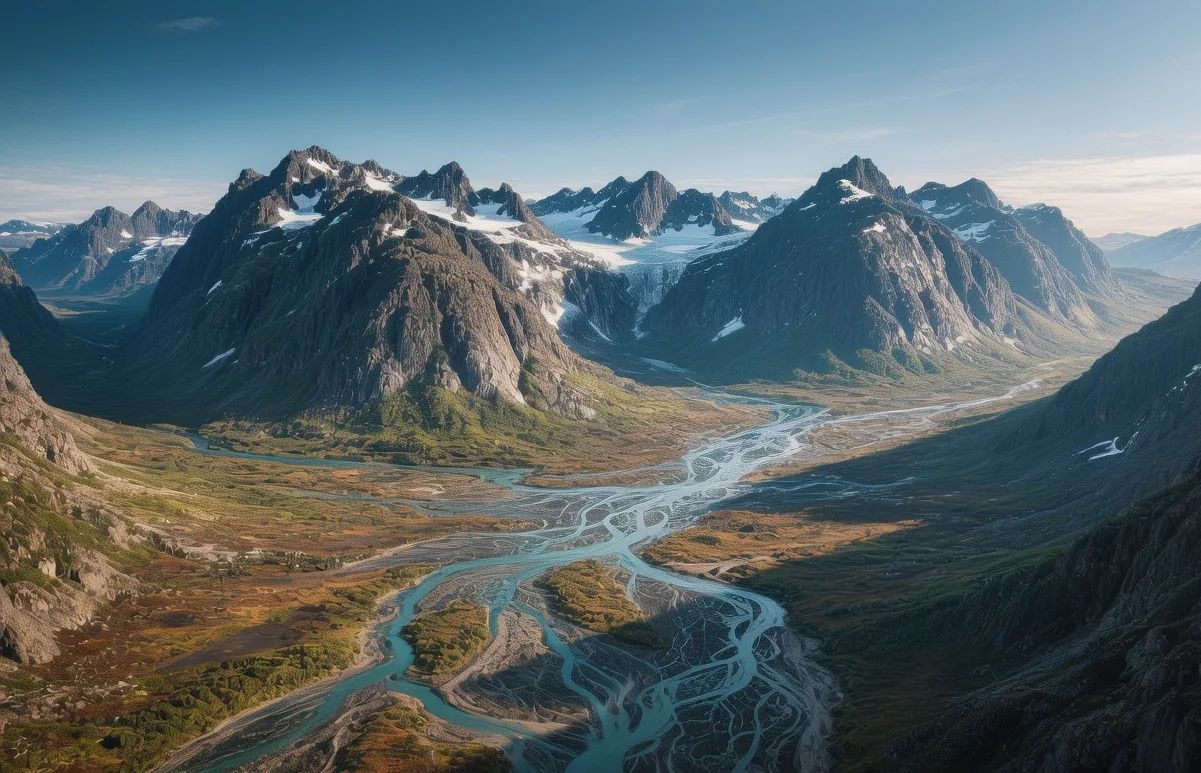
The dawn breaks over Sarek National Park not with a sunrise, but with a slow, golden unveiling—light spilling across nearly 100 glaciers that cling to six of Sweden's thirteen highest peaks. At 1,179 meters, the cliff face of Skierfe drops 700 meters straight into the Rapa River Delta, where glacial waters braid through willow islands in one of Europe's most spectacular natural displays. The air carries the crisp bite of Arctic winds—temperatures hovering between 9°C and 19°C (48°F–66°F) even in midsummer—while reindeer bells tinkle in distant valleys where the Sami people have herded their animals for millennia. This is not a park with marked trails or wooden boardwalks; it is Europe's last true wilderness, a 1,970 km² expanse where brown bears, wolverines, and lynx roam free, and where human presence is measured in footprints that vanish with the next snowfall. Sarek matters because it refuses to compromise—it demands respect, rewards courage, and preserves a primordial landscape that reminds us what the world looked like before we mapped every corner.
Why Sarek Embodies Pristine Wilderness
When the Swedish Parliament established Sarek National Park in 1909—making it one of Europe's first national parks—they preserved something far more significant than scenic beauty. This decision protected 1,970 square kilometers of high-alpine terrain where six mountains pierce the 2,000-meter threshold, crowned by Sarektjåkkå at 2,089 meters [[7]]. The park contains almost 100 glaciers, carving U-shaped valleys that tell stories written in ice over thousands of years. Unlike most protected areas, Sarek has no marked trails, no bridges across its raging rivers, no facilities whatsoever—only the raw geography that shaped this landscape since the last Ice Age.
The Sami people have lived in this territory from time immemorial, and since 2013, their reindeer husbandry rights have applied to the entire national park [[96]]. For them, Sarek is not a destination but a living landscape—critical calving grounds, migration routes, and sanctuary for their herds. This indigenous presence solves a fundamental problem in modern conservation: how to protect wilderness while honoring traditional land use. The Sami divide the year into eight seasons, each with specific names and purposes, creating a sophisticated calendar that modern meteorology struggles to match [[37]].
From an ecological perspective, Sarek functions as a keystone habitat for Scandinavia's largest predators. Brown bears, Eurasian lynx, and wolverines—all critically important to maintaining ecological balance—find refuge here alongside Europe's largest moose and the endangered Arctic fox [[67]][[70]]. The Rapa River Delta, visible from Skierfe's summit, represents one of the continent's most pristine river systems, where glacial meltwater creates constantly shifting channels that support rich biodiversity [[83]]. This is wilderness not as a museum exhibit, but as a functioning ecosystem where natural processes unfold without human interference.
The Best Time to Experience Sarek
Timing your visit to Sarek National Park requires understanding that this Arctic wilderness operates on extremes. For hikers seeking accessible conditions, the window is narrow but glorious: July 1 through September 15 offers the most reliable weather, with daytime temperatures ranging from 10°C to 20°C (50°F–68°F) [[40]]. July brings the midnight sun—hiking at 11:00 PM under golden light becomes not just possible but magical—while average temperatures hover around 14°C (57°F), with highs reaching 19°C (66°F) and lows dipping to 9°C (48°F) [[35]][[42]].
For winter enthusiasts, March 15 through April 30 provides optimal conditions for ski expeditions, with average daytime temperatures around –12°C (10°F) and the possibility of dropping to –27°C (–17°F) on the coldest nights [[41]]. The polar night has passed, daylight returns, and the landscape transforms into a crystalline dreamscape perfect for silent ski touring.
Avoid these periods: Late September through November brings unpredictable storms and early snowfall that can trap unprepared hikers. May and June present dangerous river crossings as glacial melt swells the Rapa and its tributaries to impassable levels. December through February offers only 2–3 hours of twilight—beautiful but impractical for most visitors.
For official information and current conditions, consult the park authorities at www.sverigesnationalparker.se [[7]]. The Swedish Tourist Association also maintains excellent resources for planning your expedition through this challenging terrain [[3]].
Approximate Budget for a 7-Day Trip
Traveling to Sarek Wilderness requires budgeting for remote Arctic logistics. The following estimates assume a moderate travel style—using mountain stations and hostels rather than luxury hotels, preparing your own meals, and relying on public transportation. Prices are in euros (€) based on current exchange rates (approximately 11 SEK = €1).
- Accommodation: €70–€140 per night
- STF mountain stations (Saltoluokta, Kvikkjokk): €70–€80 per night for basic rooms [[111]]
- Hotels in Jokkmokk: €130–€160 per night for standard double rooms [[129]][[130]]
- Wild camping: Free (Allemansrätten—freedom to roam)
- Food: €30–€50 per day
- Breakfast: €5–€8 (oatmeal, coffee, bread from mountain station)
- Lunch: €10–€15 (packed sandwiches, energy bars, dried fruit)
- Dinner: €15–€27 (pasta with vegetables, canned fish, or mountain station meal)
- Mountain station dinner: €25–€30 for hot meal
- Transportation: €120–€180 total
- Train Stockholm to Boden/Murjek: €80–€120 (overnight sleeper)
- Bus 94 Murjek to Kvikkjokk: €25–€35 each way [[107]]
- Local buses in Jokkmokk area: €15–€20
- Attractions & Equipment: €100–€200
- STF membership (optional but recommended): €25/year (provides €10/night discount)
- Map and compass: €30–€40 (essential—no marked trails in Sarek)
- Emergency equipment rental: €50–€100 (satellite communicator, bear spray)
- Guided tour (optional): €400–€800 for 5–6 days with Jokkmokkguiderna [[53]]
- Miscellaneous: €50–€100
- Sami duodji (handicraft) souvenirs: €20–€50
- Shower facilities at mountain stations: €5–€8 per use
- Emergency supplies and first aid: €20–€30
Total for 7 days: €800–€1,300 per person (excluding international flights to Sweden)
7 Essential Sarek Experiences
- Climb Skierfe for the Rapa River Delta Vista: This 16-kilometer round-trip hike from STF Aktse Mountain Cabin delivers one of Europe's most photographed landscapes. Start at 6:00 AM to avoid afternoon clouds; the 1,179-meter summit rewards you with a 700-meter vertical drop to the braided Rapa River Delta below. Allow 6–8 hours total, carrying plenty of water—there are no facilities on the trail [[92]][[93]].
- Cross the Rapadalen Valley: Enter the heart of Sarek by traversing this magnificent delta where the Rapa River splits into countless channels. Wade through icy glacial streams (knee-deep in July), watching for Europe's largest moose grazing among willow islands. This is wilderness navigation at its purest—no bridges, no markers, just you and the landscape [[77]][[82]].
- Witness the Midnight Sun from a Mountain Ridge: Between June 15 and July 10, hike at 11:30 PM along any high ridge—Pårtejekna or Sarektjåkkå offer spectacular vantage points. The sun hovers on the horizon, casting golden light across glaciers while Arctic flowers bloom at your feet. Bring a tripod for photography; the light remains constant for hours [[49]].
- Track Wildlife in Sarvesvágge Valley: This valley where Sarvesjåkkå meets Rapadalen concentrates wildlife—brown bears, wolverines, lynx, and those unusually large Sarek moose. Move quietly at dawn (3:00–5:00 AM during summer), scanning hillsides with binoculars. Maintain 200+ meters from bears; carry bear spray and make noise in dense vegetation [[68]][[69]].
- Experience Sami Reindeer Herding Culture: Visit the Laponia entrance in Huhttán/Kvikkjokk to learn about the Sami people's millennia-old relationship with this landscape [[8]]. If fortunate, you'll encounter reindeer herders during summer migration (late June–July)—always ask permission before photographing, and never approach the herds directly [[96]][[99]].
- Navigate the Kungsleden Trail Section: Hike the Saltoluokta to Kvikkjokk stretch of Sweden's famous King's Trail—approximately 75 kilometers through terrain bordering Sarek's eastern edge. This 5–7 day trek passes mountain stations every 15–20 kilometers, offering shelter and supplies while maintaining wilderness character [[124]][[126]].
- Camp Beneath the Northern Lights: Visit in late August or September (after August 20) when darkness returns. Set up camp away from mountain stations, lie on reindeer lichen carpets, and watch auroras dance above peaks. Temperatures drop to –5°C to 5°C (23°F–41°F)—bring a –10°C rated sleeping bag minimum [[46]].
3 Hidden Gems Most Travelers Miss
- Biellorieppe's Hidden Cirque: This lesser-known 1,609-meter peak in Sarek's northwestern corner features a glacial cirque that few visitors explore. Access: From Pårte Mountain Cabin, head northwest for 12 kilometers (4–5 hours). The cirque holds snow year-round and offers solitude even in peak season. Insider tip: Visit in early September when autumn colors paint the tundra gold and crowds have dispersed.
- Laitaure Delta's Eastern Channels: While everyone photographs the main Rapa Delta, the eastern channels where the river meets Lake Laitaure create equally stunning patterns with zero visitors. Access: Requires boat crossing from Saltoluokta (contact Sáltoluokta Sámi village for transport, approximately €50–€80). Insider tip: Low water levels in late August reveal sandbars perfect for wild camping with panoramic views.
- Stuor Rápa's Source Glacier: Few hikers venture to the actual glacial source of the Rapa River system. Access: From Skierfe, continue west for 18 kilometers through Rapadalen (full day hike). The glacier tongue calves into a turquoise proglacial lake. Insider tip: This requires glacier travel equipment and experience—consider hiring a guide from Jokkmokkguiderna (€200/day) [[53]].
Cultural & Practical Tips
- Respect Allemansrätten (Freedom to Roam): Sweden's right of public access allows wild camping and foraging, but with responsibility: camp at least 150 meters from inhabited houses, never disturb reindeer or Sami infrastructure, and leave no trace.
- River Crossing Safety: Glacial rivers swell dramatically in morning hours (8:00 AM–2:00 PM) as ice melts. Cross early (before 8:00 AM) or late evening (after 8:00 PM) when water levels drop. Unbuckle backpack straps before crossing—hypothermia kills within minutes in 4°C (39°F) water.
- Sami Language Basics: Learn these respectful greetings: "Buerie biejjije" (BOO-rieh BYE-yee-yeh) = Good day; "Giitu" (YEE-too) = Thank you. The Sami are not a tourist attraction—they're working reindeer herders maintaining ancient traditions.
- Bear Safety Protocol: Sarek has Sweden's highest brown bear density. Make noise in dense vegetation, never approach cubs, carry bear spray (available in Jokkmokk for €35), and store food 100 meters from your tent. If you encounter a bear: speak calmly, back away slowly, never run.
- Weather Preparedness: Arctic weather changes in minutes. Even in July, pack: waterproof jacket and pants, insulated layers (temperatures drop to 2°C/36°F at night), warm hat and gloves, and emergency shelter. Check forecasts at Swedish Meteorological Institute (smhi.se) before entering.
- Navigation Requirements: No marked trails exist inside Sarek. Essential gear: detailed topographic maps (BD10 Sarek scale 1:100,000), compass (and knowledge to use it), GPS device with spare batteries. Download offline maps—cell coverage is nonexistent.
- Photography Etiquette: Never photograph Sami people or reindeer camps without explicit permission. Drone use requires permission from Länsstyrelsen (County Administrative Board). Golden hour lasts 3+ hours during midnight sun—plan shoots accordingly.
Conclusion: Travel with Reverence, Not Just Conquest
Sarek Wilderness does not yield its secrets easily—and that is precisely its gift. In an age where every corner of Earth appears on Instagram within hours of discovery, Sarek remains stubbornly, beautifully resistant to casual tourism. It asks you to carry your own shelter, navigate your own route, accept that rivers may block your path for days, and understand that turning back is sometimes the wisest summit. This is not a park designed for comfort; it is a landscape designed for transformation.
When you stand on Skierfe's edge, watching the Rapa River braid through valleys where Sami herders have moved reindeer for a thousand years, you participate in something larger than adventure tourism. You witness a functioning ecosystem where predators still hunt, glaciers still carve, and indigenous culture still thrives. The question is not whether Sarek will change you—it is whether you will leave it unchanged.
Travel here with reverence. Pack out every gram of waste. Step lightly on tundra that took centuries to grow. Listen more than you speak. And when you finally emerge from those mountains, dusty and exhausted, carrying memories of midnight sun and silent valleys, you will understand that Sarek did not need your visit—but you desperately needed Sarek.