
Aveiro Canals: Where Moliceiro Elegance Meets Lagoon Tides
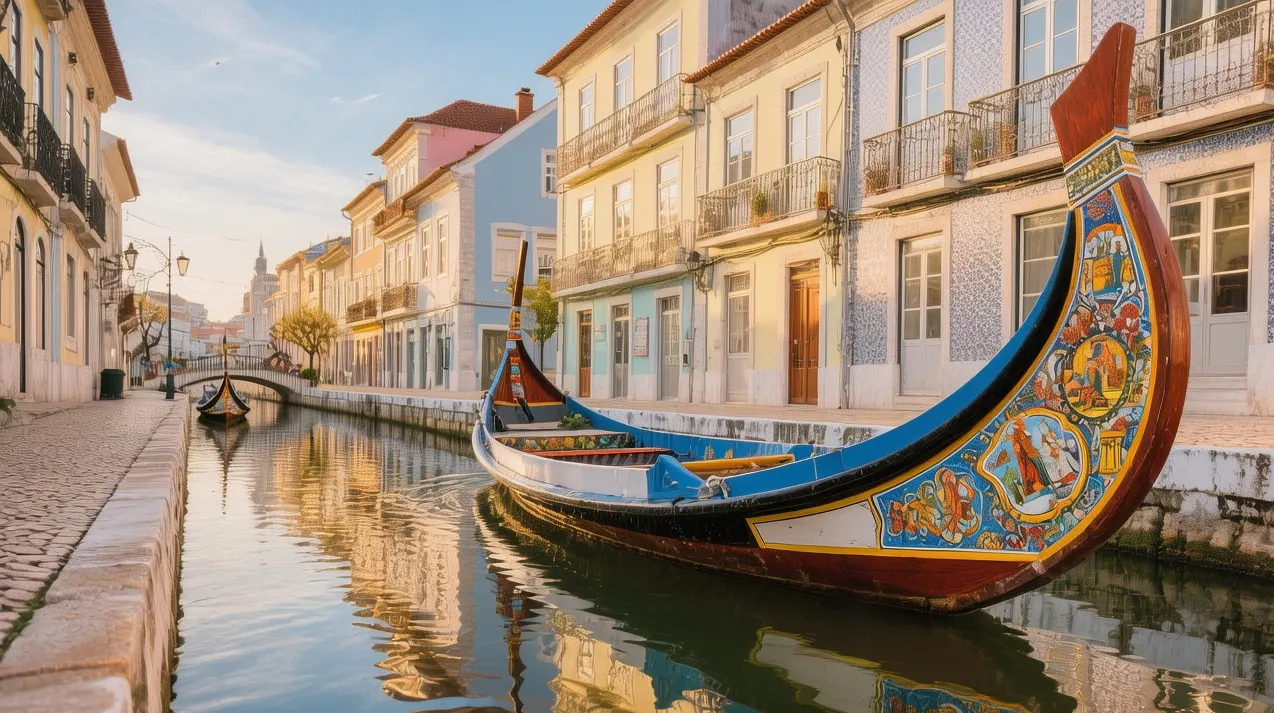
Late afternoon light spills like liquid amber over the Aveiro canals, fracturing into a thousand rippling shards against the painted wooden hulls of passing moliceiro boats. The air carries a briny tang from the nearby Ria de Aveiro—a vast coastal lagoon stretching 45 kilometers (28 miles) parallel to the Atlantic—mixed with the faint, sweet aroma of caramelized egg yolk from nearby confectioneries. Water laps rhythmically against the ancient granite embankments. You stand on the Praça do Peixe, watching gondola-like vessels glide past facades adorned with glazed ceramic tiles that chronicle the city's maritime dominance since the 15th century. The canals slice through the grid-patterned streets with geometric precision. This network of waterways matters because it preserves a living, breathing connection to a time when Aveiro served as a bustling ocean port, ensuring that the soul of Portugal’s fragile maritime heritage remains vividly, tangibly alive rather than relegated to a museum display.
Why Aveiro Canals Embody Maritime Elegance
The Aveiro canals represent a masterclass in hydraulic resilience, born from a desperate 19th-century engineering battle against the encroaching sea. Following a catastrophic storm in December 1808, the natural sandbar separating the Ria lagoon from the Atlantic Ocean closed entirely. The lagoon's water levels plummeted; fish populations collapsed; the city's economic lifeblood drained away into the mudflats. To save Aveiro from ruin, the Portuguese government commissioned a radical artificial inlet project, which engineers completed in 1861 under the direction of João Carlos de Sousa. This infrastructure did not just open the ocean; it spawned an intricate network of urban canals—stretching over 5.5 kilometers (3.4 miles) through the city center—dredged precisely to a depth of 3 meters (10 feet) to accommodate shallow-draft cargo vessels. The waterways solved a profound logistical problem, replacing chaotic, muddy overland transport with a sleek aquatic highway. The engineering relied on a complex system of sluice gates and tidal locks to regulate saline flow, preventing further silting. Today, these channels stand sentinel to adaptive urbanism, their granite walls seamlessly integrating with the ornate Art Nouveau buildings that rose during Aveiro's subsequent Belle Époque wealth boom fueled by the booming salt trade.
The Best Time to Experience Aveiro Canals
To witness the Aveiro canals in their most authentic, undisturbed state, plan your visit between April 15 and May 30. During this narrow window, the surrounding estuary blooms with wild sea lavender, and temperatures remain a comfortable 17°C–23°C (63°F–73°F)—ideal for extended walks along the water’s edge without overheating. Arrive at the Central Canal precisely between 8:30 and 10:00 AM. At this hour, the water lies perfectly still, offering mirror-like reflections of the pastel facades, and the local fishermen are still out checking their armações (traditional fish traps). You should aggressively avoid July 15 through August 25; summer holidays push daytime temperatures to an oppressive 30°C (86°F), and the main canals become congested with a continuous stream of motorized tourist boats, erasing any sense of historical tranquility. For live updates on canal water levels, municipal festivals,
Approximate Budget for a 7-Day Trip
Estimating costs for a cultural immersion along the Aveiro canals requires factoring in the city’s highly favorable position as an affordable alternative to Lisbon. The following budget reflects a mid-range traveler prioritizing authentic experiences and local cuisine over luxury amenities.
- Accommodation: €60–€90 per night (a charming, tile-facade guesthouse in the historic Beira Mar district, featuring canal views and traditional Portuguese breakfasts)
- Food: €40 per day (Breakfast €4 for a strong bica espresso and a crusty torrada at a riverside café; Lunch €12 for a hearty bowl of caldo verde and a grilled sardine bica; Dinner €24 for tripas à moda de Aveiro—a rich local tripe stew—paired with crisp Vinho Verde at a family-run tasca)
- Transportation: €18 total (€1.50 per ride on the urban Bus Line 12 connecting the train station to the canal district; €4.50 round-trip on the comboio regional train to the nearby coastal village of Costa Nova)
- Attractions: €20 total (€10 for a 45-minute traditional moliceiro boat ride; €5 for the Museu de Aveiro housed in a former convent; €0 for the Cathedral of São Domingos)
- Miscellaneous: €30 (hand-painted ceramic plates depicting moliceiro boats from the Arte Nova district, premium tins of local flor de sal, and fresh ovos moles from a convent pastry shop)
Total: €488–€628
6 Essential Aveiro Canals Experiences
- Ride a Traditional Moliceiro Boat: Board one of these iconic, gondola-like vessels from the docks near the Monument to the Dead of the Great War. Measuring exactly 15 meters (49 feet) in length, the boat features a curved, upward-sweeping bow and stern. As the boatman pushes with a long wooden pole, run your fingers along the low gunwales and examine the exuberant, painted panels depicting romantic scenes, satirical jabs at neighbors, and folkloric motifs unique to each vessel.
- Walk the Ria de Aveiro Wooden Boardwalks: Depart from the urban center and follow the elevated wooden walkways winding through the salt marshes. Arrive by 6:30 AM to witness the estuary blanketed in a thick, ethereal mist. Listen to the rhythmic call of black-winged stilts and observe the exposed mudflats glistening in the early light as the tide retreats toward the Atlantic.
- Taste Ovos Moles de Aveiro: Visit the historic Confeitaria Peixinho or the stalls near the fish market to purchase this delicate convent dessert. Made strictly from egg yolks and sugar, it is encased in thin, crisp communion-like wafers shaped into fish and seashells. The texture is intensely smooth, dissolving on the tongue with a rich, sweet density that reflects the region's monastic pastry traditions.
- Photograph the Art Nouveau Facades: Stroll along Rua Nova and Rua José Estêvão between 10:00 and 11:30 AM. The angled sunlight perfectly highlights the floral ceramic tiles, wrought-iron balconies, and sinuous stonework of these early 20th-century bourgeois mansions, which wealthy salt merchants built to flaunt their booming economic status.
- Cross the Ponte La Salette: Walk to the center of this elegant, iron-framed pedestrian bridge spanning the Central Canal. Looking west, you capture a cinematic convergence: the blue-and-white spire of the La Salette Church rising directly above the shimmering water, flanked by rows of brightly painted moliceiros bobbing gently at their moorings.
- Explore the Troncalhada Salt Pans: Rent a bicycle and ride two kilometers (1.2 miles) south of the center to the Salinas de Troncalhada. Stand on the narrow earthen levees separating the geometric crystallization ponds. If visiting between June and September, you will see the stark white pyramids of freshly harvested salt glowing brilliantly against the green marsh grass.
3 Hidden Gems Most Travelers Miss
- Canal de São Roque: Located one kilometer (0.6 miles) northeast of the main tourist hub, this narrow, residential waterway is overlooked simply because no commercial boat tours navigate its quiet length. To access it, walk past the Mercado Manuel Firmino and follow the cobblestone path along the water. Here, you will find locals tying up small dinghies and laundry lines strung across the canal. It offers an authentic glimpse into the daily, functional relationship residents still maintain with the water. Visit in the late afternoon when the low sun casts long shadows over the peeling pastel walls.
- Casa do Capitão-Mor: Situated in the Beira Mar neighborhood, this 18th-century aristocratic residence is missed because its narrow street entrance is easily mistaken for a private apartment block. To visit, ring the bell at Rua Visconde de Molelos 10; entry costs €3 and requires an appointment by calling +351 234 423 019. Inside, the house preserves original period furniture, but the true highlight is the secluded interior courtyard featuring an intricate Manueline window rescued from a demolished chapel.
- Ponte dos Carcavelos: An unassuming, low-arched stone bridge crossing a minor irrigation channel near the university district. It is entirely ignored by tourists fixated on the grand iron bridges downtown. Reach it by walking fifteen minutes south along the Ria from the Forum Aveiro mall. The bridge offers a stunning, unobstructed view of the sunset reflecting off the vast, open expanse of the lagoon, completely free of architectural clutter. Bring a blanket to sit on the grassy bank; the optimal viewing time is exactly 8:45 PM in early June.
Cultural & Practical Tips
- Remain seated and centered during your moliceiro ride; these historic wooden boats possess a high center of gravity, and standing to take photographs shifts the weight, which boatmen strongly discourage for safety reasons.
- Master a few essential Portuguese phrases: say "Bom dia" (good morning, pronounced "bom dee-ah") when entering shops, and use "Obrigado" (thank you, pronounced "oh-bree-gah-doo") when concluding your purchases.
- Drones are strictly prohibited over the Ria de Aveiro without a special permit from the Instituto da Conservação da Natureza; the lagoon is a heavily protected Natura 2000 habitat for migratory birds, and violations carry steep fines.
- Pack a windbreaker regardless of the season; the Nortada—a persistent, cooling Atlantic wind—sweeps through the canal corridors unpredictably, dropping perceived temperatures by several degrees even on sunny afternoons.
- Eat ovos moles by hand, allowing the delicate sugar wafer to dissolve on your tongue; using a metal fork crushes the fragile shell and disrupts the intended texture contrast between the crisp exterior and soft filling.
- Exercise extreme caution along residential canal edges, particularly in the Beira Mar district; many stretches lack protective guardrails, and the ancient granite embankments feature steep, slippery drops directly into the water.
Conclusion: Travel with Reverence, Not Just Recreation
The Aveiro canals demand more than a passive, camera-ready glance; they require a mindful participation in a fragile ecosystem. When you choose to linger by the water’s edge—watching the tide dictate the rhythm of the city instead of rushing to the next photo opportunity—you honor the delicate balance between human engineering and natural tidal forces. Mindful travel here means recognizing that these waterways are not a theme park, but a living, working estuary that sustains local birdlife, traditional salt harvesters, and the cultural identity of the community. By supporting local artisans, respecting the protected marshlands, and taking the time to learn the history behind the painted moliceiro prows, you actively contribute to the preservation of Aveiro’s unique heritage. Let the slow, meandering current of the canals remind you that the most profound travel experiences rarely occur at a sprint. In a coastal city defined by the gentle push and pull of the tides, the greatest luxury you can afford yourself is the grace to simply slow down.