
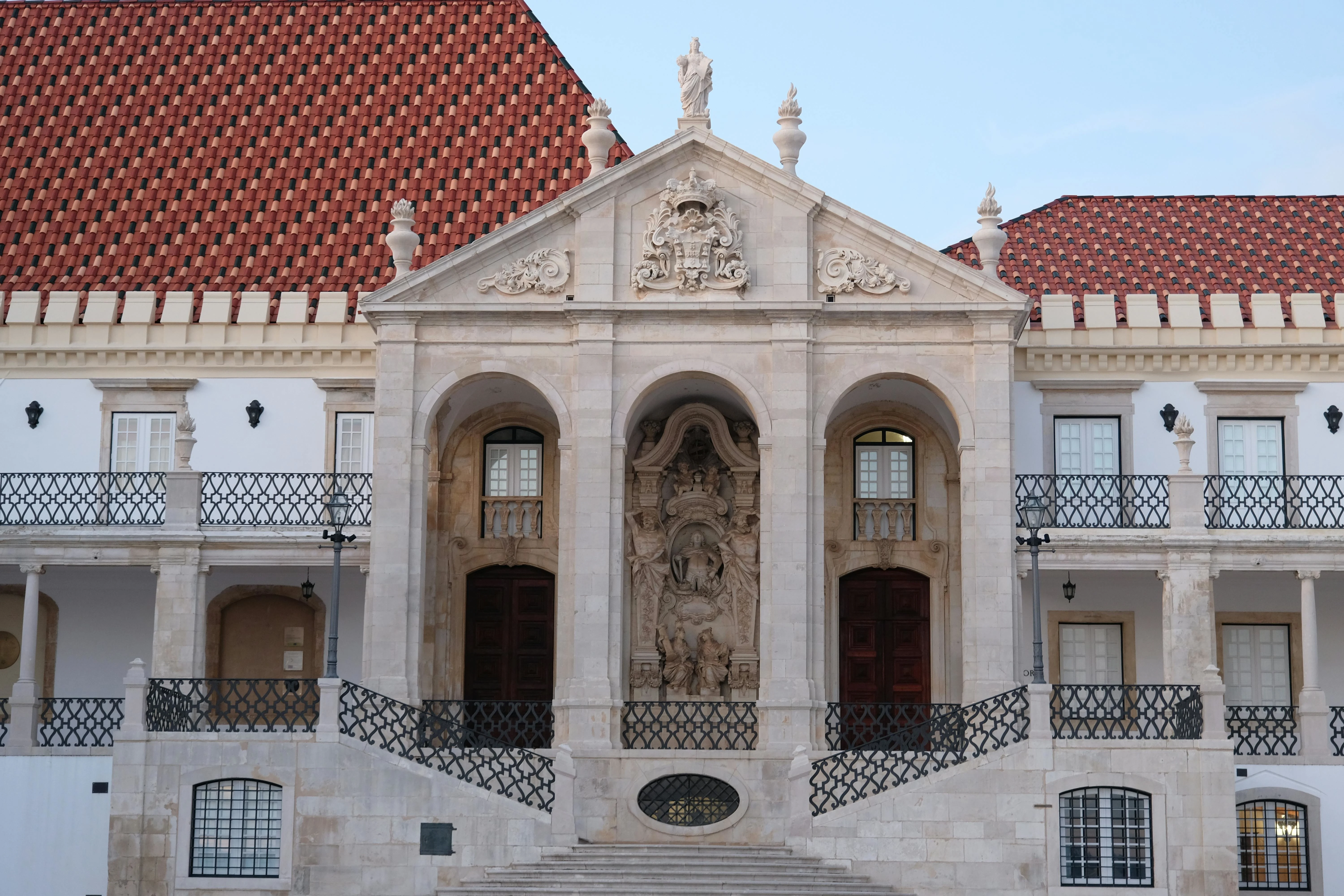
Coimbra University: Where Baroque Majesty Meets Mondego River Views
Dusk settles over the Mondego River, casting a bruised violet light across the soaring limestone facade of the Paço das Escolas. You stand in the sprawling Largo da Porta Férrea, where the rhythmic crunch of gravel underfoot echoes against imposing eighteenth-century archways. The air smells faintly of aged cedar and old parchment—a scent that seems to emanate directly from the hallowed halls towering above. Rising 34 meters (112 feet) into the sky, the massive bell tower, known locally as A Cabra, commands the skyline; its dark silhouette cuts a sharp, uncompromising figure against the fading light. Founded over seven centuries ago, this is not merely a campus but a fortified citadel of Portuguese identity. Coimbra University matters because it serves as the living, breathing repository of a nation's intellectual soul, preserving centuries of academic tradition, architectural brilliance, and melancholic Fado within its ancient, weathered walls.
Why Coimbra University Embodies Intellectual Majesty
Coimbra University embodies intellectual majesty because it was explicitly engineered to centralize and protect Portuguese knowledge during a period of intense political instability. Originally established in Lisbon in the late thirteenth century by King Dinis I, the institution was permanently relocated to Coimbra in the mid-sixteenth century under King João III. This strategic move solved the persistent problem of excessive royal interference in the capital by isolating scholars in the country's historic religious heartland. The crown commissioned architect Diogo de Castilho and later the German master João de Ruão to transform the former medieval Royal Palace into a monumental seat of learning. The most staggering technical achievement of this era is the Biblioteca Joanina, constructed over an eleven-year period in the early eighteenth century. Built to house the vast, sensitive collections of King João V, the library solves the critical problem of manuscript preservation in a notoriously humid climate. Its exterior walls measure 2.1 meters (7 feet) thick, creating a massive thermal mass that insulates the interior. Inside, the 60,000 volumes rest in oak shelves treated with an ingenious mixture of lard, cinnamon, and clove oil—an organic, centuries-old chemical treatment that actively repels insects. The three grand halls span 70 meters (230 feet) in total length, featuring intricate Baroque trompe-l'œil ceilings painted by Italian masters Simões Ribeiro and Vicente Nunes. Every architectural element functions as a defensive mechanism, ensuring the survival of fragile human thought against the relentless decay of time.
The Best Time to Experience Coimbra University
To experience Coimbra University at its most evocative, plan your visit between October 12 and November 5. During this precise window, the academic term has just commenced, filling the courtyards with students clad in their traditional black capes, while the surrounding Mondego valley erupts in autumnal copper and gold. Temperatures are ideally mild, hovering between 16°C and 20°C (61°F–68°F), allowing for comfortable exploration of the steep, cobbled university hill. Arrive at the main entrance precisely between 9:00 and 10:30 AM. At this hour, the morning light angles perfectly through the Baroque arches of the Via Latina, and the Joanina Library tours remain uncrowded, allowing you to hear the distinct, echoing creak of the ancient oak floors. You should firmly avoid July 15 through August 25; summer holidays drain the campus of its vital academic energy, turning the historic halls into stagnant tourist corridors where temperatures routinely exceed 33°C (91°F). For current ticket reservations, faculty access updates, and seasonal closure schedules, consult the official municipal tourism portal at https://www.uc.pt/. Checking this resource ensures you secure a guided slot for the restricted library chambers and experience the campus as a living institution rather than an empty museum.
Approximate Budget for a 7-Day Trip
Estimating costs for a deep cultural immersion into Coimbra University requires factoring in the city's status as a highly affordable, student-driven destination. This budget reflects a mid-range traveler prioritizing heritage experiences and traditional regional cuisine over modern luxury amenities.
- Accommodation: €55–€80 per night (€385–€560 for seven nights in a restored nineteenth-century guesthouse in the Baixa or Almedina neighborhoods, featuring exposed stone walls and views of the river valley)
- Food: €40 per day (€280 for seven days; Breakfast €3.50 for a strong bica espresso and a pastel de nata; Lunch €10 for a hearty prato do dia featuring chanfana—goat stew slow-cooked in red wine—at a local tavern; Dinner €26.50 for a refined tasting of leitão à Bairrada [roast suckling pig] paired with sparkling Espumante)
- Transportation: €14 total (€1.65 per ride on the SMTUC Bus 34 or 35 connecting the train station directly to the university hilltop; €0 for walking the historic pedestrian zones)
- Attractions: €35.50 total (€14.50 for the combined Paço das Escolas and Joanina Library ticket; €7 for the Science Museum; €14 for a traditional Fado performance at a Capela venue)
- Miscellaneous: €30 total (A replica cork student briefcase, a bottle of local champurrada sponge cake, and an academic-themed postcard from the historic downtown bookshops)
Total: €744.50–€919.50
6 Essential Coimbra University Experiences
- Enter the Biblioteca Joanina: Step across the heavy threshold into the dark, cedar-scented sanctuary. Listen to the distinct, almost musical chirping of the resident bats—introduced centuries ago to feast on insects that threaten the parchment. Run your eyes over the gilded, trompe-l'œil ceiling reflecting light from the strategically placed reading desks, feeling the weight of seven centuries of accumulated knowledge pressing gently from all sides.
- Test the Acoustics of the Sala dos Capelos: Walk into the former Great Hall of the Inquisition. Stand precisely in the center of the room and speak at a normal volume; the domed, wood-paneled ceiling amplifies whispers to a startling degree. Examine the intricate azulejo panels depicting the history of Portuguese education lining the lower walls, tracing the cool, painted ceramic tiles with your eyes.
- Climb the Mina de Ar Voado: Descend into the subterranean, nineteenth-century pneumatic tube system located beneath the New Reitorate building. Feel the damp, cool subterranean air as you walk through the massive stone tunnels, marveling at the engineering feat that once carried documents across the steep hill using compressed air currents.
- Observe the Capa e Batina Tradition: Sit on the stone steps of the Via Latina at 1:00 PM. Watch the streams of students walking past, noting the specific, sweeping draping of their traditional black capes. Look closely for the colorful ribbons tied to their leather satchels—each specific hue represents a different academic faculty.
- Walk the Rua Sofia: Explore the modernist extension of the university, located a fifteen-minute walk from the historic core. Designed by Pritzker Prize-winning architect Álvaro Siza Vieira, these stark, Brutalist concrete buildings offer a striking architectural counterpoint to the ornate Baroque hilltop, surrounded by peaceful, manicured botanical gardens.
- Listen to Fado de Coimbra at Night: Attend a performance at 9:30 PM in a dimly lit, cavernous stone cellar near the university gates. Unlike the Fado of Lisbon, this regional variant is exclusively sung by men, accompanied by the haunting, twelve-string Coimbra guitar. The melodies are intellectual, deeply melancholic, and tied inextricably to the pain of student exile and lost academic youth.
3 Hidden Gems Most Travelers Miss
- The Botanical Garden of the University: Located just below the main library, this 13-hectare (32-acre) garden is frequently overlooked because tourists never think to descend the steep, hidden stairs behind the Joanina Library. Access is free through an unassuming green gate on the Rua do Padre António Vieira. It features exotic flora collected from former Portuguese colonies, a towering bamboo forest that rattles in the wind, and a tranquil eighteenth-century iron greenhouse.
- Colegio de São Jerónimo: Situated adjacent to the main entrance, this sixteenth-century Jesuit college is missed because visitors mistake its entrance for part of the general ticket queue. To find it, look for the narrow passage to the left of the primary ticket office. Inside, the historic cafeteria features spectacular, original Manueline vaulted ceilings supported by twisted stone pillars that most tourists walk right past without glancing upward.
- Queima das Fitas Graffiti Tunnel: An underground pedestrian passage near the Rua da Sofia. It is ignored by older tourists and guidebooks because it represents modern, ephemeral student culture rather than ancient history. Every May, during the "Burning of the Ribbons" festival, student factions paint the tunnel's rough concrete walls with political slogans, poetry, and vivid murals. Visit on a weekday morning to see this raw, constantly evolving artistic canvas completely devoid of crowds.
Cultural & Practical Tips
- Never interrupt a student performance of Fado de Coimbra; unlike Lisbon Fado, this is traditionally an a cappella or guitar-only serenade performed silently for friends or lovers, and clapping during the song is considered deeply disrespectful.
- Learn to greet locals properly: say "Bom dia" (good morning, pronounced "bom dee-ah") and "Boa noite" (good evening, pronounced "bo-a noy-t") after 6:00 PM, a strict temporal distinction the Portuguese observe carefully.
- Photography inside the Biblioteca Joanina is strictly forbidden, even without flash; security guards will firmly enforce this rule to protect the fragile, light-sensitive manuscripts and historic leather bindings from any accidental exposure.
- Wear shoes with excellent rubber grip; the university hill is paved with polished Portuguese limestone and steep cobblestones that become incredibly slick and hazardous during the damp, misty mornings common in autumn and winter.
- The Nortada, a persistent northern wind, sweeps down the Mondego valley unpredictably, particularly in April and May; always carry a tightly windproof layer, as perceived temperatures can drop 5 degrees Celsius in minutes on the exposed upper terraces.
- Book your Joanina Library tickets online at least three weeks in advance for visits between April and October; daily capacity is strictly limited to 60 people per hour to stabilize the delicate interior microclimate.
Conclusion: Travel with Reverence, Not Just Recreation
Coimbra University stands as a profound testament to the enduring power of human curiosity—a place where the pursuit of knowledge was quite literally fortified in stone. When you choose to engage with this institution as a living heritage site rather than a checklist of architectural photo opportunities, you honor the countless scholars who walked these same steep corridors. Mindful travel here means resisting the urge to rush from the library to the bell tower. It means pausing in the silent courtyards, acknowledging the architectural ingenuity that protected fragile ideas from the decay of time, and supporting the local traditions that keep academic Fado alive. By treating the campus with quiet reverence, you play a small but vital role in its ongoing preservation. Let the heavy oak doors and echoing stone chambers remind you that true enlightenment requires patience. In a modern world obsessed with instant answers, the greatest privilege this ancient university offers is the space to simply slow down, listen, and learn.