
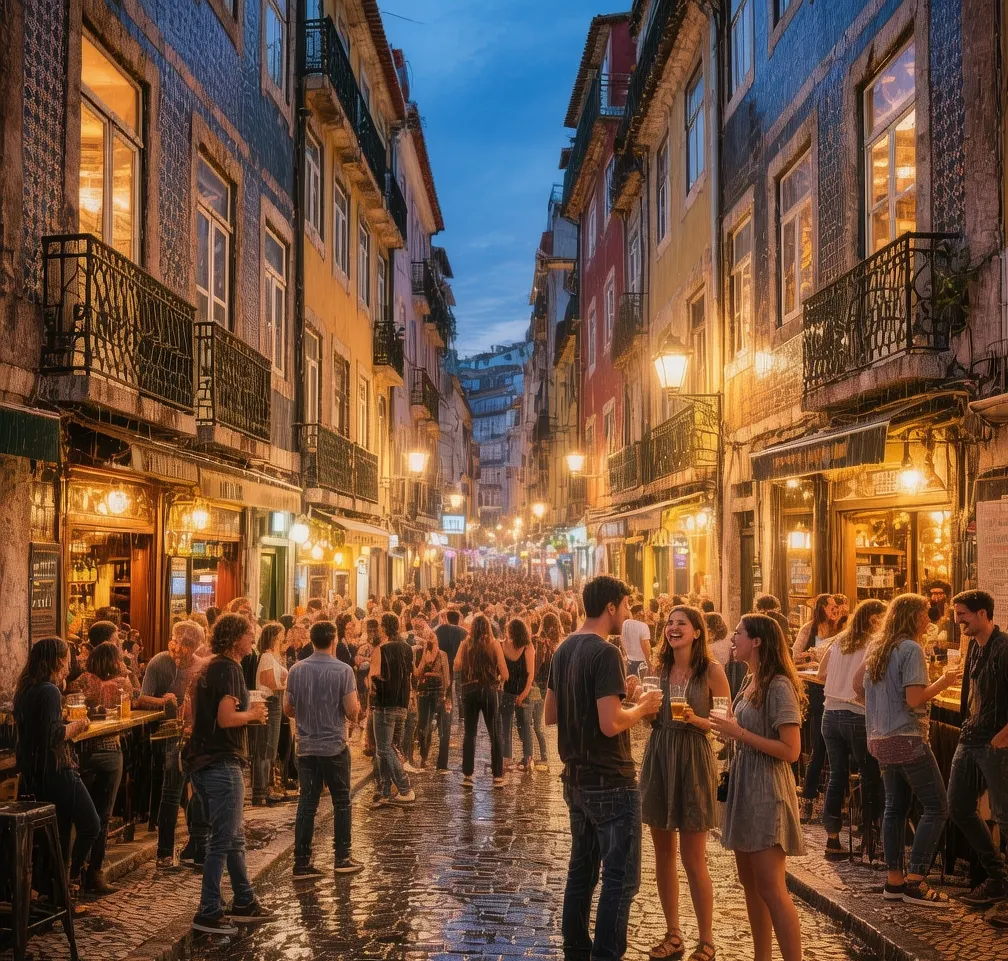
Bairro Alto Nightlife: Where Fado Echoes Meet Cobblestone Vitality
Night descends on the hilltop, and the narrow lanes of Bairro Alto awaken with a sudden, kinetic energy. The air vibrates with a layered symphony: the clinking of glassware, the rhythmic strumming of a Portuguese guitar from a distant doorway, and the roar of animated conversations bouncing off ancient masonry. You step onto the uneven pavement—polished basalt and white limestone catching the amber glow of overhead string lights. Situated roughly 300 meters (984 feet) above the Tagus River, this grid of streets was once a quiet aristocratic enclave. Now, it spills over with life. The scent of chargrilled chorizo and sweet cherry liqueur mingles with the cool Atlantic breeze. It matters because Bairro Alto nightlife is not merely a sequence of bars; it is a communal ritual that transforms a historic residential quarter into the pulsing, ephemeral heart of Lisbon’s cultural identity.
Why Bairro Alto Nightlife Embodies Bohemian Resilience
To understand the nightlife here is to recognize the physical space it radically repurposes. Following the devastating earthquake of 1755, the Marquis of Pombal mandated a radical reconstruction of Lisbon. While the downtown Baixa was flattened into a rigid grid, Bairro Alto retained its earlier, organic sixteenth-century street plan. The district solves a fascinating urban problem: how to fit thousands of revelers into a neighborhood never designed for cars or large crowds. The streets are exceptionally narrow, measuring just 5 meters (16 feet) wide, paved in the traditional calçada portuguesa. This intricate mosaic of white limestone and black basalt provides a textured, shock-absorbing surface that subtly forces pedestrians to slow their pace. The buildings, typically four to five stories tall, utilize the revolutionary Pombaline cage system—an internal wooden lattice hidden within masonry walls designed to flex and survive seismic tremors. Originally constructed to house the Jesuit elite, these resilient structures now function as acoustic chambers. The hard limestone facades reflect sound, while the narrow street canyons trap and amplify the melodies of passing musicians. By repurposing an earthquake-resistant residential grid into a pedestrian-first social ecosystem, Bairro Alto fulfills a deep modern need for authentic, friction-filled human connection.
The Best Time to Experience Bairro Alto Nightlife
To experience the neighborhood’s true character without being overwhelmed by sheer tourist volume, you must time your visit with absolute precision. Plan your evenings between May 18 and June 12, or from September 22 to October 10. During these specific windows, the nighttime temperature hovers between 17°C and 20°C (63°F–68°F), which is cool enough to make standing outdoors comfortable, yet warm enough to linger in the streets for hours. Arrive precisely at 9:30–10:30 PM. This is the magical transitional hour when local Lisboetas finish their late dinners and spill into the streets, claiming their favorite corners before the venue doors open. Avoid July 15 through August 25 at all costs. During this peak summer stretch, the ambient temperature remains an oppressive 24°C (75°F) even at midnight, and the narrow streets become physically impassable due to crushing crowds. The heat exacerbates the smell of stale alcohol and discarded food. For the most current cultural event schedules,
Approximate Budget for a 7-Day Trip
Calculating the cost of a cultural immersion in Bairro Alto requires prioritizing location and experience over luxury. By staying inside the neighborhood, you eliminate late-night transit costs and integrate yourself directly into the rhythm of the streets.
- • Accommodation: €85–€130 per night (soundproofed boutique apartment in Bairro Alto or adjacent Príncipe Real, featuring original exposed brick and double-glazed windows)
- • Food: €55 per day (breakfast €6 for a pastel de nata and galão, lunch €12 for a bifana pork cutlet sandwich, dinner €34 for grilled bacalhau with olive oil and a carafe of Vinho Verde, late-night snack €3 for a churro from a street vendor)
- • Transportation: €20 total (€3.50 for the Lisboa Metro red line from the airport to Baixa-Chiado; €16.50 for a reloadable Viva Viagem card covering the Glória funicular and daytime tram rides)
- • Attractions: €45 individual prices listed (traditional Fado house cover charge and show: €25, MUDE Design Museum: €5, Santa Catarina Viewpoint: free, Carmo Convent archaeological ruins: €5, historic cocktail at Pavilhão Chinês: €10)
- • Miscellaneous: €35 (hand-painted ceramic azulejo coasters from a local artisan shop: €12, bottle of Ginjinha cherry liqueur to take home: €8, vintage Portuguese music poster: €15)
Total: €1,080–€1,395
6 Essential Bairro Alto Nightlife Experiences
- Claiming a Corner on Rua da Atalaia: Walk to the heart of the bar district and purchase a 500-milliliter glass of draft Super Bock from a hole-in-the-wall counter. Step back into the street. Feel the vibrations of the basalt pavement through your shoes as hundreds of conversations blur into a single, rhythmic hum.
- Attending an Intimate Fado Performance: Descend the steep stairs into a dimly lit, subterranean Fado house like Fado in Alfama or Mesa de Frades. Let your eyes adjust to the candlelight. When the singer begins, the raw, mournful wail fills the intimate brick vaults, demanding absolute silence from the audience.
- Drinking Ginjinha from a Chocolate Cup: Find a standing-room-only counter serving Ginjinha. Watch the bartender pour the bright, sour-cherry liqueur into a small, edible chocolate cup. Consume it in a single, swift gulp, feeling the sticky sweetness coat your throat before biting into the liqueur-soaked chocolate.
- Ascending the Elevador da Glória: Board the iconic yellow funicular at the base of the hill just before midnight. Stand on the steep wooden steps as the mechanical cable drags the carriage up the 45-degree incline, offering a vertiginous, tilted view of the neon-lit streets below.
- Watching the Sunset at Miradouro de São Pedro de Alcântara: Arrive at this terraced park at 7:30 PM. Lean against the stone balustrade as the fading sun turns the Tagus River into a ribbon of liquid gold, perfectly framing the red suspension bridge and the illuminated statue of Christ the King across the water.
- Eating a Warm bifana at 2:00 AM: Locate a brightly lit, fluorescent-tipped snack bar still serving food as the crowds thin. Order a bifana. The crusty bread, soaked in garlic-infused pork fat and mustard, provides the perfect salty, textured antidote to a night of sweet liqueurs and crisp beer.
3 Hidden Gems Most Travelers Miss
- Pavilhão Chinês: Located on Rua Dom Pedro V, just steps from the main nightlife chaos. It is overlooked because the entrance resembles a standard, unassuming green door, lacking the flashing neon of modern cocktail bars. Inside, it is a spectacular, cluttered museum-bar featuring displays of antique pipes, model ships, and African tribal masks. Insider tip: arrive before 9:00 PM to secure a velvet booth, as the space is exceptionally small and fills up rapidly with local intellectuals.
- Cervejaria da Trindade: Situated on Rua Nova da Trindade. Tourists seeking nightlife often walk right past this establishment, assuming it is just a daytime restaurant. It is actually the oldest brewery in Lisbon, founded in 1834. The true hidden gem is its stunning, cavernous back rooms, covered floor-to-ceiling in nineteenth-century hand-painted azulejo tiles depicting mythological scenes. Insider tip: order the traditional francesinha sandwich during the late afternoon pre-drink hour to avoid the lengthy dinner queues.
- Rua da Bica de Duarte Belo: While many tourists ride the famous Bica funicular, very few actually walk the steep street itself. This narrow, shadowed lane is a true hidden gem because it is lined with tiny, locally owned bars where university students and artists gather. The bars spill their seating directly onto the steep, stepped street. Insider tip: walk down the street at 11:00 PM and look for the small kiosk halfway down selling cheap, cold imperial beers to enjoy on the stone steps.
Cultural & Practical Tips
- • Master the essential drinking phrase: say "Uma imperial, se faz favor" (OO-mah im-peh-ree-AHL, seh fahsh fa-VOHR) to order a draft beer. Locals will appreciate your effort to speak Portuguese rather than defaulting to English or Spanish.
- • Protect your belongings with extreme vigilance; the dense, jostling crowds on Rua da Atalaia are a prime hunting ground for pickpockets. Keep your phone securely zipped in an interior pocket and your hand resting on your bag when standing in the street. • • Photography etiquette is paramount in Fado houses; flash photography is strictly forbidden. The sudden bursts of light destroy the intimate, mournful atmosphere, and you will be sharply reprimanded by the staff. Rely on high-ISO settings instead.
Conclusion: Travel with Reverence, Not Just Intoxication
Bairro Alto nightlife is not merely an open-air drinking festival designed for uninhibited excess; it is a fragile, living cultural ecosystem that requires a delicate balance to survive. When you choose to travel with reverence rather than treating the neighborhood as a hedonistic playground, you begin to honor the complex history of this resilient hilltop. Slow down. Resist the urge to mindlessly hop from one crowded bar to the next, and instead pause to listen to the solitary busker playing a mournful fadinho in a shadowed doorway. Mindful nightlife tourism recognizes that these narrow streets are also people’s homes, and the ancient limestone pavements cannot withstand the physical friction of millions of careless, intoxicated footsteps. By engaging deeply—savoring the complex notes of a local wine, respecting the silence during a Fado performance, cleaning up after your street drinks—you shift from being a disruptive intruder to a welcomed participant in Lisbon’s enduring communal ritual. Let the raw, acoustic energy of the city wash over you; that is where the true soul of Bairro Alto resides.
.