
Oceanário de Lisboa: Where Marine Conservation Meets Atlantic Architecture
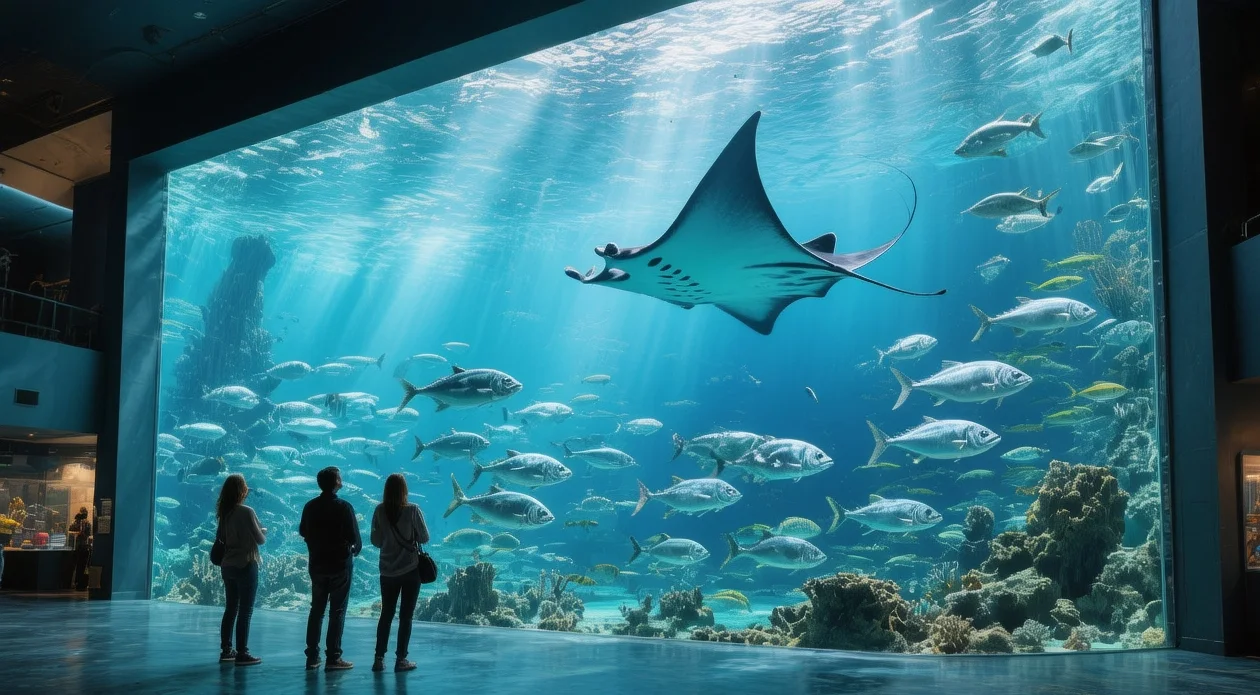
Dim, blue light washes over the巨大的 acrylic viewing panel, dissolving the boundary between the air and the abyss. The hushed, reverent silence of the crowd is broken only by the rhythmic hum of life-support pumps and the muffled, echoing splash of a massive fin. You stand before the central tank, a colossal cylinder holding 5 million liters (1.3 million gallons) of carefully regulated saltwater. Suspended in this liquid void, a giant ocean sunfish drifts past, its dorsal fin slicing the water like a silent scythe. Located on the Pier of Nations, the Oceanário de Lisboa was originally constructed as the centerpiece of a major world exposition, designed to showcase the vast interconnectedness of the global ocean. It matters because it does not merely display marine life; it forces a profound psychological shift, submerging you in an alien environment to bridge the immense gap between human coastal existence and the deep, unknowable mysteries of the pelagic sea.
Why the Oceanário Embodies Marine Engineering
To understand the Oceanário is to recognize the audacious architectural problem it solved: how to represent the global ocean—historically segregated into distinct temperature zones—in a single, unified structure. Conceived by American architect Peter Chermayeff, the building fulfills this need by abandoning traditional gallery layouts in favor of a central, open-water concept. The engineering required to maintain this illusion is staggering. The main tank is encircled by four smaller coastal habitats representing the Antarctic, temperate Pacific, tropical Indian, and North Atlantic oceans. To prevent the transfer of pathogens or temperature fluctuations between these distinct ecosystems, engineers designed a complex, invisible matrix of thermal barriers and isolated filtration loops. The building itself is physically anchored in the Tagus River estuary, utilizing the surrounding water as a massive thermal sink to regulate the interior climate. The primary viewing panel is forged from a single piece of acrylic measuring 7 meters (23 feet) tall and 16 meters (52 feet) wide, specifically engineered to withstand the immense hydrostatic pressure of the deep tank without distorting the optical clarity. By seamlessly blending cutting-edge aquatic life-support systems with a minimalist, open-plan design, the Oceanário fulfills its mandate—erasing the physical borders between oceans to evoke a holistic understanding of marine fragility.
The Best Time to Experience the Oceanário
To experience the ethereal atmosphere of the main tank without the overwhelming friction of crowds, you must synchronize your visit with the academic calendar. Plan your visit between April 15 and May 10, or from September 22 to October 15. During these windows, the ambient temperature in Lisbon hovers between 18°C and 22°C (64°F–72°F), making the walk from the metro station pleasant. Arrive precisely at 10:00–10:30 AM, the exact moment the doors open. At this hour, the overhead skylights cast a brilliant, dappled light into the central tank, perfectly illuminating the schooling fish, and the acoustic silence is profound. Avoid July 10 through August 25. During this peak summer period, European family holidays flood the exhibition halls; the noise level escalates significantly, and finding a solitary viewing spot at the primary acrylic panel becomes nearly impossible. For current ticketing, temporary exhibition schedules, and real-time capacity alerts, consult the official portal: www.oceanario.pt.
Approximate Budget for a 7-Day Trip
Calculating the cost of a family-focused immersion in Lisbon’s Parque das Nações requires balancing premium attraction tickets with the accessibility of local transit and dining. This methodology avoids the inflated prices of the historic center while keeping you steps from the aquarium.
- • Accommodation: €90–€140 per night (modern family room in a waterfront hotel in the Parque das Nações neighborhood, featuring soundproofing and river views)
- • Food: €55 per day (breakfast €7 for pastries and galão at a local bakery, lunch €14 for a bifana sandwich and sparkling water, dinner €34 for grilled dory fish, batatas fritas, and a carafe of Vinho Verde)
- • Transportation: €28 total (€6.50 for a round-trip on the red metro line from the city center; €21.50 for a 24-hour Viva Viagem card covering local buses and the iconic yellow trams)
- • Attractions: €35 individual prices listed (Oceanário standard ticket: €22, Telecabine cable car: €6, Pavilhão do Conhecimento science museum: €7)
- • Miscellaneous: €40 (sustainable plush sea turtle from the gift shop: €14, hardcover book on Atlantic marine biodiversity: €18, reusable insulated water bottle: €8)
Total: €808–€1,188
7 Essential Oceanário Experiences
- Sitting Before the Central Tank: Claim a spot on the bench facing the massive acrylic panel. Breathe slowly as a school of silver lookdowns swims in unison, their flat bodies flashing like coins in the subdued lighting. Allow five minutes for your eyes to fully adjust to the blue spectrum; the true depth of the tank only reveals itself once the surface glare fades.
- Walking the Underwater Tunnel: Enter the bottom-level passage beneath the primary aquarium. Look straight up to see the pale underbellies of reef sharks and rays gliding silently over your head. The thick acrylic muffles the external noise, replacing it with a deep, underwater hum that vibrates in your chest.
- Observing the Sea Otter Enrichment: Visit the temperate Pacific habitat at exactly 1:30 PM. Watch the keepers drop frozen ice blocks embedded with seafood into the pool. The otters crack the ice open using rocks on their chests, displaying a surprising, almost mechanical level of problem-solving intelligence.
- Tracing the Global Currents Floor Map: Stand on the raised walkway bridging the four outer habitats. Look down at the vast, illuminated world map embedded in the floor, tracing the animated blue light that represents the thermohaline circulation connecting the Antarctic tank to the North Atlantic tank.
- Feeling the Anemone in the Touch Pool: Approach the shallow, interactive tidal pool in the temperate zone exhibit. Gently press your fingertip against the soft, pink tentacles of a jewel anemone. The tactile sensation is surprisingly sticky, followed by a gentle, reflexive retraction as the animal defensively pulls inward.
- Listening to the Underwater Microphones: Stand beneath the overhead speakers in the North Atlantic kelp forest exhibit. The installation pipes live audio from hydrophones placed in the actual Atlantic Ocean, filling the room with the eerie, rhythmic clicking of unseen dolphins and the low groan of shifting currents.
- Witnessing the Vertical Migration Light Shift: Remain in the main hall until 5:00 PM, when the automated overhead lighting begins to simulate dusk. Observe how the behavior of the pelagic fish shifts; species that hid in the shadows during the bright daylight suddenly emerge from the depths to claim the open water.
3 Hidden Gems Most Travelers Miss
- The Upper Level Predator Silhouettes: Most visitors remain fixated on the ground-floor main panel. Walk up to the top tier of the central tank and look straight down into the dark water column. From this vantage point, the massive sand tiger sharks appear as ominous, gliding silhouettes against the bright surface water—a hidden gem that dramatically emphasizes their sheer size.
- The Terrestrial Biodiversity Garden: Located entirely outside the main building envelope, this outdoor space is frequently overlooked because visitors assume the experience ends at the gift shop exit. It houses a pristine aviary and terrestrial habitats featuring free-flying birds and arboreal amphibians. Insider tip: visit this area at 4:00 PM when the Atlantic wind dies down; the birds become highly active, foraging in the engineered tidal pools.
- The Behind-the-Scenes Filtration Portholes: Tucked away in a quiet corridor near the educational classrooms are small, thick glass portholes looking directly into the mechanical rooms. It is overlooked because there is no obvious signage directing the public away from the main exhibition path. Looking through these windows reveals the colossal protein skimmers and massive sand filters—a hidden gem that exposes the raw, industrial engineering required to sustain this artificial ocean.
Cultural & Practical Tips
- • Do not tap or strike the acrylic viewing panels; the vibrations transmit deeply into the water, causing acute stress and disorientation for the sensitive pelagic species, particularly the ocean sunfish.
- • Purchase tickets online in advance to bypass the frequently chaotic weekday morning queues at the ground-level ticket kiosks.
- • Use the Portuguese phrase "Onde fica o tanque principal?" (ON-deh FEE-kah o TANK-veh prin-see-PAL), meaning "Where is the main tank?" to navigate the space while respectfully engaging the multilingual staff.
- • Photography requires specific camera adjustments; disable your flash entirely, as it causes severe glare on the curved acrylic and startles the marine life. Increase your camera’s ISO to 1600 or higher, and brace your elbows firmly against your ribs or a railing to counteract the low-light blur.
- • Be mindful of the aggressive Atlantic winds that sweep across the open Pier of Nations; if you are visiting the exterior terrestrial gardens or taking the adjacent cable car, secure your hat and avoid wearing loose scarves that can easily be swept into the water.
- • Utilize the designated coat and bag lockers near the entrance; navigating the narrow, winding corridors with bulky winter coats or oversized backpacks creates unnecessary physical friction in crowded zones.
Conclusion: Travel with Responsibility, Not Just Entertainment
The Oceanário de Lisboa is not merely a cinematic aquatic theme park designed for passive visual consumption; it is a vital, functioning center for marine science that demands a deep intellectual engagement. When you choose to travel with responsibility rather than simply rushing past the tanks to capture a photograph of a shark, you begin to honor the fragile ecosystems represented within these acrylic walls. Slow down. Resist the urge to sprint through the four coastal habitats and instead sit quietly on the cold floor in front of the temperate kelp forest, allowing the hypnotic sway of the seaweed to anchor your thoughts. Mindful tourism here recognizes that the artificial environments require immense, invisible human labor and vast resources to maintain. By engaging deeply—reading the specific conservation plaques, teaching children to respect the touch pools, understanding the engineering that keeps these fragile creatures alive—you shift from being a transient spectator to an active advocate for oceanic preservation. Let the immense, silent weight of the water humble you; that is where the true value of the Oceanário resides.