
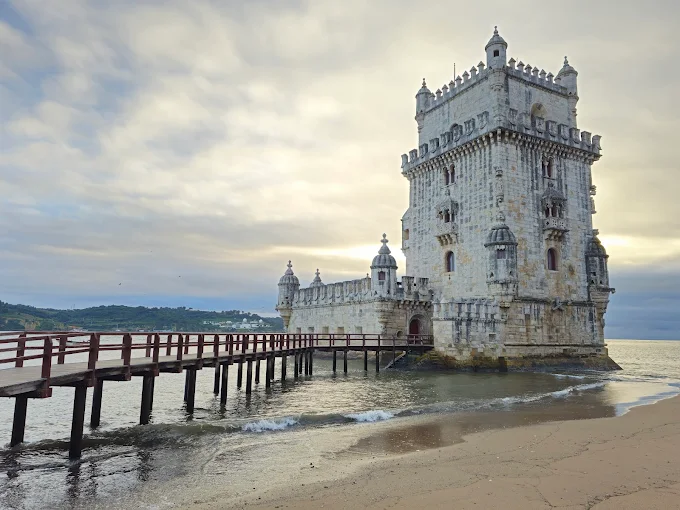
Belém Tower: Where Maritime Glory Meets Manueline Stone
Golden light spills across the Tagus River as you approach the Belém Tower, its honey-colored limestone façade glowing like carved amber against the deepening azure sky. The air carries the briny scent of Atlantic waters mixed with the faint perfume of nearby jacaranda trees; seagulls wheel overhead while the gentle lap of river water against the tower's bastion creates a rhythmic percussion that has echoed here for five centuries. You stand before a masterpiece of Manueline architecture—a 30-meter (98-foot) fortified tower adorned with intricately carved ropes, armillary spheres, and crosses of the Order of Christ, each stone telling the story of Portugal's Age of Discovery. Built between 1514 and 1520 under the direction of master architect Francisco de Arruda, this UNESCO World Heritage monument once guarded the entrance to Lisbon's harbor, welcoming explorers returning from voyages to India, Brazil, and Africa while deterring pirates with its strategic cannon placements. This isn't merely a pretty monument—it's a stone chronicle of human ambition, where maritime engineering met artistic devotion, where defense transformed into beauty, and where every weathered carving whispers tales of caravels that changed the world. To stand in its shadow is to touch the soul of Portugal itself.
Why Belém Tower Embodies Portuguese Maritime Heritage
The Belém Tower represents far more than an elegant riverside monument—it embodies the zenith of Portugal's maritime empire and stands as one of the world's finest examples of Manueline architecture, a uniquely Portuguese style that flourished during the reign of King Manuel I (1495–1521). Commissioned in 1514 and completed in 1520, this fortified tower solved a critical strategic need: protecting Lisbon's harbor entrance while serving as a ceremonial gateway for vessels returning from the lucrative spice trade routes to India and the East Indies. The tower's location—positioned on a small island in the Tagus River estuary, approximately 200 meters from the Belém shoreline—provided optimal defensive positioning while creating a dramatic visual statement of royal power.
Engineering excellence defines every aspect of the structure: the tower rises 30 meters (98 feet) above the river, with walls up to 2.5 meters (8 feet) thick at the base to withstand cannon fire. The distinctive four-story design incorporates a governor's chamber, king's chamber, audience hall, and rooftop terrace, each connected by a narrow spiral staircase of 158 steps carved from local limestone. Most remarkably, the exterior features over 200 carved stone elements: twisted rope motifs symbolizing maritime exploration, armillary spheres representing navigation science, and the cross of the Order of Christ—identical to those carried on the sails of Vasco da Gama's fleet. The tower's bastion includes 16 cannon emplacements arranged in a hexagonal pattern, allowing 360-degree defensive coverage while maintaining aesthetic harmony.
Today, the Belém Tower stands as a protected monument under the supervision of Portugal's Directorate-General for Cultural Heritage (DGPC), with ongoing conservation efforts focusing on preventing limestone erosion from Atlantic salt spray and managing visitor impact. The tower welcomed approximately 450,000 visitors in 2023, making it one of Lisbon's most popular attractions while maintaining its structural integrity through careful crowd management and climate-controlled interior spaces. This enduring monument reminds us that Portugal's golden age wasn't built on conquest alone—it was crafted through the marriage of practical necessity and artistic vision, where every functional element became an opportunity for beauty.
The Best Time to Experience Belém Tower
To experience the Belém Tower under optimal conditions, plan your visit between May 10 and June 18 or September 8 through September 28. During these windows, air temperatures range from 19–24°C (66–75°F), creating comfortable conditions for exploring the tower's interior and riverside promenade. The ideal times to visit are 9:00–10:30 AM, when morning light illuminates the tower's eastern façade and crowds remain minimal before tour groups arrive, or 5:30–7:00 PM, when the setting sun bathes the limestone in golden light and the Tagus reflects brilliant colors perfect for photography.
Avoid visiting during July 15 through August 25, when temperatures soar to 28–35°C (82–95°F) and humidity rises, making the tower's narrow spiral staircase physically demanding and potentially uncomfortable. Additionally, cruise ship passengers often arrive mid-morning during peak season, creating queues that can exceed 90 minutes for entry. Winter months (November through February) present their own challenges: frequent rainfall makes the riverside promenade slippery, temperatures drop to 8–14°C (46–57°F), and reduced daylight hours (sunset as early as 5:15 PM) limit exploration time. Additionally, the tower occasionally closes during severe weather for visitor safety.
For current opening hours, ticket availability, and local events near the Belém district, consult the official Portuguese tourism portal: https://www.museusemonumentos.pt provides comprehensive, updated information specific to Lisbon travel planning and cultural site access.
Approximate Budget for a 7-Day Trip
Lisbon offers exceptional value compared to other Western European capitals, combining rich history, stunning architecture, and world-class cuisine at reasonable prices. The following budget assumes moderate comfort—clean, centrally-located accommodations and authentic Portuguese dining with occasional upscale experiences. Prices reflect the 2024–2026 season and assume travel during shoulder season (May–June or September) rather than peak summer.
- Accommodation: €60–€110 per night in Belém, Chiado, or Baixa districts. Traditional guesthouses with private bathroom: €60–€80; boutique hotels in restored buildings: €85–€110; riverside apartments with Tagus views: €100–€140.
- Food: €30–€42 per day
- Breakfast: €5–€7 (bica coffee €1.20, pastel de nata €1.40, fresh fruit €2.50)
- Lunch: €10–€14 (salada mista €7, grilled sardines €9, bifana sandwich €4.50)
- Dinner: €15–€21 (bacalhau à brás €13, arroz de marisco €18, francesinha €12, house wine €4)
- Transportation:
- Tram 15E from city center to Belém: €3 per ride (included in Viva Viagem card)
- Viva Viagem rechargeable card: €0.50 card fee + €1.50 per journey
- Uber/Bolt from airport to Belém: €12–€18 (20-minute journey)
- Car rental: €35–€55 per day (optional; parking in Belém costs €2/hour)
- Train to Sintra (day trip): €4.50 round-trip from Rossio station
- Attractions:
- Belém Tower entrance: €6 adult, €3 reduced (free first Sunday of month)
- Jerónimos Monastery: €10 adult, €5 reduced (combined ticket with Tower: €12)
- Belém Cultural Center: Free entry to exhibitions
- MAAT museum: €9 adult, €6 reduced
- Tagus River cruise: €15–€25 per person (1-hour sunset tour)
- Miscellaneous:
- Pastéis de Belém (box of 6): €6.50
- Portuguese azulejo tile souvenir: €15–€45
- Local wine from Douro Valley (750ml): €8–€18
- Travel insurance: €40–€60 for week
Total estimated cost for 7 days: €890–€1,280 per person (excluding international flights to Lisbon)
6 Essential Belém Tower Experiences
- Sunrise Photography Walk: Arrive at the Belém Tower promenade by 7:30 AM during May–June or September. The morning light strikes the limestone façade at an angle that reveals the intricate Manueline carvings—twisted ropes, armillary spheres, and crosses of the Order of Christ—while creating dramatic shadows perfect for architectural photography. Start at the riverside viewpoint across from the tower, then walk the paved promenade to capture the structure from multiple angles. Use a polarizing filter to reduce glare on stone surfaces and a wide-angle lens (24mm or wider) to include the Tagus River in your composition. The experience costs nothing beyond your entrance ticket and offers 90 minutes of golden light before crowds arrive.
- Interior Exploration with Audio Guide: Purchase the €2 audio guide (available in 8 languages) at the ticket counter to unlock the tower's hidden stories. Begin at the governor's chamber on the ground floor, noting the vaulted ceiling and narrow arrow slits designed for defensive archers. Ascend the spiral staircase of 158 steps to the king's chamber, where you'll find a stunning ribbed ceiling and a balcony offering panoramic views of the Tagus. Continue to the audience hall and rooftop terrace, where cannon emplacements and decorative merlons reveal the tower's dual purpose as fortress and monument. Allow 45–60 minutes for the full interior experience; visit between 10:00 AM–12:00 PM for optimal lighting through the tower's windows.
- Riverside Picnic with Tower Views: Purchase supplies from the nearby Mercado de Belém: local cheese, chouriço sausage, fresh bread, olives, and a bottle of Vinho Verde. Arrive at the grassy area between the tower and the Monument to the Discoveries at 5:00 PM. As the sun descends, the limestone changes color from cream to amber to rose, while the Tagus reflects brilliant oranges and purples. This experience costs €10–€15 per person for provisions and creates memories far more valuable than any organized tour. Remember to pack out all trash and respect the monument's protected status as a UNESCO World Heritage Site.
- Manueline Architecture Detail Study: For those interested in art history and stonemasonry, spend 1–2 hours examining the tower's decorative elements. Focus on: the twisted rope motifs symbolizing maritime exploration, the armillary spheres representing navigation science, the crosses of the Order of Christ carried on explorer ships, and the rhinoceros head carving (one of Europe's earliest depictions of this animal). Bring a notebook and camera with macro capability. The best sections for study are the bastion's exterior walls and the rooftop terrace merlons. This self-guided educational experience costs nothing beyond your time and curiosity—and deepens appreciation for Portugal's unique artistic heritage.
- Sunset Tagus River Cruise: Book the 1-hour sunset cruise departing from Belém pier (€22 per person) for a unique perspective of the tower from the water—the view explorers would have seen returning from voyages. The boat passes beneath the tower's bastion, allowing close-up photography of the limestone carvings while the setting sun illuminates the structure from the river side. The cruise includes commentary on Lisbon's maritime history and stops near the Monument to the Discoveries for additional photo opportunities. Depart at 6:30 PM during shoulder season for optimal light and comfortable temperatures. Bring a light jacket; river breezes can be cool even in summer.
- Belém District Walking Circuit: Combine your tower visit with a self-guided walking tour of the Belém neighborhood. Start at the tower, then walk 400 meters east to the Jerónimos Monastery (another UNESCO site), continue 200 meters to the iconic Pastéis de Belém bakery for the original custard tarts, then stroll 300 meters to the Monument to the Discoveries overlooking the Tagus. The complete circuit covers 1.2 kilometers and takes 2.5–3 hours at a leisurely pace. Download the free Lisbon Heritage app for augmented reality reconstructions showing how these monuments appeared during Portugal's Age of Discovery. This experience contextualizes the tower within Lisbon's broader maritime heritage.
3 Hidden Gems Most Travelers Miss
- Tower's Underground Cistern: Beneath the Belém Tower's bastion lies a rarely-visited cistern that once stored fresh water for the garrison during sieges. This atmospheric chamber, measuring approximately 8×6 meters with a vaulted ceiling 3.5 meters high, features original 16th-century stonework and a small well that still holds water. Access requires advance arrangement through the DGPC visitor services (+351 21 362 0034)—contact them at least 48 hours ahead to schedule a visit. Tours are offered on Tuesdays and Thursdays at 11:00 AM (€8 supplement to standard ticket, minimum 3 participants). Bring a flashlight and wear sturdy shoes; the stone floor is uneven and damp. The cistern's cool interior (typically 15–17°C year-round) and ancient masonry create a striking contrast to the sun-baked tower above.
- Padrão dos Descobrimentos Rooftop: While thousands photograph the Belém Tower from the riverside promenade, few climb the nearby Monument to the Discoveries (Padrão dos Descobrimentos) for the complementary view. This 52-meter (171-foot) concrete monument, shaped like a caravel's prow, features an elevator to the rooftop terrace offering panoramic views that include the Belém Tower framed against the Tagus River and 25 de Abril Bridge. Visit between 4:00–6:00 PM when the afternoon sun illuminates the tower's limestone façade. Entrance: €6 adult, €3 reduced. Ask the staff about the monument's interior exhibition on Portuguese exploration—it provides crucial context for understanding why the tower was built and what it protected. This paired experience transforms two separate monuments into a cohesive narrative of maritime history.
- Jardim da Praça do Império at Blue Hour: Located 300 meters east of the tower, this formal garden with geometric hedges, fountains, and reflecting pools offers a stunning—and often empty—viewpoint for photographing the Belém Tower during blue hour (the 20–30 minutes after sunset when the sky turns deep indigo). Arrive at 7:45 PM during June or September, position yourself near the central fountain, and use a tripod to capture the tower silhouetted against the twilight sky with the garden's lights creating foreground interest. The garden remains open until 10:00 PM in summer, and few photographers think to visit after dark. Bring a warm layer; temperatures drop 4–6°C after sunset. This experience rewards patience with images that capture the tower's timeless elegance without crowds.
Cultural & Practical Tips
- Respect UNESCO guidelines: The Belém Tower is a protected World Heritage Site under Portuguese law. Never climb on the exterior walls, remove stones, or touch the intricate carvings—oils from skin accelerate limestone deterioration. Stay on designated pathways and respect barriers marking fragile sections. The monument belongs to all humanity; treat it with the reverence due a 500-year-old masterpiece.
- Essential Portuguese phrases: Pronunciation guide: "Bom dia" (bom DEE-ah) = Good morning; "Obrigado/a" (oh-bree-GAH-doo/dah) = Thank you; "Onde fica a Torre de Belém?" (ON-deh FEE-kah ah TOR-reh deh beh-LAYN) = Where is Belém Tower?; "Quanto custa?" (KWAN-too KOOSH-tah) = How much does it cost? Lisbon residents appreciate visitors who attempt Portuguese, even imperfectly, and often share local knowledge about hidden viewpoints or traditional tascas when approached respectfully.
- Footwear requirements: The tower's interior features narrow, uneven spiral stairs with no handrails in some sections—always wear closed-toe shoes with good grip. The riverside promenade consists of smooth limestone slabs that become extremely slippery when wet. Avoid flip-flops or high heels, especially after rainfall or morning dew. The climb to the rooftop terrace involves approximately 158 steps with moderate elevation gain.
- Photography guidelines: Photography for personal use is unrestricted inside and outside the tower. However, tripods require permission from DGPC staff (+351 21 362 0034), and commercial photography requires advance authorization. For best results, use a polarizing filter to reduce glare on limestone surfaces and a wide-angle lens (24mm or wider) to capture architectural scale. Golden hour (first and last hour of daylight) provides optimal lighting. Avoid using flash near other visitors in the tower's narrow chambers.
- Weather considerations: Lisbon's coastal location creates variable conditions—the Belém riverside can be 3–5°C cooler and significantly windier than the city center. Check the Portuguese Institute for Sea and Atmosphere (www.ipma.pt) before visiting. During summer, temperatures on the limestone surfaces can exceed ambient air temperature by 4–6°C due to heat absorption. Always carry water (minimum 1 liter per person) and sun protection. After rainfall, wait at least 2 hours before climbing—the stone remains slippery long after surfaces appear dry.
- Accessibility information: The Belém Tower's ground floor is accessible for visitors with limited mobility via a ramp, but upper levels require navigating narrow spiral stairs without elevator access. Wheelchair users can view the tower's exterior and enjoy excellent photography opportunities from the riverside promenade. The DGPC visitor center can arrange assisted access to the governor's chamber upon request (+351 21 362 0034). Accessible parking is available near the tower entrance (3 designated spaces).
- Local customs: Lisbon maintains a relaxed, authentic atmosphere distinct from more tourist-heavy European capitals. Dress modestly when visiting nearby religious sites like Jerónimos Monastery (shoulders and knees covered). Tipping is appreciated but not mandatory—round up bills or leave 5–10% for exceptional service. Many shops close for lunch between 1:00–3:00 PM, though tourist areas remain open. Evening meals typically begin after 8:00 PM; arriving earlier may find kitchens closed.
Conclusion: Travel with Reverence, Not Just Recreation
The Belém Tower asks nothing dramatic of you—only that you approach its ancient limestone with awareness, recognizing that these stones have witnessed five centuries of human history, from departing caravels to modern cruise ships. In an age where travel often becomes a race to collect Instagram-worthy landmarks, the tower demands something different: presence. It invites you to trace your hand along weathered carvings laid by craftsmen whose names are lost to time, to stand where explorers once gazed toward the open ocean, and to understand that infrastructure can transcend utility to become art.
When you leave Lisbon—whether your flight departs at dawn or you board a train to Porto with the tower's silhouette still fresh in your mind—carry more than photographs of Manueline stone. Carry the understanding that monuments like this survive only when visitors become stewards, when we measure success not by how many sites we checked off a list but by whether the next traveler finds the tower as majestic and intact as we did. Slow down. Sit on that sun-warmed riverside stone. Listen to wind moving through arches that have stood since before the Pilgrims landed at Plymouth. This is travel transformed from consumption into communion—a sacred exchange between visitor and place, between present curiosity and historical wisdom, between human wonder and the enduring grace of craftsmanship made eternal.