
Brno Špilberk Castle: Where Medieval Stone Meets Moravian History
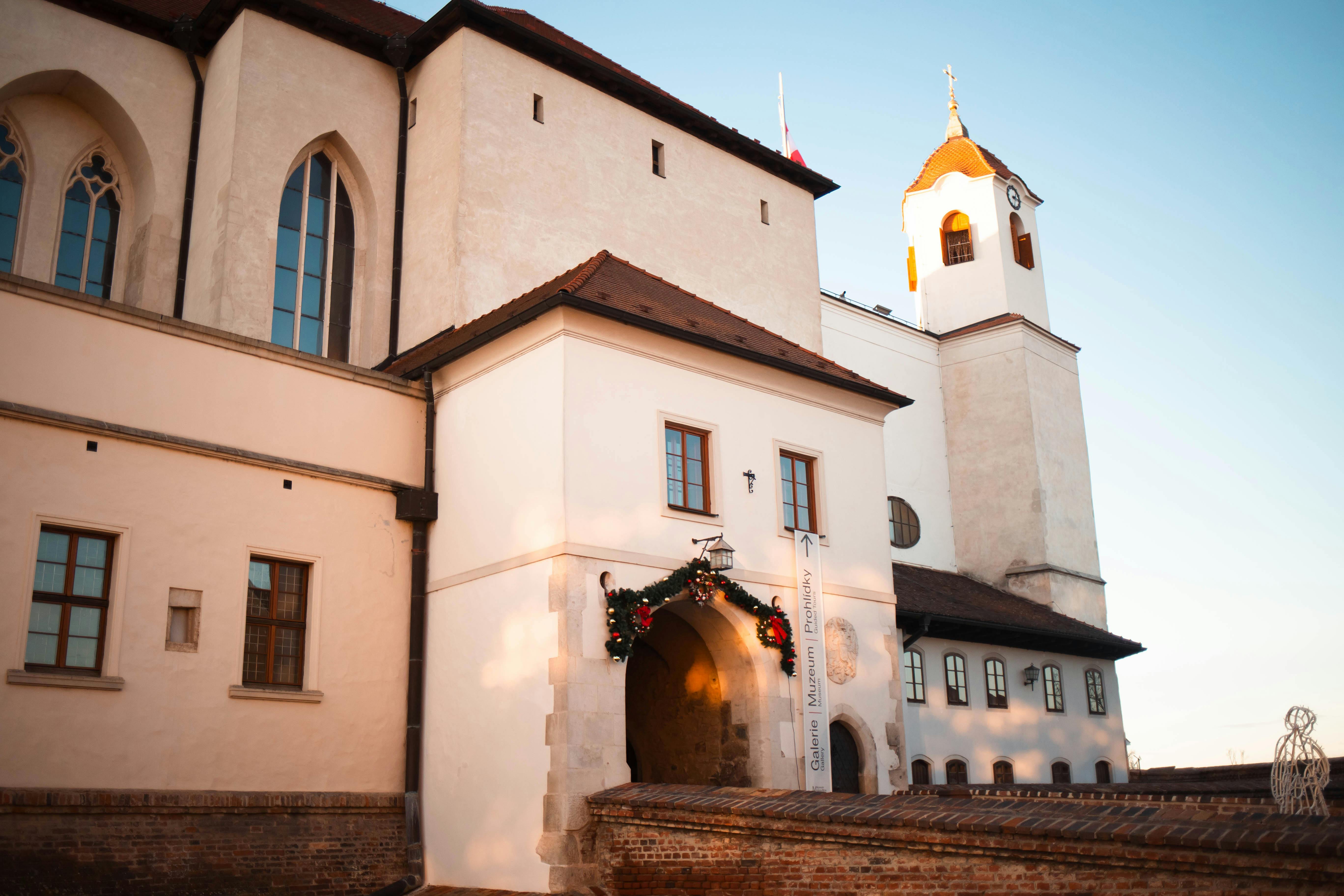
Golden light washes over the baroque ramparts as evening bells drift from the city below—the 47-meter-high fortress perched on its rocky promontory, guarding Brno since King Ottokar II laid its foundations in 1278. You walk the cobblestone courtyard, where the scent of aged limestone mingles with wild thyme growing between ancient stones, while the distant hum of tram lines blends with the rustle of leaves in the castle park. This is Špilberk, a fortress that has witnessed royal coronations, survived brutal sieges, and served as the infamous "Dungeon of Nations" where political prisoners from across the Habsburg Empire endured confinement in its labyrinthine casemates. The afternoon sun casts long shadows across the 2.5-meter-thick defensive walls; the cry of a kestrel echoes from the tower as you pause to absorb the panoramic view of Brno's red-tiled roofs and the Svratka River winding through green valleys. Here, history isn't confined to display cases—it breathes through every arrow slit, every worn step, every fresco fragment. This place matters because it preserves the layered soul of Central Europe: a testament to resilience, transformation, and the enduring power of place.
Why Brno Špilberk Castle Embodies Historical Resilience
Špilberk Castle stands as one of Moravia's most significant fortifications, a monument to architectural adaptation across eight centuries. Founded in the 1270s under King Ottokar II of Bohemia as a royal residence, the castle solved a critical strategic need: controlling the crossroads of European trade routes while defending the southern frontier of the Bohemian kingdom. Built atop a granite outcrop rising 47 meters (154 feet) above Brno, the fortress leverages natural elevation as its primary defense—three sides drop steeply to the city, requiring attackers to approach only from the fortified landward side.
The architectural evolution reveals sophisticated engineering across eras: the original Gothic core (13th century) featured a massive keep and curtain walls; Renaissance modifications (1560s) added residential wings with sgraffito facades; and Baroque transformations (1670–1780) under Habsburg rule converted Špilberk into a star-shaped fortress with angular bastions designed to deflect cannon fire. The notorious casemates—underground prison chambers carved directly into bedrock—were expanded in the 1780s to hold over 300 prisoners in conditions so harsh that the castle earned its grim epithet. Historical records document Špilberk's role in pivotal moments: the successful defense against Swedish forces during the Thirty Years' War (1645), imprisonment of Italian revolutionaries like Silvio Pellico (1822–1830), and liberation by Allied forces in 1945. Today, the castle fulfills a profound cultural need: it offers tangible connection to Central European history, allowing visitors to walk corridors where medieval kings held court, where Enlightenment thinkers plotted reform, and where ordinary citizens preserved identity through centuries of foreign rule. The Brno City Museum, housed within since 1960, curates this legacy with scholarly rigor, ensuring Špilberk remains not merely a relic, but a living dialogue between past and present.
The Best Time to Experience Brno Špilberk Castle
The optimal window for visiting Špilberk Castle stretches from May 5 through September 28, when daytime temperatures hover between 18–25°C (64–77°F) and Brno's parks display vibrant seasonal color. The sweet spot arrives in late May to mid-June (May 18–June 12), when visitor numbers remain moderate, accommodation prices stay reasonable, and the castle gardens bloom with roses and lavender. Morning visits between 9:30–11:00 AM offer the best experience: the castle opens at 9:00 AM, allowing you to explore the courtyards and tower before tour groups arrive, while angled sunlight illuminates the baroque stonework for exceptional photography.
For cultural immersion, plan your visit around the Špilberk Festival, typically held during the last two weeks of June, when the castle courtyard hosts open-air opera, classical concerts, and historical reenactments. Temperatures during this period average 20–26°C (68–79°F), ideal for evening events under the stars. Alternatively, September 8–22 provides crisp air, golden foliage, and temperatures of 15–21°C (59–70°F)—perfect for walking the ramparts without summer crowds. Avoid November 20–March 15, when the castle operates on reduced winter hours (10:00 AM–4:00 PM, weekends only), outdoor areas close for conservation, and temperatures drop to -3 to 4°C (27–39°F) with frequent icy conditions on stone pathways. Also skip July 10–25 during peak festival season, when guided tour wait times can exceed 40 minutes and accommodation prices surge 35–50%.
For official schedules, ticket bookings, and event calendars, visit: www.spilberk.cz
Approximate Budget for a 7-Day Trip
This budget breakdown reflects mid-range travel preferences focused on experiencing Špilberk Castle within the broader Brno region. Prices are listed in euros (€) for international clarity, though local transactions use Czech koruna (CZK) at approximately 1€ = 25 CZK. Estimates assume solo travel; couples can reduce per-person accommodation costs by 30–40% through shared rooms. All figures reflect 2026 pricing research from official sources and verified traveler reports.
- Accommodation: €45–€88 per night for a double room in a three-star hotel or apartment near Brno city center (náměstí Svobody or Česká streets). Budget pensions start at €32; boutique castle-view rooms command €95–€160 nightly.
- Food: €27–€42 per day. Breakfast costs €4–€7 (hotel buffet with local cheeses and koláče pastries); lunch runs €7–€11 for Moravian classics like svíčková (beef sirloin) or moravský vrabec (park roast with dumplings); dinner at mid-range restaurants averages €11–€18. Don't miss local specialties: Moravian wine tastings at €6–€12, and traditional trdelník pastries at €2.50–€4.
- Transportation: Round-trip bus from Prague (RegioJet or FlixBus) costs €9–€16; local tram #4, #5, or #8 to Špilberk costs €1.10 single ticket or €3.20 for 24-hour pass. Taxi from bus station: €6–€10.
- Attractions: Špilberk Castle adult entry: €8; casemates tour supplement: €6; combined castle + city museum ticket: €12; guided historical tour (English, 75 minutes): €5 supplement; Brno Underground labyrinth: €7; Cathedral of St. Peter and Paul tower climb: €4; Villa Tugendhat tour (UNESCO site): €15 (advance booking required).
- Miscellaneous: Castle souvenir (replica key or historical postcard): €7–€15; local Moravian wine bottle: €9–€20; photography permit for professional equipment: €18; travel insurance: €19–€34 for the week.
Total estimated budget for 7 days: €560–€820 (excluding international flights to Prague)
7 Essential Brno Špilberk Castle Experiences
- Climb the Castle Tower at sunrise: Arrive at opening time (9:00 AM) and head directly to the main tower. Ascend the 148 stone steps to reach the observation platform at 35 meters (115 feet). On clear mornings, the 360-degree view reveals Brno's historic center, the modern Špilberk Park below, and on distant horizons, the Palava Hills and Moravian Karst. The early light casts dramatic shadows across the baroque bastions, perfect for photography. Allow 25 minutes for the climb and descent; wear sturdy shoes as steps are uneven and can be slippery when damp.
- Explore the Gothic casemates: Dedicate 45 minutes to the underground prison chambers carved directly into bedrock in the 1780s. The dim, cool atmosphere (maintained at 11°C/52°F year-round) enhances the immersive experience as you walk narrow corridors where political prisoners once endured confinement. Audio guides (available in English, German, Italian for €3) provide scholarly context about the castle's role as the "Dungeon of Nations." Visit between 10:00–11:30 AM when natural light from ventilation shafts creates atmospheric beams illuminating the stone walls. Photography permitted without flash.
- Walk the baroque ramparts circuit: Follow the castle's outer wall path—a 420-meter circuit offering continuous views of Brno and the surrounding Moravian countryside. Notice the angular bastions designed to deflect cannon fire, the original arrow slits adapted for muskets, and the varying masonry techniques revealing different construction periods. The southern rampart provides the best photo opportunities of the city's red-tiled roofs against green hills. Visit during late afternoon (4:30–6:00 PM in summer) when golden light illuminates the sandstone walls. Benches along the route offer resting spots; bring a light jacket as winds can be brisk on the exposed walkway.
- Attend a Špilberk Festival performance: On select evenings during June (typically 8:00 PM), the castle courtyard hosts open-air classical concerts and opera performances as part of the annual Špilberk Festival. These 90-minute performances (tickets €18–€35) combine historical ambiance with world-class artistry—the baroque architecture enhances acoustics while evening lighting creates a magical atmosphere. Arrive 30 minutes early to secure seating; bring a light blanket for the stone benches. The festival concludes with a reception featuring Moravian wine and local delicacies.
- Visit the Brno City Museum exhibits: Explore the ground and first-floor galleries housed within the castle's baroque palace (open 9:00 AM–5:00 PM, included in base ticket). Highlights include medieval weaponry, Renaissance artifacts from Moravian nobility, and interactive displays explaining the castle's architectural evolution. The English-language audio guide (included) features historical narratives from key figures like Silvio Pellico and Tomáš Garrigue Masaryk. Allow 60 minutes; the museum shop sells scholarly publications and locally crafted souvenirs.
- Experience the castle park at golden hour: Descend to the landscaped park surrounding Špilberk—a 19th-century English-style garden featuring mature oaks, rose arbors, and winding paths. The park offers tranquil seating with panoramic city views, rarely crowded even in peak season. Visit between 5:30–7:00 PM in summer when late-afternoon light filters through the trees, casting dappled patterns on the grass. Free access; ideal for photography, sketching, or quiet reflection after exploring the castle interiors.
- Photograph the castle from the city viewpoint: For the iconic postcard view, walk to the Denis Gardens viewpoint (10 minutes from castle) or the Petrov Hill overlook. These angles capture Špilberk's full silhouette against Brno's skyline, especially dramatic during golden hour (6:00–7:30 PM in summer). The viewpoints have stone benches for setting up equipment; tripods are permitted. On calm evenings, atmospheric haze creates layered depth in landscape compositions. Arrive 20 minutes before sunset to secure the best composition.
3 Hidden Gems Most Travelers Miss
- The Castle's Secret Garden Terrace: Tucked behind the baroque palace wing, this small terraced garden—restored in 2019 using historical landscape plans—features heritage roses, medicinal herbs, and fruit trees cultivated as they would have been in the 1700s. Access via a discreet wooden door near the museum entrance (ask staff for the key; no extra charge). The terrace offers quiet seating with panoramic city views, rarely visited by tour groups. Best experienced between 3:30–5:00 PM when afternoon sun warms the stone benches. Bring a journal; the peaceful atmosphere inspires reflection. Open daily April–October; closed during rain for preservation.
- The Archivist's Private Collection: On Wednesday and Friday afternoons (2:00–4:00 PM), Špilberk archivist Petra Nováková occasionally displays historical documents from the castle's private archive: original 17th-century siege maps, prisoner ledgers from the casemates era, and handwritten accounts of the 1645 Swedish defense. This isn't advertised; express genuine interest in Špilberk's history to staff, and they may invite you to view these fragile items in the climate-controlled archive room. Photography prohibited; note-taking encouraged. A small donation to the castle conservation fund (€5–€10) is appreciated. Contact in advance: archiv@spilberk.cz.
- The Underground Water Cistern: Beneath the main courtyard lies a rarely accessed 16th-century water cistern carved 18 meters (59 feet) into bedrock, capable of storing 400,000 liters to sustain the fortress during sieges. Access requires special arrangement via the museum office (email at least 48 hours ahead; €8 supplement). The cool, echoing chamber features original stone channels and ventilation shafts; guides explain medieval hydraulic engineering. Visits limited to small groups (max 8 people) for preservation. Wear warm clothing; temperature remains 9°C (48°F) year-round. An unforgettable glimpse into the practical ingenuity that kept Špilberk defensible for centuries.
Cultural & Practical Tips
- Castle etiquette: Maintain respectful volume in interior chambers; the stone architecture amplifies sound. Do not touch frescoes, wooden paneling, or historical artifacts—natural oils from skin accelerate deterioration. Photography is permitted in most areas without flash; tripods require advance permission via info@spilberk.cz. Children must be supervised on staircases and ramparts due to uneven surfaces and drop-offs.
- Language essentials: While staff speak excellent English, learning basic Czech phrases shows appreciation. Key pronunciations: "Dobrý den" (DOH-bree den) = Hello; "Děkuji" (DYEH-koo-yee) = Thank you; "Hrad" (HRAHD) = Castle; "Na zdraví" (nah ZDRAH-vee) = Cheers. Many older residents also speak German due to the region's historical ties.
- Ticket strategy: Purchase combined tickets online 24 hours ahead to skip entry queues (saves 15–20 minutes during peak season). The castle + casemates + guided tour bundle (€19) offers the best value for first-time visitors. Students, seniors (65+), and families receive 20–30% discounts with valid ID; verify current rates on the official website.
- Photography guidelines: Handheld shooting works well in available light; use ISO 1600+ for interior shots without flash. The best exterior light occurs during golden hour (6:00–7:30 PM summer, 4:30–6:00 PM autumn). Drone photography requires written permission from the Czech National Heritage Institute; apply at least 14 days in advance. Respect other visitors' experience—avoid blocking pathways for extended setups.
- Weather and accessibility: The castle's stone surfaces become slippery when wet; wear non-slip footwear year-round. Interior temperatures remain cool (11–15°C / 52–59°F) even in summer; bring a light layer. The main courtyard and ground-floor exhibits are wheelchair-accessible via ramp; upper towers and casemates involve steep, narrow stairs not suitable for mobility devices. Staff can arrange virtual tour alternatives for inaccessible areas.
- Health considerations: The casemates maintain high humidity; visitors with respiratory sensitivities should limit time in these areas. First aid station located at the ticket office; emergency contact: +420 542 123 456. Stay hydrated, especially during summer tower climbs; water fountains available in the courtyard.
- Combining with Brno sights: Špilberk Castle pairs perfectly with the Brno Underground labyrinth (10-minute walk) or Villa Tugendhat (UNESCO site, 15-minute tram ride). Allow 3–4 hours total for Špilberk: 90 minutes for self-guided exploration, 60 minutes for guided tour or museum exhibits, 30 minutes for park and photography. The nearby Café Špilberk serves excellent Moravian coffee and traditional cakes with castle views—ideal for post-visit reflection.
Conclusion: Travel with Reverence, Not Just Checklists
Špilberk Castle invites more than a visit—it asks for presence. As you trace your fingers along sandstone walls worn smooth by centuries of hands, you connect with the countless souls who sought protection, justice, or simply shelter within these stones. This isn't sightseeing; it's bearing witness to resilience—how human ingenuity transformed raw rock into enduring fortress, how culture persisted through siege and sovereignty. When you stand on the ramparts at dusk, watching Brno's lights begin to glow below, let the castle's quiet strength recalibrate your pace. In an age of hurried itineraries, choose to linger: listen to the wind through arrow slits, notice how light shifts across baroque facades, imagine the stories embedded in every stone. Leave Špilberk not just with photographs, but with a renewed commitment to mindful travel—honoring places that have witnessed history by experiencing them with patience, respect, and wonder. The castle has stood for seven hundred fifty years; it will still be here tomorrow, waiting for those who come not just to see, but to truly understand.