
Villa Tugendhat: Where Modernist Glass Meets Moravian Light
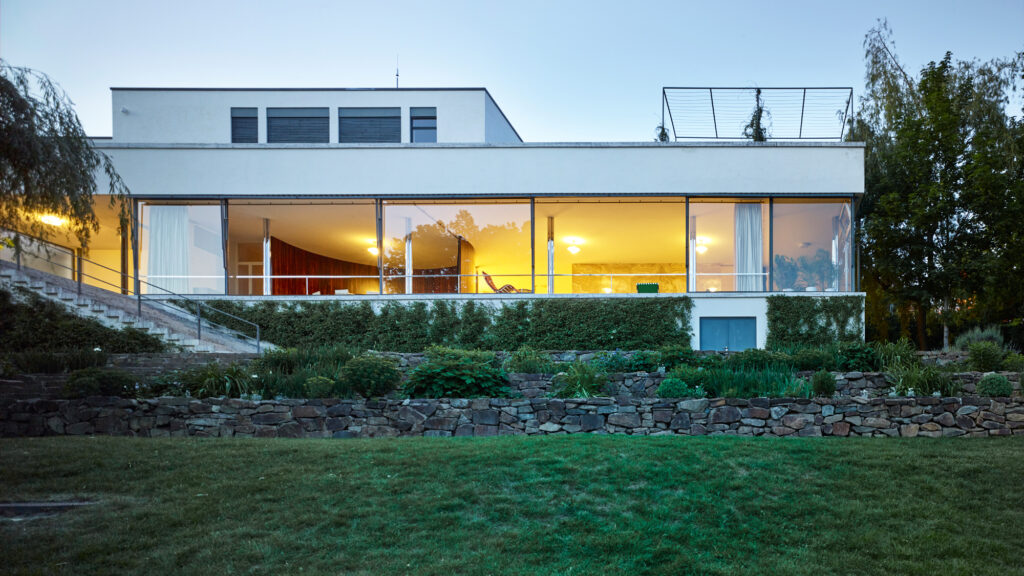
Soft morning light filters through the floor-to-ceiling glass walls as you step onto the polished travertine floor—cool beneath your feet, reflecting the gentle glow of the Moravian sky. The air carries a subtle scent of aged wood and fresh linen; the distant hum of Brno's trams blends with the quiet rustle of leaves in the terraced garden. This is Villa Tugendhat, where Ludwig Mies van der Rohe's revolutionary vision transformed steel, glass, and stone into a living poem of space and light. Completed in 1930, the villa's 23-meter-long (75-foot) glass curtain wall dissolves boundaries between interior and landscape, while the honey-colored onyx partition glows amber when sunlight strikes its translucent surface. You pause beneath the flat roof's cantilevered edge—engineered with a steel frame that eliminates load-bearing walls—and feel the profound calm of intentional design. Here, architecture isn't merely shelter; it's a philosophical statement about freedom, transparency, and the harmony between human habitation and nature. This place matters because it preserves a pivotal moment when modernism redefined how we live, work, and experience space—a legacy that continues to inspire architects and dreamers worldwide.
Why Villa Tugendhat Embodies Architectural Revolution
Villa Tugendhat stands as one of the twentieth century's most influential residential designs, a masterpiece that solved a fundamental challenge: how to create domestic space that feels both expansive and intimate, private yet connected to nature. Commissioned by Grete and Fritz Tugendhat in 1928 and completed in 1930, the villa introduced revolutionary concepts: a free-flowing floor plan enabled by a steel skeleton frame, floor-to-ceiling retractable glass walls that vanish into pockets, and innovative materials like Macassar ebony and golden onyx used not as ornament but as integral spatial elements.
The engineering precision is extraordinary: the steel framework—designed with columns spaced precisely 6.8 meters (22 feet) apart—supports the entire structure, allowing interior walls to be non-load-bearing and reconfigurable. The famous onyx partition, quarried in the Atlas Mountains and book-matched to create symmetrical veining, measures 2.4 meters tall by 3.2 meters wide (8 by 10.5 feet); when backlit by morning sun, it transforms the living space into a luminous sanctuary. Mies van der Rohe's "less is more" philosophy manifests in every detail: the chrome-plated cross-shaped columns, the circular macassar ebony wall that defines the dining area without enclosing it, the underfloor heating system concealed beneath travertine slabs. Historical context deepens its significance: the Tugendhat family fled Czechoslovakia in 1938 as Nazi forces advanced; the villa served as Gestapo headquarters, then Soviet military offices, before falling into disrepair. Meticulously restored between 2010–2012 using original plans and materials, Villa Tugendhat now fulfills a profound cultural need: it offers tangible connection to modernist ideals, allowing visitors to experience how thoughtful design can elevate everyday life. This isn't a museum piece; it's a living testament to the power of vision, craftsmanship, and the enduring belief that beauty and function can coexist in perfect balance.
The Best Time to Experience Villa Tugendhat
The optimal window for visiting Villa Tugendhat stretches from May 10 through September 25, when daytime temperatures hover between 17–24°C (63–75°F) and Brno's gardens display vibrant seasonal color. The sweet spot arrives in late May to mid-June (May 20–June 14), when visitor numbers remain moderate, natural light optimally illuminates the onyx wall between 10:00 AM–12:00 PM, and the terraced garden blooms with heritage roses. Morning tours at 10:00 AM offer the best experience: the glass facade captures soft eastern light, interior spaces feel serene before afternoon crowds, and photography conditions are ideal without harsh shadows.
For architectural enthusiasts, September 8–22 provides golden-hour light that enhances the villa's material textures—onyx glows amber, travertine warms to honey tones, and steel columns cast elegant shadows across white walls. Temperatures during this period average 15–21°C (59–70°F), comfortable for exploring the garden terraces. Avoid November 15–March 10, when tours operate on limited winter schedules (weekends only, 11:00 AM–3:00 PM), daylight shrinks to 8 hours, and temperatures drop to -2 to 5°C (28–41°F) with frequent frost on glass surfaces. Also skip July 15–August 10 during peak tourist season, when tour slots book 8–12 weeks in advance and Brno accommodation prices surge 40–60%.
For official tour bookings and architectural resources, visit: www.tugendhat.eu
Approximate Budget for a 7-Day Trip
This budget breakdown reflects mid-range travel preferences focused on experiencing Villa Tugendhat within the broader Brno region. Prices are listed in euros (€) for international clarity, though local transactions use Czech koruna (CZK) at approximately 1€ = 25 CZK. Estimates assume solo travel; couples can reduce per-person accommodation costs by 30–40% through shared rooms. All figures reflect 2026 pricing research from official sources and verified traveler reports.
- Accommodation: €46–€90 per night for a double room in a three-star hotel or apartment near Brno city center (náměstí Svobody or Veveří streets). Budget pensions start at €33; boutique design-focused hotels command €98–€165 nightly.
- Food: €28–€43 per day. Breakfast costs €5–€8 (hotel buffet with local cheeses and koláče pastries); lunch runs €8–€12 for Moravian classics like svíčková (beef sirloin) or moravský vrabec (park roast); dinner at mid-range restaurants averages €12–€19. Don't miss local specialties: Moravian wine tastings at €6–€11, and traditional trdelník pastries at €2.50–€4.
- Transportation: Round-trip bus from Prague (RegioJet or FlixBus) costs €9–€16; local tram #1 or #3 to Villa Tugendhat (stop "Tugendhatova vila") costs €1.10 single ticket or €3.20 for 24-hour pass. Taxi from city center: €7–€11.
- Attractions: Villa Tugendhat standard tour (60 minutes): €16; premium architectural tour with garden access: €24; Špilberk Castle entry: €8; Brno Underground labyrinth: €7; Cathedral of St. Peter and Paul tower: €4; Villa Stiassni (another functionalist gem): €9.
- Miscellaneous: Villa Tugendhat architectural guidebook: €14–€22; local Moravian wine bottle: €9–€19; photography permit for professional equipment: €20; travel insurance: €20–€35 for the week.
Total estimated budget for 7 days: €570–€840 (excluding international flights to Prague)
7 Essential Villa Tugendhat Experiences
- Experience the onyx wall at mid-morning: Time your tour for 10:00–11:30 AM when eastern sunlight strikes the famous golden onyx partition. Watch as the translucent stone glows with warm amber light, revealing intricate veining patterns that shift subtly as clouds pass overhead. Stand quietly for a moment to observe how the material transforms the space—neither fully opaque nor transparent, it creates a luminous boundary that defines without dividing. Photography permitted without flash; maintain respectful distance to preserve the stone's surface. This is the villa's emotional heart, where Mies van der Rohe's material poetry becomes tangible.
- Walk the free-flowing main floor: Dedicate 20 minutes to experiencing the revolutionary open plan. Notice how the circular macassar ebony wall anchors the dining area without enclosing it; how the chrome columns seem to float beneath the ceiling plane; how retractable glass walls disappear completely, merging interior and garden. Walk slowly, observing sightlines: from the entrance hall through living space to terrace, the villa reveals itself as a sequence of framed views rather than enclosed rooms. Wear soft-soled shoes to protect the original travertine flooring; guides provide context about how the Tugendhat family lived within this innovative space.
- Explore the garden terraces: After the interior tour, spend 15 minutes on the landscaped terraces designed in harmony with the architecture. The sloping garden features original plantings—boxwood hedges, heritage roses, and specimen trees—that frame views of the villa's glass facade. Sit on the stone bench beneath the cantilevered upper floor; notice how the building appears to float above the landscape. Best experienced between 3:00–4:30 PM when afternoon light creates long shadows that emphasize the villa's geometric purity. Free access with tour ticket; respect planting beds and original landscape features.
- Attend the architectural lecture series: On select Thursday evenings (6:00–7:30 PM, May–September), Villa Tugendhat hosts specialized talks by architects and historians (€12, booking required). Topics range from Mies van der Rohe's design philosophy to contemporary preservation techniques. The intimate setting—seating limited to 30 guests in the villa's original study—creates meaningful dialogue between experts and enthusiasts. Book online at least 10 days ahead; lectures conducted in English with Czech translation available. A rare opportunity to deepen understanding beyond the standard tour.
- Photograph the glass facade at golden hour: For exterior shots, visit the public pathway along Černopolní street between 5:30–7:00 PM in summer. The low-angle light illuminates the glass curtain wall, creating reflections of sky and garden while revealing the delicate steel mullions. Use a polarizing filter to manage reflections; tripods permitted on public sidewalks. The villa's minimalist geometry creates compelling compositions against Brno's traditional architecture in the background. Respect neighboring properties; avoid photographing private residences without permission.
- Compare with Villa Stiassni: Extend your modernist exploration with a visit to Villa Stiassni (Hlinky 44), another functionalist masterpiece designed by Ernst Wiesner in 1928. The 45-minute tour (€9, book via www.stiassni.cz) reveals contrasting approaches to modern living: where Tugendhat emphasizes transparency, Stiassni explores spatial compression and expansion. Allow 90 minutes total including tram travel (#5 from city center). The comparison deepens appreciation for Brno's exceptional interwar architectural heritage.
- Reflect in the upper-floor study: During the tour, pause in the intimate study on the upper level—a space designed for contemplation with north-facing windows providing even, shadowless light. Notice the built-in shelving, the discreet storage solutions, the way the room feels both protected and connected to the whole. This was Grete Tugendhat's private retreat; today it offers visitors a moment of quiet reflection on the villa's layered history. Speak softly; the acoustics preserve the space's contemplative atmosphere. A subtle but powerful conclusion to the architectural journey.
3 Hidden Gems Most Travelers Miss
- The Original Service Entrance & Staff Quarters: While tours focus on the main living spaces, the villa's service wing—accessible via special arrangement—reveals the hidden infrastructure that enabled the Tugendhats' elegant lifestyle. Contact the villa office at least 72 hours ahead (info@tugendhat.eu) to request access to the original kitchen, staff staircase, and storage areas. These functional spaces showcase Mies van der Rohe's holistic design approach: even service areas received meticulous attention to light, flow, and materials. Visits limited to small groups (max 6 people); additional fee €10. A fascinating glimpse into the social dynamics embedded in modernist architecture.
- The Archivist's Technical Drawing Collection: On Tuesday and Thursday afternoons (2:00–4:00 PM), Villa Tugendhat archivist Martin Novák occasionally displays original 1929 construction drawings, material samples, and correspondence between Mies van der Rohe and the Tugendhat family. This isn't advertised; express genuine interest in architectural history to tour staff, and they may invite you to view these fragile items in the climate-controlled archive room. Photography prohibited; note-taking encouraged. A small donation to the preservation fund (€5–€10) is appreciated. Contact in advance: archiv@tugendhat.eu.
- The Garden's Original Irrigation System: Behind the main terrace, a discreet access path leads to the villa's 1930s-era irrigation infrastructure—a network of copper pipes and gravity-fed cisterns designed to maintain the garden with minimal mechanical intervention. Ask your guide about this feature during the garden portion of your tour; they can arrange a brief detour (no extra charge). The system demonstrates how sustainability principles were embedded in modernist design decades before the term existed. Best viewed after rainfall when water flow is visible. Respect the working nature of the system; follow staff guidance to avoid damaging historic components.
Cultural & Practical Tips
- Tour etiquette: Villa Tugendhat is a protected UNESCO site; maintain respectful volume throughout the interior. Do not touch original surfaces—onyx, ebony, travertine—as natural oils accelerate deterioration. Photography is permitted without flash in most areas; video recording requires advance written permission via info@tugendhat.cz. Children under 10 must be supervised at all times due to valuable historic materials.
- Language essentials: While tour guides speak excellent English, learning basic Czech phrases shows appreciation. Key pronunciations: "Dobrý den" (DOH-bree den) = Hello; "Děkuji" (DYEH-koo-yee) = Thank you; "Vila" (VEE-lah) = Villa; "Na zdraví" (nah ZDRAH-vee) = Cheers. Many older Brno residents also speak German due to the region's historical ties.
- Booking strategy: Reserve Villa Tugendhat tours 4–8 weeks in advance via the official website; slots fill quickly, especially for weekend morning tours. The premium architectural tour (€24) includes garden access and extended Q&A time with guides—worth the supplement for serious enthusiasts. Students and seniors receive 20% discounts with valid ID; verify current rates online.
- Photography guidelines: Handheld shooting works well in available light; use ISO 1600+ for interior shots without flash. The best exterior light occurs during golden hour (5:30–7:00 PM summer). Drone photography requires written permission from the Czech National Heritage Institute; apply at least 21 days in advance. Respect other visitors' experiences—avoid blocking sightlines for extended setups.
- Weather and packing: Brno's valley location creates microclimate conditions: mornings can be cool even in summer, warming by midday. Pack layers—temperatures can swing 7°C (13°F) between morning and afternoon. Comfortable, soft-soled shoes are mandatory for villa tours (no heels or hard soles to protect historic flooring). Bring a light jacket for garden exploration; the villa's glass walls provide minimal thermal buffer.
- Accessibility considerations: The main floor is wheelchair-accessible via ramp; the upper level and garden terraces involve stairs not suitable for mobility devices. Staff can arrange virtual tour alternatives for inaccessible areas with 48 hours' notice. Service animals welcome; inform the villa office when booking. First aid station located at visitor reception; emergency contact: +420 545 211 234.
- Combining with Brno sights: Villa Tugendhat pairs perfectly with Špilberk Castle (15-minute tram ride) or the Brno Underground labyrinth (10 minutes from city center). Allow 2.5 hours total for the villa: 60 minutes for guided tour, 30 minutes for garden exploration, 30 minutes for travel and preparation. The nearby Café Tugendhat serves excellent Moravian coffee and light meals in a setting inspired by the villa's aesthetic—ideal for post-visit reflection.
Conclusion: Travel with Contemplation, Not Just Checklists
Villa Tugendhat invites more than a tour—it asks for presence. As you stand beneath the cantilevered roof, watching light dance across onyx and travertine, you connect with a vision that redefined how humans inhabit space. This isn't sightseeing; it's bearing witness to a revolution in thought—how steel and glass, carefully considered, can create not just shelter but sanctuary. When you pause in the garden at dusk, observing how the villa's silhouette softens against the Moravian sky, let its quiet discipline recalibrate your pace. In an age of distraction, choose to value what requires intention, craftsmanship, and respect for materials to create. Leave Brno not just with photographs, but with a renewed commitment to mindful observation—honoring places that challenge us to live more thoughtfully, beautifully, and authentically. The villa has stood for nearly a century; it will still be here tomorrow, waiting for those who come not just to see, but to truly understand.