
Cabo da Roca: Where Continental Terminus Meets Atlantic Majesty
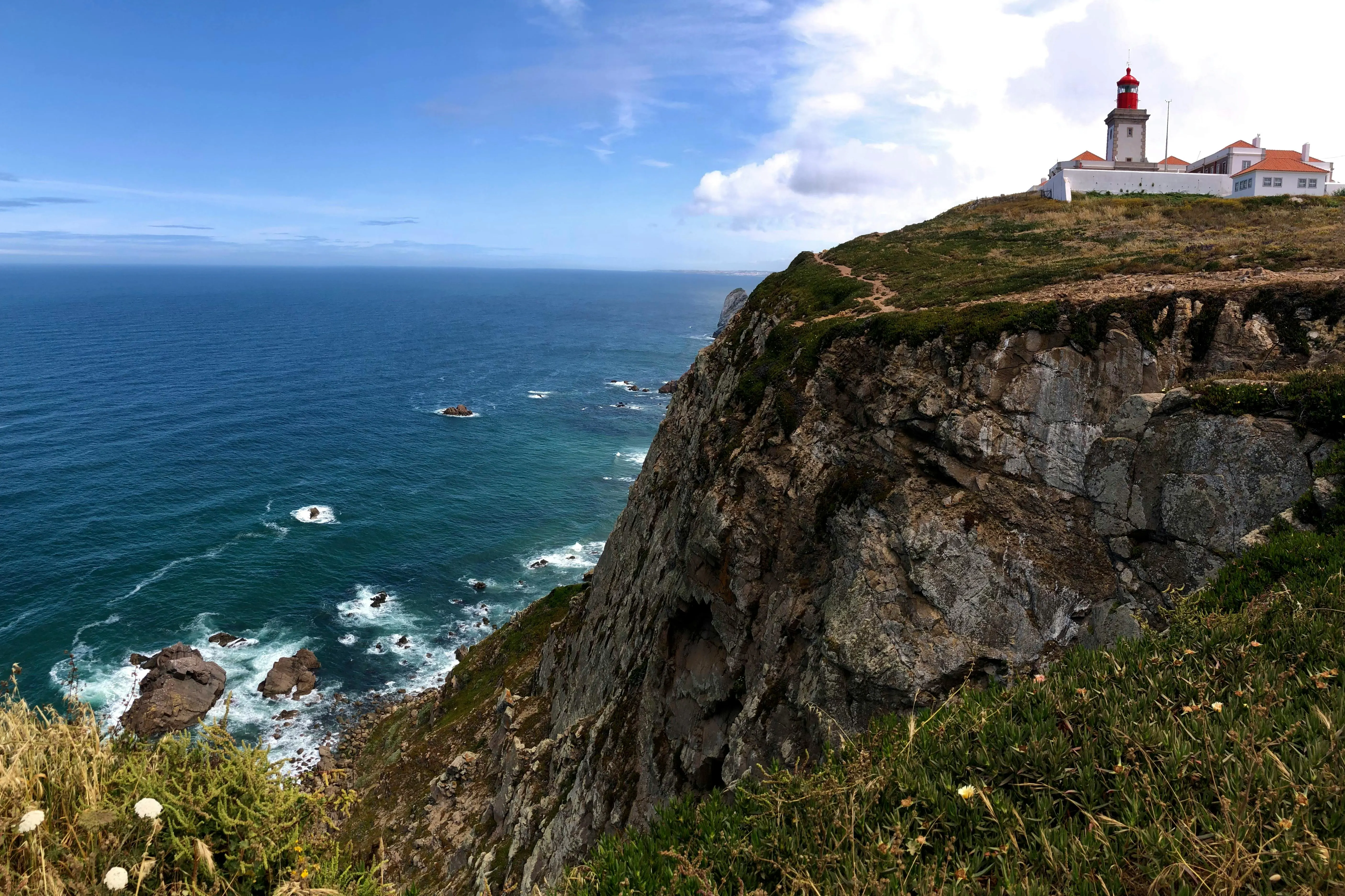
Late afternoon light spills across the Serra de Sintra, painting the churning ocean in ribbons of bruised violet and metallic silver. The air tastes of crushed heather, raw sea salt, and the sharp, mineral tang of eroding limestone. You stand at the edge of a jagged, 140-meter (459-foot) cliff face, listening to the rhythmic, thunderous crash of Atlantic swells hammering the rocks below. A fierce, unrelenting wind pulls at your clothes—the same wind that once filled the canvas sails of early explorers. Ahead of you lies nothing but an endless, churning expanse of water. Marked by a stark stone obelisk, this exact coordinate represents the westernmost extent of mainland Europe. Historically known to Roman navigators as Promontorium Magnum, the edge of the known world, it served as the final visual anchor for Portuguese sailors venturing into the profound unknown. It matters because standing here forces a visceral recalibration of scale, reminding you of the terrifying, awe-inspiring vastness that greeted the Age of Discovery.
Why Cabo da Roca Embodies Maritime Isolation
To understand the significance of Cabo da Roca is to recognize the existential problem it solved for early transatlantic navigation. For centuries, European sailors departing from Lisbon needed a definitive, unmissable geographical anchor before committing their vessels to the open ocean. The dramatic, sheer cliff face of Cabo da Roca provided this absolute boundary. The engineering response to the treacherous coastline came in the form of a 144-meter (472-foot) red brick lighthouse, constructed during the late eighteenth century to prevent the massive carracks and caravels from dashing themselves against the unseen reefs. This cylindrical tower was a marvel of its time, engineered to withstand the violent, salt-laden nortada winds that frequently gust at over 100 kilometers (62 miles) per hour. In the mid-nineteenth century, the lighthouse’s optical system was radically upgraded with a state-of-the-art Fresnel lens—a precisely calculated array of prismatic glass that focused the light into a blinding beam, extending its visual reach to 46 kilometers (28 miles). By providing an infallible, nocturnal navigational fix at the exact edge of the continental shelf, the lighthouse fulfilled a profound psychological and logistical need: transforming the terrifying abyss of the Atlantic into a mathematically charted, survivable corridor for global exploration.
The Best Time to Experience Cabo da Roca
To witness the continental terminus under optimal atmospheric conditions, precise timing is absolutely essential. Plan your visit between May 18 and June 12, or from September 25 to October 10. During these windows, the ambient temperature sits between 17°C and 21°C (63°F–70°F), which is warm enough to stand outside comfortably but cool enough to prevent exhaustion from the wind chill. Arrive precisely at 5:30–7:00 PM to watch the sun dip below the horizon. At this hour, the fading light transforms the red brick lighthouse into a stark silhouette against a fiery sky. You must actively avoid December 1 through February 28. During these deep winter months, violent Atlantic storm systems batter the cliffs; the pathways are frequently closed due to flying debris, and the wind chill can drop the perceived temperature to near freezing. Equally, avoid July 15 through August 25, when the narrow access road is choked with tour buses, destroying the solitary majesty of the landscape. For real-time cliff closures,
Approximate Budget for a 7-Day Trip
Calculating the cost of a coastal immersion near Cabo da Roca requires prioritizing the elegant resort town of Cascais. Staying here allows you to easily access the cape via a scenic coastal bus route while enjoying high-quality seafood and ocean-view accommodations without the premium pricing of Sintra's historic center.
- • Accommodation: €110–€180 per night (boutique ocean-view guesthouse in the center of Cascais, featuring whitewashed walls and breakfast terraces)
- • Food: €55 per day (breakfast €6 for a pastel de nata and espresso, lunch €14 for a garlic prawn camarão alho starter with bread, dinner €35 for a grilled sea bass robalo with boiled potatoes and a carafe of crisp Vinho Verde)
- • Transportation: €30 total (€11.50 for a round-trip combo ticket on the Cascais train line from Lisbon; €4.50 for the Scotturb bus 403 from Cascais directly to the cape; €14 for local Ubers to reach secluded beaches)
- • Attractions: €22 individual prices listed (Cabo da Roca visitor center and certificate: free, Santa Marta Lighthouse Museum: €5, Cascais Citadel Palace: €8, Boca do Inferno cliff viewing platform: free, Museu do Mar: €9)
- • Miscellaneous: €35 (official Cabo da Roca journey certificate from the souvenir shop: €5, hand-painted ceramic tile from a Cascais artisan: €15, tin of premium Portuguese sardines: €8, insulated windbreaker: €7)
Total: €932–€1,497
6 Essential Cabo da Roca Experiences
- Standing at the Stone Obelisk: Walk past the tourist buses and approach the truncated marble pyramid. Run your fingers over the carved Portuguese text. Feel the full, unobstructed force of the Atlantic wind pushing against your chest as you look out over the 140-meter (459-foot) vertical drop to the churning whitecaps below.
- Reading the Words of Camões: Locate the bronze plaque affixed to the monument. Read the famous epigraph by Luís de Camões: "Aqui... onde a terra se acaba e o mar começa" (Here... where the land ends and the sea begins). The poetic weight of the phrase perfectly encapsulates the spatial isolation of the promontory.
- Hiking the Clifftop Trail to Ursa Beach: Walk 15 minutes south from the lighthouse along a rugged, unpaved dirt path. The trail narrows dangerously, hugging the sheer cliff edge. Listen to the deafening echo of the waves bouncing off the limestone walls until the path abruptly descends to a secluded, pristine cove.
- Photographing the Lighthouse at Dusk: Set up your camera 200 meters (656 feet) north of the tower at 6:30 PM. Frame the red brick cylinder against the glowing, pink-tinged clouds. Use a fast shutter speed to freeze the silhouette of the lighthouse while capturing the motion blur of the grass bending in the relentless wind.
- Spotting the Peregrine Falcons: Bring binoculars and scan the craggy rock faces immediately below the visitor center. The inaccessible ledges serve as nesting grounds for peregrine falcons. Watch for their high-speed, aerodynamic dives as they hunt the migrating seabirds riding the coastal thermals.
- Earning the Journey Certificate: Step inside the small, stone-built visitor center. Pay a small fee to receive a personalized, printed document stamped with the official coordinates. The heavy paper feels like a tactile validation of your physical journey to the absolute edge of the continent.
3 Hidden Gems Most Travelers Miss
- The WWII Coastal Bunkers: Located a 10-minute walk north along the rugged coastal path from the main parking lot. It is overlooked because the entrance is obscured by dense, waist-high gorse bushes, and there are no informational signs. These crumbling concrete pillboxes were built to defend the Tagus estuary from naval attacks. Insider tip: push through the thorny bushes to find the bunker slots; you can frame a perfectly dramatic photograph of the Atlantic through the narrow, rusted gun slits.
- The Lighthouse Keeper’s Secret Path: A narrow, gated dirt trail branching off to the left of the main lighthouse entrance. It is missed because the gate looks permanently closed, but it is merely designed to keep cars out. It leads down to a private, rocky outcrop used by the keepers. Insider tip: quietly slip through the pedestrian gap in the gate at 7:00 AM to secure an entirely unobstructed, eye-level photograph of the lighthouse base without a single tourist in the frame.
- The Submerged Whale Bone Grotto: Situated on a small, hidden beach accessible only by scrambling down a steep, unmarked eroded path 200 meters south of the main viewpoint. It is ignored because the descent requires physical agility and gets slippery. At low tide, a sea cave is revealed containing massive, bleached whale vertebrae wedged into the rock crevices. Insider tip: check local tide charts meticulously; the cave is only accessible during a negative low tide, and getting trapped by the incoming swell is highly dangerous.
Cultural & Practical Tips
- • Respect the sheer physical danger of the cliffs; stay strictly behind the low stone barriers. The limestone edges are heavily fractured and eroded, meaning a sudden collapse under human weight is a very real possibility.
- • Learn a vital Portuguese phrase: say "Onde fica o farol?" (ON-deh FEE-kah ooh fah-ROHL), meaning "Where is the lighthouse?" to navigate the sprawling visitor area.
- • Photography requires extreme stabilization; the sustained 40-kilometer (25-mile) per hour winds will introduce severe camera shake. Use a heavy tripod with a weighted hook, or brace your body tightly against the stone walls to capture sharp landscapes.
- • Monitor the nortada wind forecasts relentlessly; if the wind is blowing above force six on the Beaufort scale, park authorities will close the upper clifftop paths due to the danger of pedestrians being physically blown over the edge.
- • Layer your clothing aggressively; even on a cloudless summer afternoon, the wind chill at the cape can make the ambient 22°C (72°F) air feel like a chilling 12°C (54°F). Bring a tightly woven windbreaker and a warm hat.
- • Plan your departure logistics carefully; the Scotturb 403 bus has a highly limited schedule, especially in the late afternoon. Missing the last bus means navigating a 6-kilometer (3.7-mile) walk back to Cascais along a narrow, unlit road with no sidewalk.
Conclusion: Travel with Reverence, Not Just Checklists
Cabo da Roca is not merely a geographic coordinate designed to be hastily checked off a travel itinerary; it is a raw, deeply atmospheric boundary that commands absolute respect. When you choose to travel with reverence rather than rushing to the obelisk for a quick photograph, you begin to honor the terrifying, magnificent power of the Atlantic that shaped Portuguese history. Slow down. Resist the urge to immediately return to the warm tourist bus and instead sit on the cold, wind-blasted stones, listening to the rhythmic, violent crash of the swells against the continent's edge. Mindful tourism here requires acknowledging that the fragile, limestone cliff ecosystem is actively eroding with every passing storm; by staying on the designated paths and resisting the temptation to trespass for a better selfie, you actively help preserve the structural integrity of the promontory. By engaging deeply—feeling the immense salt spray on your face, understanding the navigational lifeline the lighthouse provided, appreciating the poetic finality of Camões’ words—you shift from being a passive observer to a humble witness to the earth's elemental forces. Let the vast, unbroken horizon humble you; that is where the true spirit of Cabo da Roca resides.