
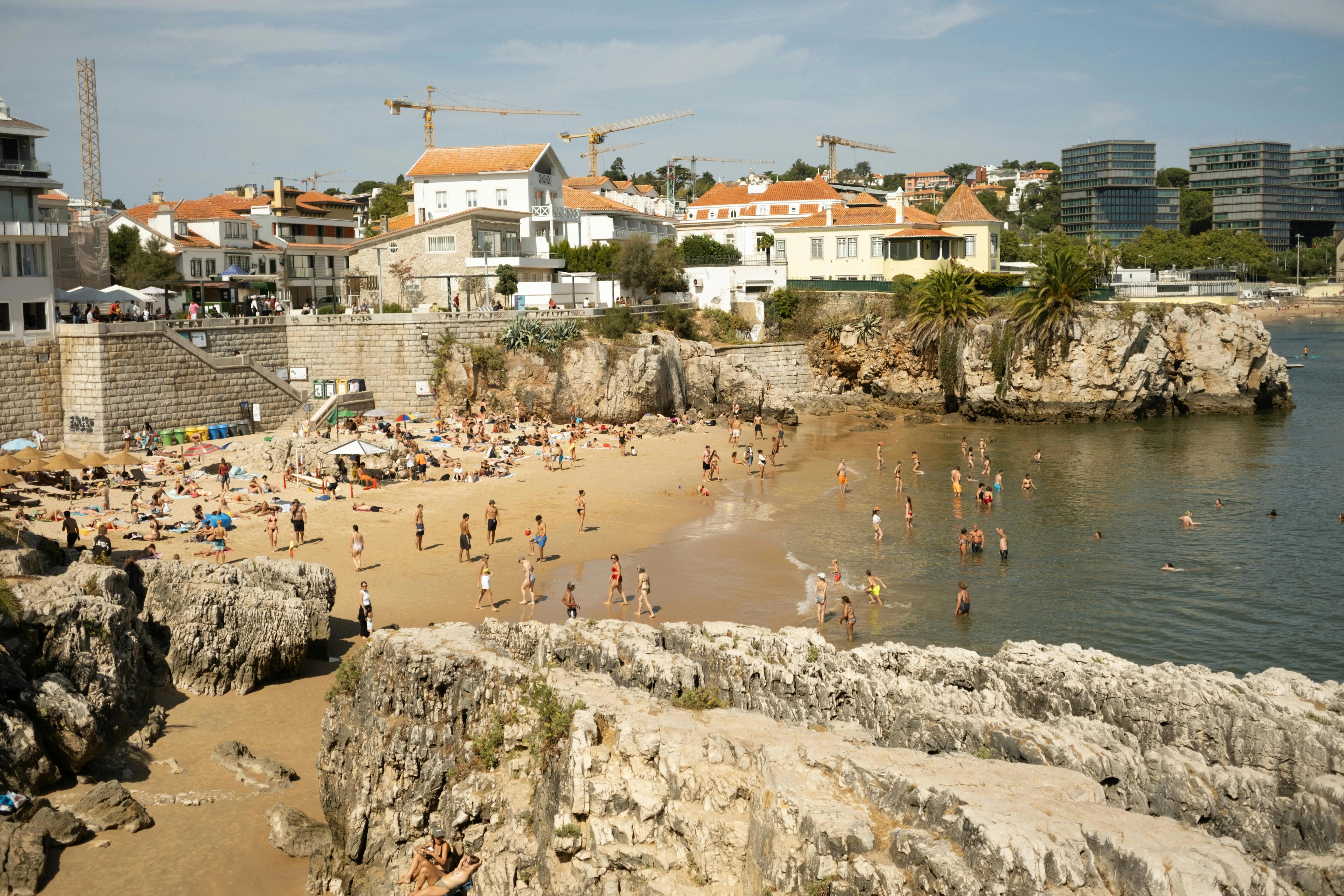
Cascais Beaches: Where Aristocratic Elegance Meets Atlantic Swell
Mid-morning light spills across the Baía de Cascais, gilding the white limestone promenades and warming the elegant, pastel-colored facades. The air carries a sharp, briny tang mixed with the rich aroma of roasting coffee from seaside esplanades. You stand on the edge of Praia da Rainha, listening to the rhythmic clatter of small waves against the curved seawall. Stretching along 5 kilometers (3 miles) of dramatic, jagged coastline, these sandy stretches transformed from a rugged fishing outpost into a royal sanctuary. When King Luís I declared Cascais his summer residence in the late nineteenth century, the quiet coves triggered a dramatic architectural metamorphosis. It matters because Cascais beaches are not merely strips of sand; they are living, tidal stages where Portugal’s seafaring soul collides with its refined, monarchical past, offering a coastal experience steeped in both natural power and cultivated grace.
Why Cascais Beaches Embody Aristocratic Elegance
To understand the Cascais beaches is to recognize the monumental engineering problem they solved: taming a wild, treacherous Atlantic shore for aristocratic leisure. Historically, the coastline was a chaotic series of wind-battered cliffs exposed to the full, destructive force of the ocean swells. Under royal decree, engineers constructed an extensive marginal avenue, utilizing massive blocks of locally quarried limestone to build a continuous, 2.5-meter (8-foot) high breakwater. This sheer masonry wall absorbed the kinetic energy of the Atlantic surf, creating the calm, sheltered micro-bays seen today at Praia da Rainha and Praia da Conceição. The beachfront architecture followed suit, utilizing Pombaline-style gabled facades with distinctive blue and white azulejo tiles. These tiles were specifically engineered to reflect harsh sunlight and resist the corrosive salt spray. The engineering seamlessly disguised the utilitarian seawalls beneath an aesthetic of Belle Époque luxury, fulfilling the need to provide a safe, picturesque maritime playground for European nobility without sacrificing the wild visual drama of the ocean.
The Best Time to Experience Cascais Beaches
To claim a patch of sand without the oppressive crush of peak tourism, precise timing is critical. Plan your visit between May 18 and June 12, or from September 22 to October 10. During these windows, the water temperature sits at a brisk 16°C to 18°C (61°F–64°F), and the air reaches a comfortable 22°C to 24°C (72°F–75°F). Arrive at Praia do Guincho at precisely 8:00–9:30 AM to watch the morning mist burn off the water before the wind surfers arrive. You should actively avoid July 15 through August 25. During this period, temperatures exceed 30°C (86°F), and the narrow pedestrian promenades become gridlocked with visitors. Furthermore, the intense summer sun makes lounging on the white limestone seawalls physically unbearable by midday. For real-time water quality, surf conditions, and coastal event schedules
Approximate Budget for a 7-Day Trip
Calculating the cost of a coastal immersion in Cascais requires balancing the town's upscale reputation with accessible local flavors. This methodology assumes a premium experience without unnecessary luxury markups, focusing on ocean-view lodgings and fresh, daily-caught seafood.
- • Accommodation: €100–€160 per night (boutique sea-view guesthouse in the historic center, featuring whitewashed walls and wrought-iron balconies)
- • Food: €60 per day (breakfast €8 for a pastel de nata and galão, lunch €15 for grilled sardines and salad at a beachside kiosk, dinner €37 for a seafood cataplana stew with a carafe of Vinho Verde)
- • Transportation: €30 total (€11.50 for a round-trip combo train ticket from Lisbon’s Cais do Sodré station; €18.50 for local Ubers to access the western beaches)
- • Attractions: €20 individual prices listed (Santa Marta Lighthouse Museum: €5, Boca do Inferno cliff viewing platform: free, Casa das Histórias Paula Rego: €10, surfboard rental at Guincho: €5/hour)
- • Miscellaneous: €45 (hand-painted ceramic rooster from a local artisan: €18, jar of local Flor de Sal sea salt flakes: €12, high-quality Portuguese linen beach towel: €15)
Total: €1,215–€1,635
6 Essential Cascais Beaches Experiences
- Walking the Marginal at Dawn: Walk the 2.5-kilometer (1.5-mile) seaside promenade at 7:00 AM. Feel the smooth, polished limestone under your sandals. The air is cool, the brightly painted fishing boats are anchored in the sand, and the pastel facades of the town glow softly in the eastern light.
- Swimming at Praia da Rainha: Squeeze between the elegant old mansions to access this tiny, sheltered cove—the "Queen's Beach." The water here is incredibly calm, fully protected by the curved seawall. Float on your back and look up directly at the wrought-iron balconies of the royal neighborhood.
- Feeling the Guincho Winds: Travel 6 kilometers (3.7 miles) west to Praia do Guincho. The sand here is coarse and golden, and the wind hits you with staggering force. Stand at the water's edge and watch the colorful kite-surfers launch themselves into the crashing, white-capped swells.
- Exploring Boca do Inferno: Walk to the western cliffs at 6:00 PM. Listen to the waves crash violently into the porous limestone arches. The sea spray creates a constant, localized rainbow in the golden light, making the "Mouth of Hell" feel intensely dramatic.
- Eating a Bifana on Praia da Conceição: Sit at a blue-and-white striped wooden kiosk at 1:00 PM. Eat a hot, garlic-soaked pork bifana sandwich. The combination of the drying sea salt on your lips and the rich, savory pork fat is an extraordinary culinary contradiction.
- Watching the Sunset from Santa Marta: Stand on the rocky outcrop near the lighthouse at 8:30 PM. The red-painted lighthouse cuts a stark silhouette against a bruised purple sky, perfectly framing the sleek, anchored yachts in the marina below.
3 Hidden Gems Most Travelers Miss
- Praia do Avencas: Located a 10-minute walk east of the historic center. It is overlooked because it sits at the bottom of a steep, residential staircase with no signage directing tourists. It features a unique geological formation of flat, sedimentary rock platforms perfect for tide pooling. Insider tip: visit at exactly low tide to see vibrant sea anemones and small crabs in the isolated pools.
- The Secret Tunnels of the Cidadela: Located beneath the sixteenth-century fortress walls near the marina. Tourists walk directly above them, never realizing the subterranean passages exist. Access is through a small, unmarked gate near the museum. Insider tip: call ahead (+351 214 815 301) as the tunnels are only opened by guided appointment on weekday mornings.
- Praia da Adraga: Located 8 kilometers (5 miles) south of the center. It is missed because public transit is infrequent, requiring a car or a long, winding taxi ride. It features dramatic, reddish cliffs and incredibly soft, golden sand. Insider tip: arrive by 10:00 AM to claim a spot under the ancient, wind-sculpted rock formations that provide natural shade.
Cultural & Practical Tips
- • Respect the local fishing community; do not block the wooden boat ramps on Praia dos Pescadores with your beach towels, as fishermen launch their vessels at unpredictable hours.
- • Learn a polite Portuguese phrase: say "Bom dia" (BOHM dee-ah) to the lifeguards, and "Onde fica a praia?" (ON-deh FEE-kah a PRAH-yah) if you need directions to a specific cove.
- • Beware of the Guincho winds; never leave your beach umbrella unattended, as the sudden, fierce Atlantic gusts will launch it into the sea or onto other sunbathers.
- • Photography on the cliffs requires a polarizing filter; the intense reflection off the Atlantic water washes out the deep blue tones without one, leaving your images looking flat and overexposed.
- • Pack layers; the temperature can drop 10 degrees in minutes when the sun dips behind a cloud or the afternoon nortada wind picks up.
- • Be mindful of the tidal currents; Praia do Guincho has dangerous rip currents. Only swim in the designated, lifeguard-patrolled zones between June and September.
Conclusion: Travel with Reverence, Not Just Superficiality
The Cascais beaches are not merely sun-traps designed for passive tanning; they are dynamic, fragile coastal ecosystems intertwined with centuries of Portuguese maritime history. When you choose to travel with reverence rather than treating the coastline as a disposable luxury backdrop, you begin to honor the immense engineering that protects the shore. Slow down. Resist the urge to bounce between beaches for the perfect photograph and instead sit on the marginal seawall, feeling the salty spray on your face as the traditional fishing boats return. Mindful tourism recognizes that the limestone breakwaters and delicate dune systems are constantly eroding under the relentless Atlantic assault; by staying on designated paths and respecting the local fishing heritage, you become a guardian of this aristocratic shore. Let the rhythmic, untamed pulse of the swell humble you; that is where the true elegance of Cascais resides.