
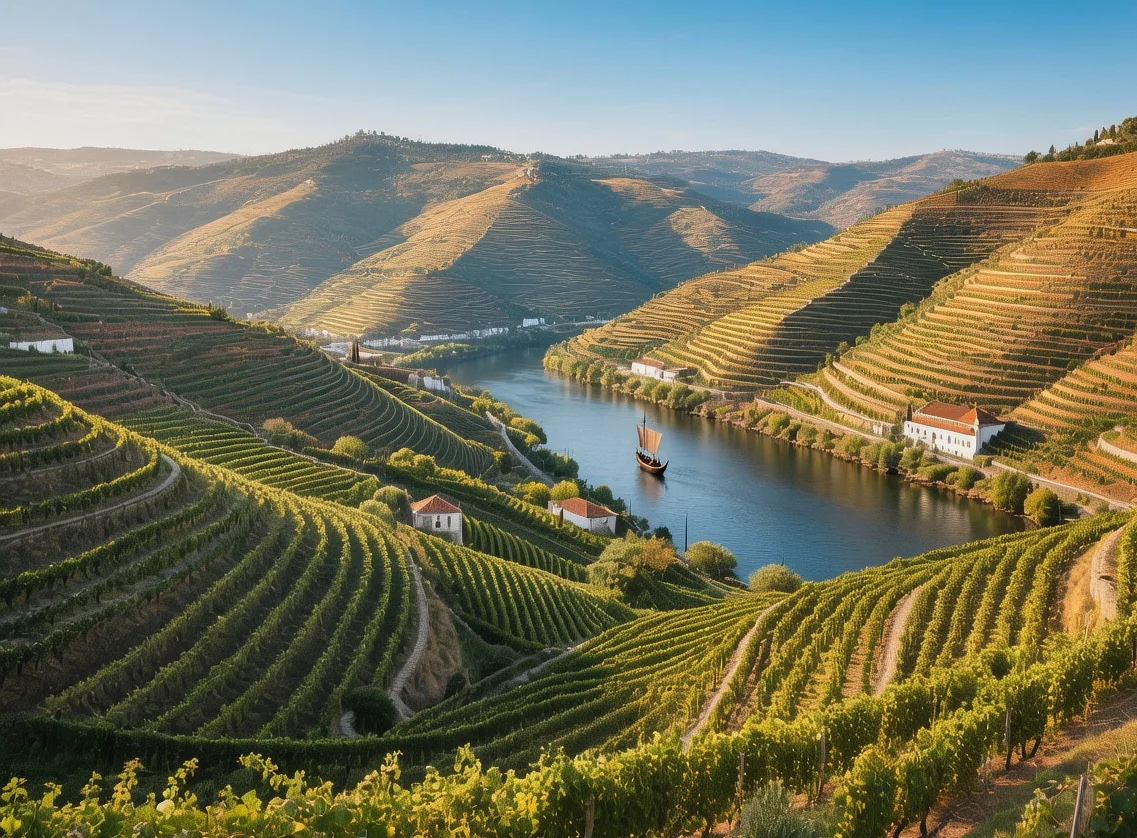
Douro Valley Vineyards: Where Terraced Grapes Meet Ancient Schist Slopes
Late afternoon light spills across the valley, igniting the sprawling, geometric patterns of the vineyards in a fiery mosaic of gold and deep green. The air smells intensely of crushed rock, baking clay, and sweet, fermenting grapes. You stand at the edge of a sheer, 45-degree terrace, listening to the distant, rhythmic chug of a diesel engine echoing off the granite cliffs. Stretching across a 600-kilometer (372-mile) corridor along the Douro River, this landscape represents the oldest demarcated wine region in the world. Conceived as a solution to rampant wine fraud in the mid-seventeenth century, the valley transformed a rugged, mountainous gorge into a feat of human agricultural engineering. It matters because it is not merely a production facility; it is a living, breathing testament to the enduring marriage between human ingenuity and the unforgiving schist soil that makes the region's world-famous nectar possible.
Why Douro Valley Vineyards Embody Agricultural Engineering
To understand the Douro Valley vineyards is to recognize the profound logistical crisis they solved for the international wine market. By the mid-seventeenth century, unscrupulous blending was ruining the reputation of Portuguese exports. To solve this, the Marquês de Pombal instituted the world’s first legally protected wine region—the Demarcated Region. However, the physical terrain presented a brutal challenge. The steep, fragmented slopes possessed highly irregular topography that could not be worked by standard plows. Engineers solved this by constructing thousands of small retaining walls from local schist, painstakingly carving the mountainside into a massive, continuous staircase of vines. This terracing solved the need for erosion control, forcing rainwater to trickle down to the river without washing away the fragile topsoil. Over two millennia, this agricultural architecture matured, blending Roman-era plantation techniques with eighteenth-century engineering. The deep, fractured schist soil absorbs and radiates stored heat, a technical necessity that forces the grapes to ripen slowly, concentrating their sugars to perfection. By transforming sheer, unstable cliffs into a highly organized, gravity-defying staircase of greenery, the Douro Valley fulfilled the deep societal need to produce consistent, high-quality wine in massive quantities, cementing Portugal’s economic dominance in the global wine trade.
The Best Time to Experience Douro Valley Vineyards
To witness the terraces in their full, vibrant splendor, precise timing is absolutely essential. Plan your visit between May 18 and June 12, or from September 25 to October 15. During these windows, the ambient temperature hovers between 18°C and 22°C (64°F–72°F), making the steep vineyard walks deeply pleasant. Arrive precisely at 10:00–11:30 AM. At this hour, the angled sunlight perfectly highlights the geometric precision of the terraces. Avoid July 15 through August 25. During this brutal stretch, temperatures routinely exceed 32°C (90°F), the midday heat radiating off the schist becomes physically exhausting, and the harvest chaos disrupts the tranquil beauty of the landscape. For official demarcation maps, vineyard visiting hours, and harvest forecasts,
approximate budget for a 7-day trip
Calculating the cost of a luxury immersion in the Douro Valley requires prioritizing the quintas over river access. Staying inside the estates eliminates the chaotic transit routes, allowing you to wake up directly within the terraced landscape, maximizing your time in the vines rather than navigating winding mountain roads.
- • Accommodation: €250–€400 per night (luxury quinta accommodation in the heart of the Baixo Corgo, featuring antique furnishings, a private balcony, and panoramic river views)
- • Food: €100 per day (breakfast €15 for a multicourse farm-to-table spread, lunch €25 for a gourmet petiscos platter paired with a chilled glass of Douro white, dinner €60 for a multi-course tasting menu featuring slow-roasted goat and vintage Port tasting at a historic cellar)
- 1• Transportation: €75 total (€50 for a private driver for a full-day vineyard tour; €25 for a scenic one-way boat ride on the river to Porto)
- • Attractions: €40 individual prices listed (In-depth cellar tour and premium tasting at a historic quinta: €25, Rabelo boat cruise from Pinhão: €12, Museu do Douro admission: €3) • Miscellaneous: €90 (premium aged Tawny Port direct from the barrel: €50, handmade wicker basket from a local artisan: €25, luxury cashmere scarf from a boutique: €15)
Total: €2,105–€3,005
6 Essential Douro Valley Vineyard Experiences
- Walking the Terraced Paths of Quinta do Vallado: Step out of the tasting room and walk directly into the vines. Feel the dry, crumbly schist beneath your boots. Stop at a viewpoint above the river. Look down the vertical drop to see the exact boundary where the vineyards end and the river begins, feeling the sheer vertical drop of the ancient retaining walls.
- Tasting from the Oak Barrels: Step into the dark, damp cellar of a historic cellar. The air is heavy with the sweet, pungent aroma of evaporating alcohol. Swirl a glass of 20-year Tawny Port in your glass. The viscous liquid coats the sides of the crystal, catching the ambient light. Tasting notes reveal rich notes of dried fig, roasted almonds, and toasted cinnamon.
- Riding the Vintage Rabelo Boat:
Board the traditional, flat-bottomed wooden boat at the Pinhão quay. Sit on the wooden benches as the skipper pushes off from the riverbank. Feel the gentle, rocking motion of the water. Look up at the impossibly steep terraces rising from the water's edge.
- Inspecting the Granite Lagares at Quinta da Roêda: Walk behind the main building to find the shallow, open-air fermentation tanks carved from solid granite. Run your fingers over the rough, tactile stone. Notice the deep, wine-stained channels where the deep crimson juice of the grapes was pressed by foot. The raw, industrial beauty of the lagares provides a profound connection to the physical labor required to make Port.
- Dining Al Fresco at a Quinta: Sit at a stone table overlooking the valley at 1:00 PM. Eat a plate of smoked ham, olives, and regional cheeses. The combination of the salty meat and the crisp, dry breeze creates a stunning counterpoint to the sweet, fortified wines.
- Watching the Sunset from a Miradouro: Drive to the highest accessible viewpoint above the river. Wait as the sun dips below the horizon. The light transitions from brilliant gold to deep violet, illuminating the terraces from above, revealing the staggering scale of the agricultural labyrinth below.
3 Overlooked Wonders Most Travelers Miss
- Museu do Douro: Located inside the former convent in Lamego. It is overlooked because most tourists bypass the town entirely, heading straight for the river. This small, intimate museum features impeccably preserved agricultural tools and perfectly detailed dioramas showing the entire winemaking process. Insider tip: visit at 9:30 AM to avoid the occasional tour buses, allowing you to study the ancient wooden wine presses in absolute silence.
- The Art Collection at Quinta da Roêda: Located in the upper gardens. It is missed because visitors focus entirely on the wine cellars. This hidden gem features an extraordinary collection of contemporary Portuguese sculpture. Insider tip: walk the perimeter fence at 4:00 PM when the low, slanting sunlight turns the bronze statues into glowing silhouettes against the lush green vineyard backdrop.
- The Roman Milestone of Almendra: Located on a rugged dirt track near the Spanish border. It is completely ignored because there are absolutely no signs directing tourists to the site. It features a weathered, cylindrical marble pillar inscribed with Latin text establishing the ancient Roman boundaries of the region. Insider tip: hire a local 4x4 vehicle to access the unpaved roads; the journey provides a raw, unvarnished look at the ancient, unexcavated Roman ruins.
Cultural & Practical Tips
- • Learn a polite Portuguese phrase: say "Bom dia" (BOHM dee-ah) to the vineyard guides, and "Obrigado" (oh-bree-GAH-doh) when concluding your tasting.
- • Dress smart-casual; while vineyards are working farms, wearing high heels or open-toed sandals is highly discouraged. Wear flat, closed-toe shoes to safely navigate the uneven, loose schist paths of the terraces.
- • Photography inside the cellars requires a steady hand; the low light and dark stone interiors demand a high ISO setting. Brace your elbows firmly against the tasting counters to stabilize your camera to avoid blurry photos.
- • Be acutely aware of the narrow, winding mountain roads; local drivers take the blind, hairpin turns at aggressive speeds. If driving, pull over frequently at the designated pull-outs to allow faster cars to pass without triggering dangerous tailgating incidents.
- • Pack layers; the microclimate in the valley shifts rapidly. A sunny, warm morning in the terraces can drop to a chilly breeze by late afternoon once the sun dips behind the mountains.
- • Respect the agricultural workers; do not wander into active vine rows that are undergoing pruning; straying from the marked paths can inadvertently damage the delicate root systems of the vines.
Conclusion: Travel with Deep Reverence, Not Just Superficial Consumption
The Douro Valley vineyards are not merely a picturesque backdrop designed for social media documentation; they are a living, engineered ecosystem that demands deep, respectful engagement. When you choose to travel with reverence rather than treating the cellars as a checklist on a checklist, you begin to honor the immense physical labor required to carve a 600-kilometer corridor out of solid rock. Slow down. Resist the urge to rush through three quick tastings and instead sit quietly on a terrace wall, feeling the rough, fractured schist beneath your palms. Mindful tourism recognizes that the delicate terraces possess a finite tolerance for the friction of tourist footsteps; sliding on the loose stone causes severe erosion to the retaining walls. By engaging deeply—understanding the agricultural engineering of the slopes, respecting the intense physical labor of the harvest, pausing to appreciate the aroma of the fermenting grapes—you shift from being a passive wine consumer to a guardian of agricultural heritage. Let the vast, silent scale of the terraced slopes humble you; that is where the true majesty of the Douro Valley resides.