
Early Christian Necropolis of Pécs: Where Roman Martyrdom Meets Eternal Frescoes
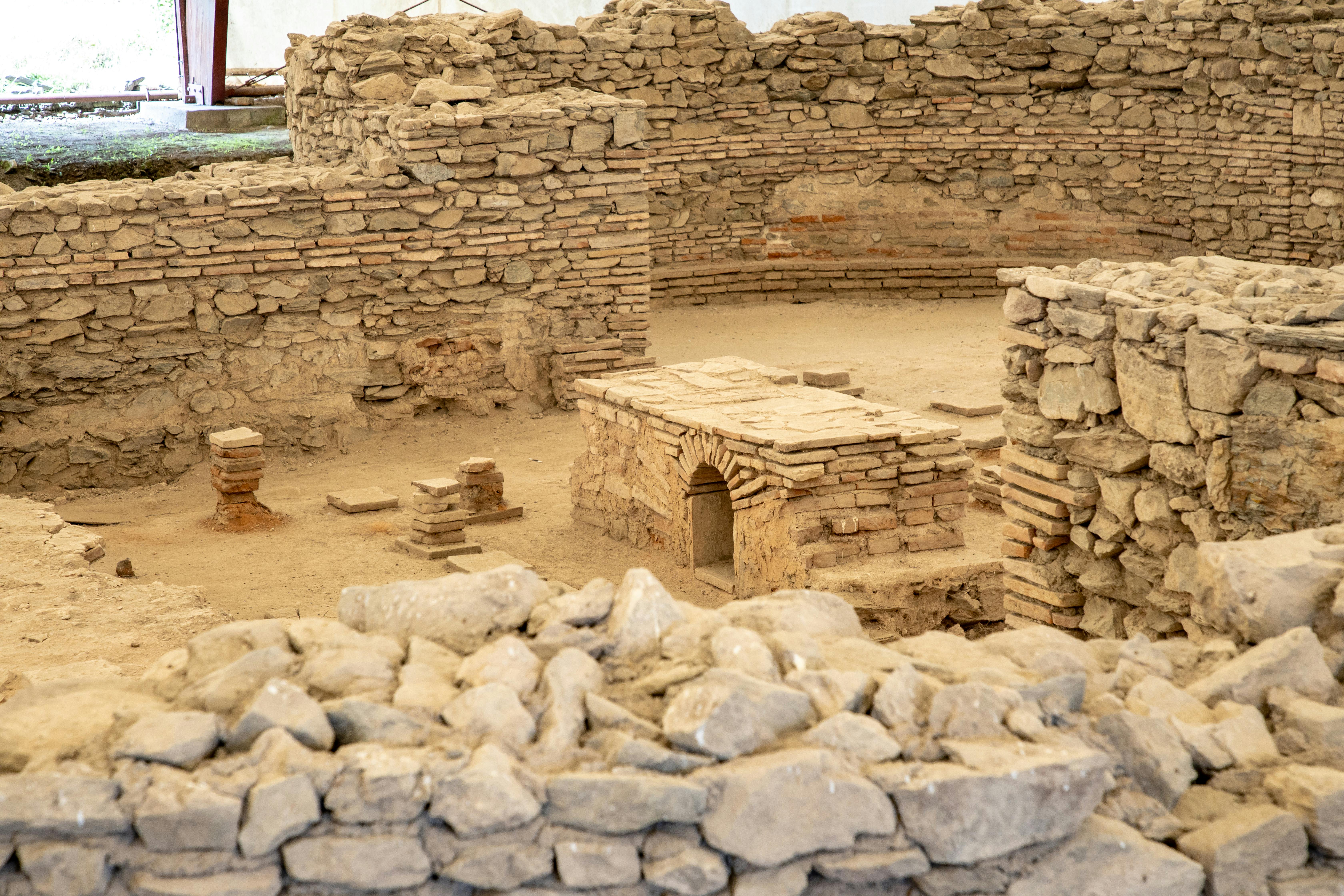
The descent begins with a single step—down worn stone stairs, into the cool limestone silence of the 4th century. You smell damp earth and ancient dust; your voice echoes off vaulted ceilings painted with vines, prophets, and prayers. Below the streets of modern Pécs—below the trams and cafés and university chatter—lies Sopianae, a Roman town that refused to die. Here, in a cemetery that spans 3.76 hectares and contains more than 500 burial monuments, early Christians built their final resting places not as hiding spots but as declarations . Above ground, memorial chapels rose like stone promises. Below, burial chambers held sarcophagi and brick tombs, their walls adorned with the oldest Christian frescoes north of the Italian peninsula . Discovered in 1782 when workers demolished a Renaissance palace, this UNESCO World Heritage site (inscribed in 2000) preserves the eternal dialogue between Roman engineering and Christian faith . You walk where martyrs were honored—and where history speaks in pigments and prayer.
Why the Early Christian Necropolis Embodies Late Roman Faith and Craftsmanship
The necropolis solved a profound problem for 4th-century Christians in the Roman province of Pannonia: how to honor the dead without violating Roman law while expressing a new, unshakable faith. The solution emerged as two-story monuments—underground burial chambers (cubicula) hewn from limestone, topped with above-ground memorial chapels (cellae memoriae) where families gathered for funeral feasts and prayer . Of the 16 excavated monuments, the most famous—the Cella Septichora, the Cella Trichora (with its three apses), and the Cella Thaurica (featuring a central apse and two side chambers)—display sophisticated Roman vaulting techniques merged with Christian iconography . The Peter-Paul Chamber holds the site’s most celebrated frescoes: Christ as the Good Shepherd among peacocks and vines, Adam and Eve in the Garden, and the three Hebrews walking unharmed through the fiery furnace . Archaeologists continue uncovering this underground city—the densest collection of burial monuments in any northern or western Roman province . What you see isn't ruins; it's resilience carved in stone.
The Best Time to Experience the Early Christian Necropolis
Because the necropolis sits entirely underground, it maintains a constant temperature of 12–15°C (54–59°F) year-round, making it a true four-season destination. For the most comfortable above-ground exploration, visit from May 1 through June 30 or September 1 through October 15, when Pécs enjoys daytime temperatures of 19–25°C (66–77°F) and the city’s parks bloom or blaze with autumn color . The necropolis opens daily from 10:00 AM to 5:45 PM (final entry at 5:30 PM), though hours reduce in winter . For a truly unforgettable experience, book the World Heritage Night Tour (offered December through February), where you explore the labyrinth with only a headlamp—the shadows making the ancient frescoes feel newly painted . Avoid late July through mid-August if you dislike crowds, as European tourists flood the region, though the underground chambers never feel packed. Check official schedules at www.vilagoroksegpecs.hu/en.
Approximate Budget for a 7-Day Trip
Pécs offers remarkable value—significantly cheaper than Budapest or Western European historic cities. The following mid-range budget includes necropolis entry, plus time exploring Pécs’ mosques, cathedral, and Zsolnay Quarter. Prices in Hungarian Forint (HUF); 1 EUR ≈ 385 HUF in 2026.
- Accommodation: 12,000–30,000 HUF (€31–78) per night. Budget guesthouses near Széchenyi Square start at 10,000 HUF; mid-range hotels like Palatinus Hotel (on the main square) run 28,000–40,000 HUF including breakfast. The university district offers cheaper student-focused hostels from 8,000 HUF .
- Food: 6,000–12,000 HUF (€16–31) per day. Breakfast at your guesthouse: 1,500 HUF. Lunch: 2,000–3,500 HUF for halászlé (fisherman’s soup) or lángos (fried dough). Dinner: 3,000–5,000 HUF at traditional restaurants; a glass of Villány red wine—some of Hungary’s finest—adds 800–1,200 HUF .
- Transportation: 3,000–7,500 HUF (€8–19) for the week. Train from Budapest’s Keleti station to Pécs: 4,200 HUF one-way (2.5–3 hours) . Local bus tickets: 350 HUF per ride. Pécs is compact and walkable, so you may not need transportation within the city.
- Attractions: Early Christian Necropolis (Cella Septichora Visitor Centre): 2,500 HUF (€6.50) adult, includes access to all exposed burial chambers. Combined ticket with Night Tour: 4,500 HUF (€11.70). Pécs Cathedral: free for main hall, 1,500 HUF for tower climb. Zsolnay Museum: 2,000 HUF. Mosque of Pasha Qasim: free entry. Csontváry Museum: 1,800 HUF .
- Miscellaneous: 8,000–15,000 HUF (€21–39). Zsolnay porcelain souvenir (eosin glaze miniature): 4,000–10,000 HUF. Villány wine bottle: 2,500–6,000 HUF. Pécs Card (72-hour museum pass + discounts): 4,500 HUF.
Total for 7 days (mid-range, solo traveler): 131,000–250,000 HUF (€340–650). Couples sharing accommodations spend roughly €550–1,000 combined. Budget travelers can reduce this to €250–350 by staying in hostels and self-catering .
7 Essential Early Christian Necropolis Experiences
- Descend into the Cella Septichora: The visitor centre—modern architecture that protects ancient stones—leads directly into this seven-apsed burial chamber (its name means “hall of seven chapels”). Stand beneath the 4th-century vaulting and examine the fresco fragments: stylized flowers, geometric borders, and the faint outline of a praying figure (the orans). The chamber was discovered only in 2000 during construction of a parking garage—a reminder that Pécs still hides secrets.
- Take the World Heritage Night Tour with a Headlamp: From December through February, the visitor centre offers one-hour English-language tours where you receive a headlamp and follow a guide through unlit sections of the necropolis . The experience transforms the site: shadows dance across the Peter-Paul Chamber’s Adam and Eve fresco, and the silence is absolute except for your guide’s whispered explanations. Book ahead (+36 30 701 3771) as tours limit groups to 15 people.
- Find the Three Hebrews in the Furnace: In the Peter-Paul Chamber, one of the best-preserved frescoes depicts Shadrach, Meshach, and Abednego standing unharmed amid flames—a popular Early Christian symbol of resurrection and divine protection . The figures wear Persian-style tunics, and the fire is rendered in vivid red and ochre. The chamber is accessible only on guided tours; ask your guide to point out the tiny fragment where a fourth figure (an angel) once stood above them.
- Walk the Sopianae Roman Walk (Free App): Download the free “Sopianae Roman Walk” mobile app (available in English and Hungarian) before your visit . Using GPS, the app guides you to 23 reconstructed Roman buildings across modern Pécs, including the necropolis, and overlays 3D models of how each structure appeared in the 4th century. The “Late Roman Early Christian Cemetery tour” focuses specifically on the UNESCO site.
- Visit the Cella Trichora at Sunset: This above-ground memorial chapel—distinguished by its three apses (a triconch layout)—sits in a small park just outside the main visitor centre . Visit between 4:00–5:00 PM (winter) or 6:00–7:00 PM (summer) when golden light pours through the reconstructed glass roof, illuminating the fragments of original floor mosaics—geometric patterns in white, black, and red tesserae.
- Explore the Mausoleum of the Christian Family: Hidden beneath a modern apartment block on Szent István Square, this two-story mausoleum contains three burial niches and a rare depiction of the monogramma Christi (Chi-Rho symbol) carved into limestone . Access requires a separate key from the visitor centre (ask at the ticket desk). The guards will accompany you for this 15-minute detour—tip them 500 HUF for the trouble.
- Combine with the Mosque of Pasha Qasim: A 12-minute walk from the necropolis brings you to Hungary’s largest surviving Ottoman mosque, built in the 16th century and now converted into a Catholic church . The contrast is jarring and instructive: Christian necropolis underground, Islamic architecture above ground, all within a city that has been Roman, Hungarian, Ottoman, and European. The mosque’s minaret (climbable for 500 HUF) offers panoramic views of the cathedral—and the necropolis hidden beneath.
3 Hidden Gems Most Travelers Miss
- The Unmarked Chamber Under Király Street: At 17 Király Street—a pedestrian shopping avenue—a metal grate in the pavement covers a skylight into an unexcavated burial chamber. Peer through the bars between 11:00 AM and 2:00 PM when the sun is directly overhead, and you’ll see intact frescoes of Jonah and the Whale, still covered in protective sediment. The chamber was discovered in 1986 during sewer work but has never been fully excavated due to its location beneath a historic building. Few tourists know to look down.
- Zsolnay Fountain’s Eosin Glow at Dusk: Directly above the necropolis on Széchenyi Square, the Zsolnay Fountain (1903) features ceramic tiles made with the factory’s signature eosin glaze—a metallic finish that shifts from green to purple to gold depending on the light . Visit between 7:30–8:30 PM (May–September) when the surrounding buildings illuminate, and the fountain seems to glow from within. This sits directly above the underground chambers—a poetic union of Pécs’ ancient and artistic souls.
- The Hidden Heritage of Sopianae App’s 3D Reconstructions: Beyond the standard Roman Walk app, the “Hidden Heritage of Sopianae” application (also free) offers a “Virtual Time Travel” feature that overlays interactive 3D models of the burial chambers as they appeared in the 4th century . Use it while standing in the Cella Septichora: you’ll see sarcophagi in their original positions, frescoes fully restored, and even digital reconstructions of the funeral ceremonies. Most visitors skip the download—don’t make that mistake.
Cultural & Practical Tips
- Photography rules: No flash inside any burial chamber—the light degrades 1,600-year-old pigments. Natural-light photography is permitted in the Cella Septichora and Cella Trichora; tripods require a 2,000 HUF permit from the visitor centre desk. The Night Tour explicitly bans all photography (the headlamps create glare on protective glass).
- Learn basic Hungarian phrases: Köszönöm (KUH-suh-nuhm) means “thank you”; Jó napot kívánok (YOH NA-pot KEE-vah-nok) is a formal “good day.” English is widely spoken at the visitor centre and major attractions, but less so in neighborhood bakeries. Hol van a Cella Septichora? (HOL vahn ah TSEL-lah SEPT-ee-koh-rah?) asks “Where is the Cella Septichora?”
- Respect the sacred space: Though the necropolis is an archaeological site, it was originally a cemetery. Speak quietly, don’t touch the frescoes (oils from skin damage the surface), and keep at least one meter from any exposed wall. Children under six are discouraged—the low ceilings and dark chambers can be frightening.
- Pécs Card vs. individual tickets: The 4,500 HUF (€12) Pécs Card covers 10 museums including the necropolis, Zsolnay Museum, and Csontváry Museum, plus unlimited bus travel and 10–20% discounts at restaurants . If you plan to visit three or more museums, buy the card at the visitor centre. The necropolis alone costs 2,500 HUF; the break-even point is three museums.
- Museum fatigue is real: Pécs has nine major museums within a 15-minute walk . Don’t try to see more than two or three in a day. The necropolis requires 90 minutes minimum; add the Zsolnay Museum (another 90 minutes) and you’ve reached saturation. Save the Csontváry and Vasarely museums for a second day.
- Accessibility: The Cella Septichora Visitor Centre is fully wheelchair accessible with ramps and an elevator. However, the Cella Trichora and individual chambers on Szent István Square have steps and narrow doorways (minimum width 65 cm). Call +36 30 701 3771 in advance to arrange accessible routes.
- Combine with a Villány wine afternoon: The Villány wine region—famous for full-bodied reds—lies 30 minutes south of Pécs by bus (500 HUF). After a morning underground, spend an afternoon tasting cabernet franc and merlot at family-run cellars like Gere Attila Pincészete (tastings from 2,500 HUF) . The contrast between limestone tombs and limestone vineyards is oddly harmonious.
Conclusion: Travel with Reverence, Not Just Curiosity
The Early Christian Necropolis asks nothing of you except stillness. You cannot rush through 1,600 years; you cannot photograph your way to understanding. Stand in the Cella Septichora and listen—not for voices, but for the absence of them. These chambers held people who died believing in resurrection, who painted vines on their tombs because life, they insisted, continues. When you finally climb back into the Pécs sunshine—past the trams and the students and the smell of fresh bread—you carry something with you: an awareness that the dead are not gone. They are beneath your feet, waiting for you to slow down, to notice, to remember. So walk softly. Stay longer than you planned. Let the frescoes teach you what pigments cannot fade: hope.