
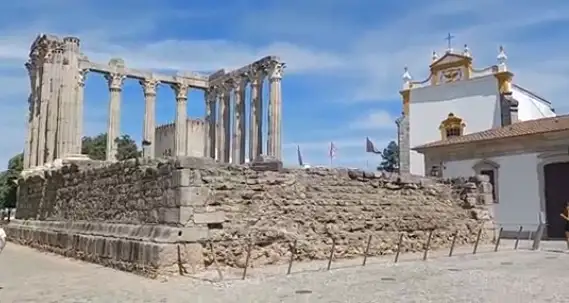
Évora Roman Temple: Where Imperial Grandeur Meets Alentejo Golden Light
Twilight settles over the Alentejo plain, casting a honeyed glow across the Corinthian columns of the Évora Roman Temple. You stand in the Largo do Conde de Vila Flor, listening to the quiet murmur of evening diners and the distant clatter of ceramic plates from nearby taverns. The air smells of roasted garlic, exhausted heat radiating from ancient granite, and the faint sweetness of blooming orange trees. Before you rises a structure that defies the centuries—14 Corinthian columns, each standing 7 meters (23 feet) tall, supporting a fractured but intact architrave. Built as a sacred sanctuary to the emperor during the early days of the Roman Empire, this monument was eventually swallowed by the medieval city, accidentally preserved within the butcher shops and feudal halls of later eras. The Évora Roman Temple matters because it is not a ruin reclaimed by nature, but an architectural survivor that was forcibly incorporated into the living, breathing fabric of a Portuguese city, offering an unbroken visual link to the vastness of antiquity.
Why Évora Roman Temple Embodies Imperial Grandeur
The Évora Roman Temple embodies imperial grandeur because it solved the complex psychological problem of projecting absolute Roman authority in a distant, newly conquered province. Constructed during the early imperial period, likely under Emperor Augustus or Tiberius, the temple served as a visual anchor for the Roman settlement of Liberalitas Iulia. To achieve this, Roman engineers relied on sophisticated structural geometry and premium materials. The temple sits upon a massive rectangular podium measuring 25 meters (82 feet) by 15 meters (49 feet), constructed from solid blocks of local granite. This elevated base physically and symbolically raised the sacred space above the mundane street level, forcing citizens to literally look up to the authority of the empire. The 14 fluted columns, carved from Estremoz marble—a stark, gleaming white stone imported from quarries 50 kilometers (31 miles) away—feature intricate Corinthian capitals. These capitals were engineered with tightly scrolled acanthus leaves designed to catch the harsh Alentejo sunlight, creating deep shadows that emphasized the density of the stonework. The entablature they support utilizes a complex system of architraves and friezes to distribute the immense downward weight of the heavy stone roof evenly across the slender columns. By utilizing the optical illusion of entasis—a subtle, convex curvature built into the column shafts—the architects prevented the columns from appearing pinched or concave, ensuring the temple looked imposingly perfect from every angle in the busy forum.
The Best Time to Experience Évora Roman Temple
To experience the Évora Roman Temple in its most photogenic and evocative state, plan your visit between October 1 and November 10. During this narrow window, the relentless summer heat has dissipated, and the surrounding Alentejo plains transform into a patchwork of golden wheat stubble and vibrant green winter crops. Temperatures are exceptionally mild, hovering between 16°C and 22°C (61°F–72°F)—ideal for standing in the sun-drenched square without physical discomfort. Arrive precisely between 6:30 and 7:45 PM. At this golden hour, the low sun strikes the marble columns directly, turning the ancient stone a warm, luminous pink, while the adjoining medieval cathedral provides a dramatic, shadowed backdrop. You should firmly avoid July 15 through August 25. During these weeks, daytime temperatures routinely exceed 38°C (100°F); the open plaza lacks shade, and the reflective granite pavement radiates blistering heat that makes extended contemplation unbearable. For current evening illumination schedules, walking tour routes.
Approximate Budget for a 7-Day Trip
Estimating costs for a cultural immersion into the Évora Roman Temple requires factoring in the highly favorable pricing of the Alentejo region, where world-class history is paired with accessible, agrarian economics. This budget reflects a mid-range traveler prioritizing architectural depth and regional gastronomy over luxury accommodations.
- Accommodation: €70–€100 per night (a restored fifteenth-century manor house in the historic center, featuring traditional azulejo tiles and a tranquil interior courtyard)
- Food: €40 per day (Breakfast €3 for a galão and a pastel de nata; Lunch €12 for a hearty spread of local sheep cheeses, smoked ham, and Alentejo bread; Dinner €25 for a traditional porco preto black pork migas stew paired with a robust Reguengos red wine)
- Transportation: €28 total (€24 for a round-trip Rede Expressos bus ticket from Lisbon to Évora; €4 for local city buses or taxis within the walled center)
- Attractions: €22 total (€6 for the combined ticket to the Évora Roman Temple and the Cathedral of Évora; €10 for the Chapel of Bones; €6 for the Évora Museum)
- Miscellaneous: €30 total (a bottle of cold-pressed Alentejo olive oil, hand-painted cork coasters, and premium regional wine tasting fees)
Total: €580–€800
6 Essential Évora Roman Temple Experiences
- Trace the Corinthian Capitals: Walk up to the base of the northern colonnade. Reach out and touch the cool, finely carved marble acanthus leaves. Notice how the deeply drilled grooves create a sharp interplay of light and shadow; tracing the weathered details with your fingertips connects you directly to the chisels of the original Roman stonemasons.
- Photograph the Juxtaposition at Blue Hour: Stand at the southeast corner of the square 15 minutes after sunset. Frame your shot to include the illuminated white marble columns in the foreground, contrasting sharply against the dark, imposing Gothic silhouette of the Cathedral of Évora behind it. The transition from imperial antiquity to medieval faith is visually striking.
- Examine the Subterranean Foundations: Walk to the small glass viewing panel located at the eastern base of the podium. Look down to see the massive, rusticated granite blocks that form the invisible foundation of the temple. This underground view provides a profound understanding of the sheer engineering volume required to elevate the sacred space.
- Sit on the Medieval Steps: Claim a spot on the low stone steps leading up to the adjoining cathedral. From this slightly elevated vantage point, you can observe the flow of local life—children chasing pigeons, tourists reading guidebooks—happily ignoring the ancient gods that once demanded absolute reverence in this exact location.
- Study the Restored Architrave: Walk to the southern side of the temple and look up at the massive horizontal beam bridging the columns. Notice the subtle but distinct color variation between the original Roman marble and the carefully blended modern restoration patches. This visual discrepancy tells a silent story of the temple's near-destruction and subsequent rescue.
- Read the Dedication Inscription: Locate the fragmented marble plaque embedded in the southern face of the podium. Squint to make out the faded Latin lettering; this dedicatory text confirms the temple's imperial patronage, serving as a tangible, linguistic bridge between modern Évora and ancient Rome.
3 Hidden Gems Most Travelers Miss
- The Roman Baths of Évora (Termas Romanas): Located in the underground chambers of the Town Hall courtyard, this site is routinely missed because it lacks an exterior signpost and is hidden beneath a modern building. To access it, enter the main municipal building during weekday mornings and ask the receptionist for directions to the basement. You will find remarkably preserved hypocaust pillars and intricate floor mosaics representing ocean creatures, offering an intimate, subterranean glimpse into the daily leisure routines of Roman citizens.
- The Castle of Évora (Castelo de Évora): Situated at the highest point of the historic center, this ruined fortress is overlooked because visitors flock to the more famous cathedral next door. To find it, walk through the narrow alleyways west of the temple until you reach the fortified walls. The keep is mostly gone, but climbing the restored battlements provides an unparalleled, high-altitude panoramic view looking *down* onto the Évora Roman Temple, perfectly illustrating its strategic placement within the ancient city grid.
- The Palace of the Dukes of Cadaval Gardens: Located directly behind the main facade of the palace on the same square as the temple, this enclosed garden is missed because the heavy wooden street-level door appears permanently closed. Pull the iron ring to enter. The manicured courtyard features a hidden gem: a striking, life-sized sculpture of a crucified Roman soldier carved directly into the trunk of a massive ancient tree, brilliantly merging pagan and Christian iconography.
Cultural & Practical Tips
- Respect the low metal barriers surrounding the temple; climbing onto the podium or touching the higher stonework is strictly prohibited to prevent the erosion of the porous Estremoz marble.
- Learn basic Portuguese pleasantries to endear yourself to locals: say "Bom dia" (good morning, pronounced "bom dee-ah") when entering a shop, and use "Obrigado" (thank you, pronounced "oh-bree-gah-doo") when ordering your morning coffee.
- Use a wide-angle lens for photography; the surrounding medieval buildings press closely against the temple, making it impossible to capture the entire colonnade without a focal length of 16mm or wider.
- Pack a wide-brimmed hat and carry at least one liter of water; the open Largo do Conde de Vila Flor offers zero shade, and the reflective white marble amplifies the intensity of the Alentejo sun during the spring and autumn months.
- Combine your visit with the Chapel of Bones; the two sites are located only a five-minute walk apart, allowing you to experience the full spectrum of Évora's macabre and magnificent historical layers in a single afternoon.
- Be vigilant with your belongings during the bustling evening hours; while Évora is exceptionally safe, the tight crowds gathering around the illuminated temple at dusk create minor opportunities for opportunistic pickpockets.
Conclusion: Travel with Historical Empathy, Not Just Sightseeing
The Évora Roman Temple demands a deeper engagement than a quick snapshot from the edge of the plaza; it asks you to witness the passage of time itself. When you choose to linger in the square, tracing the scars on the marble columns and acknowledging the medieval walls that once choked the structure, you honor the chaotic, layered history of human civilization. Mindful travel here means resisting the urge to treat the temple as a sterile, isolated museum piece. It means recognizing that this grandeur survived not because it was perfectly preserved in amber, but because it was deemed useful enough to be engulfed by the messy, everyday life of a working city. By respecting the physical boundaries of the monument, spending your euros in the local Alentejo taverns that sustain the surrounding community, and taking the time to understand its turbulent survival, you actively participate in its ongoing story. Let the fractured architrave remind you that true resilience is not about remaining unbroken, but about adapting to the relentless forces of time. In a city built upon the bones of empires, the greatest privilege you can claim is the patience to simply stand in the square and listen to the echoes of antiquity.