
Kalymnos Sponge Diving: Where Ancient Maritime Tradition Meets Aegean Depths
Golden afternoon light spills across weathered wooden boats as you wander through Kalymnos's historic harbor—this ancient maritime landscape awakens with the rhythmic clatter of diving equipment being prepared, the distant call of seagulls wheeling above turquoise waters, and the soft murmur of visitors discovering a tradition that has shaped this island's identity for over two millennia. You breathe air scented with salt spray and drying sponges, feel the rough texture of natural sea sponges beneath your palm, and watch sunlight illuminate the distinctive sponge diving boats with their colorful hulls and specialized equipment that have plied these waters since antiquity. This extraordinary cultural heritage, centered around the island of Kalymnos in the Dodecanese, features a sponge diving industry that once employed over 500 boats and 3,000 divers, creating a maritime legacy where men dove to depths of 50 meters (164 feet) holding their breath, using only primitive equipment and extraordinary courage [[15]][[22]]. The harbor's distinctive character—weathered warehouses filled with drying sponges, workshops where artisans clean and process the harvest, and tavernas where divers share stories of the deep—creates a living museum where every corner breathes with maritime tradition. But Kalymnos's sponge diving heritage matters because it preserves not just a trade, but an entire philosophy of human endurance and connection to the sea—a testament to how courage, community, and natural resources converge to create a culture that has survived technological change and economic shifts, reminding us of the enduring bond between people, ocean, and tradition.
Why Kalymnos Sponge Diving Embodies Maritime Heritage
Kalymnos sponge diving represents the pinnacle of Mediterranean maritime tradition, solving a fundamental need to harvest nature's bounty from the Aegean depths while creating a cultural identity that has defined this island for over two millennia. When ancient Greek divers first plunged into the warm waters around Kalymnos around 500 BCE, they faced a profound challenge: how to harvest valuable sea sponges—nature's perfect cleaning tool and luxury commodity—from depths that tested human limits without modern equipment [[15]][[20]]. The solution was extraordinary: develop a diving tradition where men, using only primitive masks, weighted belts, and extraordinary lung capacity, descended to 30-50 meters (98-164 feet) to harvest sponges by hand, holding their breath for up to five minutes per dive.
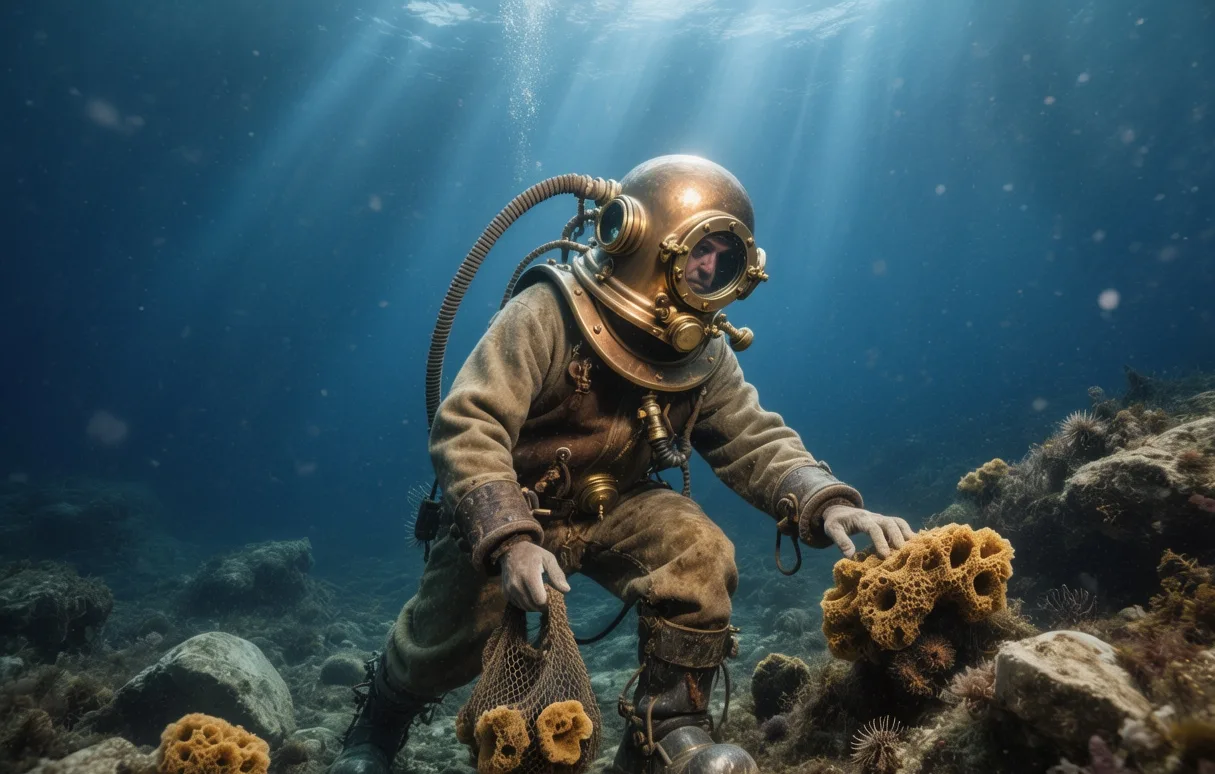
The industry's technical evolution showcases maritime engineering at its finest: traditional diving equipment including the "skafandro" (heavy diving suit) introduced in the late 1800s, weighing up to 60 kilograms (132 pounds) with copper helmets and leather boots; specialized sponge boats (caiques) designed with wide decks for processing catches; and sophisticated drying and cleaning techniques that transformed raw sponges into valuable commodities [[18]][[24]]. At its peak in the early 1900s, Kalymnos operated over 500 diving boats employing 3,000 divers who harvested sponges worth millions, creating an economy that sustained the entire island. The sponge diving tradition fulfilled a dual purpose: economically, it provided livelihoods for generations of islanders and supplied luxury goods to markets across Europe and beyond; culturally, it forged a community identity rooted in courage, endurance, and respect for the sea's power. Technical innovations include modern diving equipment that reduced risks while maintaining traditional harvesting methods, sustainable practices that protect sponge populations, and museums preserving the artifacts and stories of this dangerous profession. Today, managed by the Kalymnos Municipality alongside the Sponge Diving Museum, this heritage stands as a testament to how maritime tradition can inspire modern tourism, how dangerous work can build community, and how a single industry can anchor regional identity through centuries of change.
The Best Time to Experience Kalymnos Sponge Diving
Timing your visit to Kalymnos profoundly influences both atmospheric immersion and practical accessibility to sponge diving heritage. The optimal window falls between May 15 and June 20, when the Dodecanese enjoys extended daylight—sunset occurs around 8:45 PM—and temperatures range from 20°C to 27°C (68°F to 81°F), creating ideal conditions for exploring the harbor, visiting museums, and photographing traditional boats [[68]][[72]]. During this period, the sponge diving season begins (typically May–October), outdoor tavernas operate at full capacity, and summer crowds remain manageable before peak season. For photographers, visit between 6:30–8:30 AM when soft morning light illuminates weathered boats and drying sponges with minimal crowds, or 7:00–9:00 PM for dramatic golden-hour shots where the harbor glows against twilight skies.
Kalymnos's sponge diving heritage sites operate year-round, but key experiences follow seasonal patterns: the active diving season runs May through October when boats depart for harvesting; summer season (June–September) extends museum hours to 9:00 AM–9:00 PM daily; winter hours (November–February) reduce to 9:00 AM–3:00 PM. For current diving schedules, museum hours,. Avoid visiting during late November through early March, when temperatures drop to 8°C to 15°C (46°F to 59°F), daylight shrinks to nine hours, and winter storms can make harbor exploration challenging. Also steer clear of mid-July to mid-August when cruise crowds peak and midday heat exceeds 30°C (86°F). Standard admission to the Sponge Diving Museum costs €5 for adults, €3 for students and seniors, with harbor areas accessible free of charge [[24]]. The harbor-side cafés are particularly rewarding between 2:00–4:00 PM when afternoon light enhances the panoramic Aegean views from waterfront terraces.
Approximate Budget for a 7-Day Trip
Exploring Kalymnos's sponge diving heritage and the island requires moderate budgeting, as Greece offers excellent value compared to many European destinations. Strategic planning—including staying in Pothia (Kalymnos town) and utilizing local transportation—can optimize your experience. The following breakdown reflects mid-range preferences with cultural and maritime immersion priorities.
- Accommodation: €42–€82 per night for a double room in Pothia (walking distance to harbor); budget guesthouses €22–€42 per night; boutique sea-view hotels €92+ per night
- Food: €26–€46 per day total
- Breakfast: €4–€7 (Greek coffee, bougatsa pastry, or village bakery items)
- Lunch: €7–€13 (Greek salad, grilled octopus, or fresh fish at taverna)
- Dinner: €13–€24 (lamb kleftiko, moussaka, or mezze platter at seaside restaurant)
- Taverna option: €6–€10 for souvlaki, tzatziki, and Greek coffee
- Transportation:
- Ferry from Piraeus to Kalymnos: €32–€52 one-way (8–10 hours)
- Local bus on Kalymnos: €3 per ride
- Car rental for island exploration: €32 per day including fuel
- Taxi from harbor to beaches: €12 one-way
- Attractions:
- Sponge Diving Museum: €5 adults; €3 students/seniors [[24]]
- Guided sponge diving heritage tour: €12 per person
- Kalymnos Archaeological Museum: €4 adults
- Traditional sponge diving boat tour: €35 per person
- Sponge processing workshop: €15 per person
- Miscellaneous:
- Natural sea sponges and local crafts: €8–€45
- Audio guide rental: €3
- Photography permit for professional use: €18
Total estimated budget for 7 days: €590–€920 per person (excluding international flights)
7 Essential Kalymnos Sponge Diving Experiences
- Explore the Sponge Diving Museum at Opening: Arrive at 9:00 AM when the museum is quiet and exhibits come alive with morning light. Explore the comprehensive collection of diving equipment including heavy copper helmets, leather diving suits, and weighted boots that once protected divers at extreme depths. Allow 60 minutes for this contemplative journey; the morning atmosphere feels particularly magical before crowds gather. Listen for the stories of divers who risked their lives and listen to recordings of their experiences.
- Watch Traditional Sponge Processing: Visit the harbor workshops between 10:00 AM–12:00 PM when artisans demonstrate the traditional techniques of cleaning, bleaching, and preparing natural sponges. Allow 45 minutes to observe the skilled labor involved; watch as rough-harvested sponges are transformed into soft, valuable products through beating, washing, and sun-drying [[22]].
- Join a Sponge Diving Boat Tour: Board a traditional caique equipped for sponge diving and experience the life of modern sponge divers. Tours typically depart at 9:00 AM and last 4–5 hours, visiting traditional diving grounds where you can observe divers at work (weather permitting). The experience provides deeper context for the courage and skill required, revealing how technology has evolved while tradition endures.
- Photograph the Historic Harbor: Position yourself at designated viewpoints between 7:00–9:00 AM when soft light highlights the texture of weathered boats, colorful hulls, and stacks of drying sponges. Use a polarizing filter to manage reflections; a wide-angle lens captures the scale of the working harbor. The iconic view—traditional boats, sponge warehouses, blue Aegean—defines Kalymnos's maritime heritage.
- Visit the Diving Equipment Workshops: Explore the small workshops where traditional diving gear is maintained and restored. Visit between 11:00 AM–1:00 PM when craftsmen are most active. Allow 30 minutes; observe how copper helmets are polished, leather suits are repaired, and weighted belts are prepared—skills passed down through generations.
- Taste Harbor-Side Cuisine: Reserve a table at a waterfront taverna between 1:00–3:00 PM to sample dishes that sustained generations of divers. Order fresh fish (€16), octopus with ouzo (€14), or traditional sponge diver's stew (€12). The hearty flavors reveal how maritime culture shaped Kalymnos's culinary heritage.
- Attend a Diver's Storytelling Evening: Join evening gatherings where retired divers share stories of the deep—tales of dangerous descents, miraculous rescues, and the brotherhood of the sea. Events typically occur at 8:00 PM during summer months at the museum or harbor cafés. The experience provides emotional context for the physical courage required, revealing the human cost and glory of this dangerous profession.
3 Hidden Gems Most Travelers Miss
- The Sponge Diving Memorial Chapel: Tucked on a hillside overlooking the harbor, a small chapel dedicated to fallen divers contains moving memorials and offers panoramic views of the diving grounds. Most visitors focus solely on the harbor without exploring this spiritual space. Access: From the main harbor, follow signs toward "Εξωκκλήσι Δυτών" (Divers' Chapel); accessible 24/7; free. Best visited between 4:00–6:00 PM for golden-hour photography. The chapel's memorial plaques list divers lost at sea, creating a tangible connection to the human cost of this dangerous profession.
- The Traditional Boat-Building Yard: Beyond the main harbor, a small shipyard where craftsmen still build and repair traditional sponge diving caiques using century-old techniques. Most tourists admire boats without exploring their construction. Access: Inquire at the harbor office for yard location; typically open Monday–Friday 8:00 AM–4:00 PM; free. Best visited between 10:00 AM–12:00 PM when craftsmen are most active. Observing traditional wood-working, caulking, and painting techniques reveals the skill behind these iconic vessels.
- The Sponge Diving Archive: Behind the main museum, a research archive containing photographs, logs, and personal accounts from diving expeditions spanning over a century. Most visitors don't know this resource exists. Access: Inquire at museum entrance for archive access; typically available Tuesday–Saturday 10:00 AM–2:00 PM by appointment; free. Best visited between 11:00 AM–1:00 PM when archivists are available. The collection's historical photographs and diving logs reveal the evolution of techniques and the personal stories behind the industry.
Cultural & Practical Tips
- Photography Guidelines: Photography for personal use is permitted throughout Kalymnos's harbor and museums, but drones require special permission from local authorities—contact +30 22430 22333 in advance. The working harbor and traditional boats are ideal for photography; visit during golden hour for optimal light. Always ask permission before photographing divers at work or processing sponges.
- Language: While signage includes English, learning Greek phrases enhances your experience: efharistó (ef-ha-ree-STO = thank you), parakaló (pa-ra-ka-LO = please/you're welcome), yasou (YA-soo = hello). Greek pronunciation emphasizes the second-to-last syllable.
- Footwear: Sturdy walking shoes with good grip are essential—exploring the harbor involves uneven stone pathways, boat decks, and occasional seaweed. The main harbor circuit involves moderate walking; allow 90 minutes for full exploration.
- Respect for Tradition: Sponge diving is a dangerous, respected profession. Speak quietly around divers preparing for work, never touch equipment without permission, and understand that this is a living trade, not just a tourist attraction. The community values visitors who honor the tradition's seriousness.
- Weather Considerations: Kalymnos's island location means strong meltemi winds during July and August. Check the forecast before visiting; winds can make boat tours challenging. Spring (April–June) and fall (September–October) offer the most reliable conditions with comfortable temperatures.
- Combining with Athens: Kalymnos is accessible via ferry from Piraeus (8–10 hours) or flight via Kos (45 minutes from Athens, then 30-minute ferry). Purchase a Kalymnos transport pass for flexible travel. Consider spending 3–4 nights to fully explore the sponge diving heritage alongside the island's beaches and climbing sites.
- Respectful Engagement: The sponge diving community is tight-knit and proud. Support local businesses by purchasing natural sponges directly from workshops, dine at family-run tavernas, and engage with divers through respectful conversation. The community values visitors who honor tradition while embracing cultural exchange.
Conclusion: Travel with Reverence, Not Just Observation
Kalymnos's sponge diving heritage invites more than passive sightseeing—it demands engagement with the layered narratives embedded in copper helmets, weathered boats, and Aegean waters: the courage of divers who plunged into the deep, the resilience of communities who built identity around dangerous work, and the ongoing stewardship that keeps tradition alive for future generations. When you stand in that harbor watching weathered boats bob in turquoise waters, you're not merely viewing maritime history; you're connecting with a model for cultural preservation, a testament to how human courage can shape community, and a reminder that the most meaningful places honor both sacrifice and survival. This isn't a place to rush through, checklist in hand, snapping photos before racing to the next attraction. Slow down. Feel the rough texture of natural sponges; listen to the stories of divers who faced the deep; contemplate how a single industry could define an island's soul for two millennia. Travel here with curiosity about how places shape identity and how identity gives meaning to places. Support preservation by respecting the site, choosing experiences that employ local guides, and sharing not just images but understanding. The most transformative journeys leave you not just with memories of what you saw, but with deeper appreciation for courage—and Kalymnos's sponge diving heritage, with its seamless fusion of maritime tradition and human endurance, offers precisely that invitation to those willing to wander, to wonder, and to simply connect across time.