
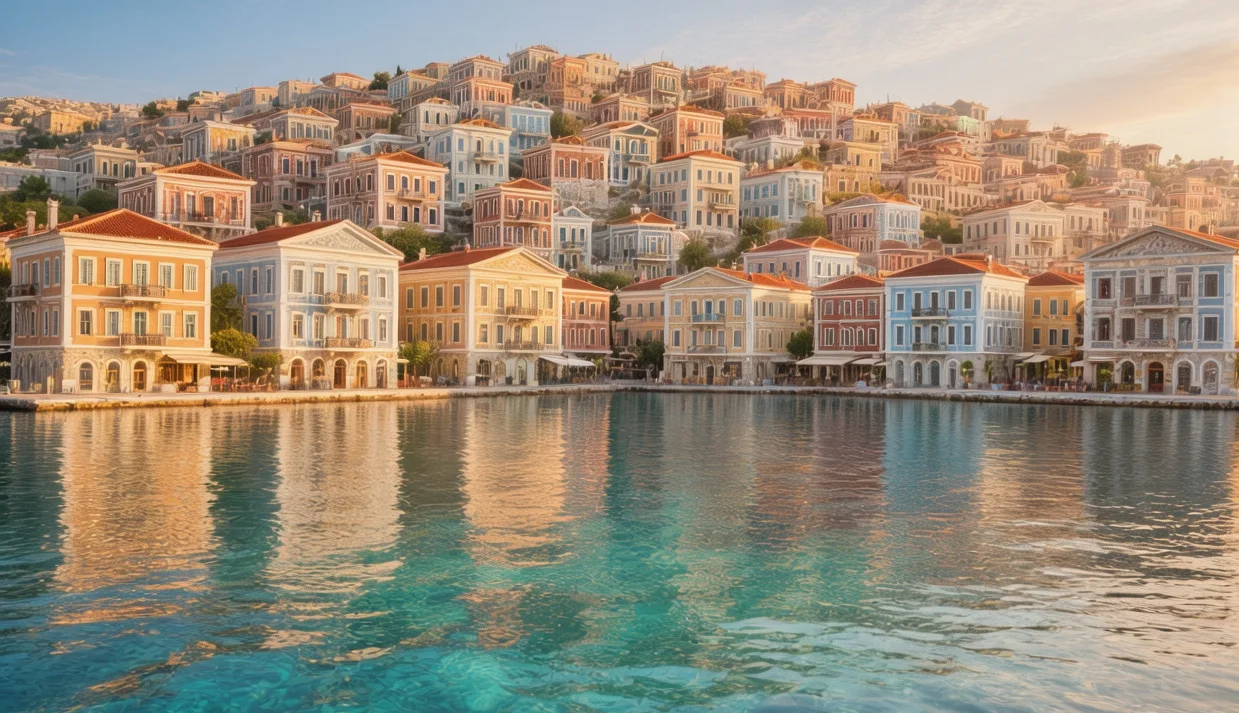
Symi Colorful Harbor: Where Neoclassical Elegance Meets Aegean Sea Majesty
Golden afternoon light spills across the cascading facades of Symi's iconic harbor as you wander the waterfront promenade—this breathtaking seascape awakens with the gentle lap of turquoise waters against stone quays, the distant cry of seagulls wheeling above terracotta rooftops, and the soft murmur of visitors discovering a harbor where over three hundred neoclassical mansions climb the hillside in a symphony of ochre, terracotta, and azure. You breathe air scented with salt spray and blooming bougainvillea, feel the warm stone beneath your palm as you trace ornate window frames carved by nineteenth-century craftsmen, and watch sunlight illuminate the distinctive architecture where Venetian, Ottoman, and Greek influences merge in perfect harmony. This extraordinary harbor, nestled in a natural amphitheater on the island's eastern coast, features buildings rising in tiers from sea level to the hilltop monastery, their pastel facades reflecting in the calm waters below [[15]][[22]]. The harbor's distinctive character—colorful balconies adorned with geraniums, marble doorways with intricate carvings, and narrow stone staircases connecting the waterfront to upper neighborhoods—creates a living postcard where every corner breathes with maritime history. But Symi's colorful harbor matters because it preserves not just architecture, but an entire chapter of Aegean prosperity—a testament to how shipbuilding wealth, artistic vision, and island pride converged to create one of Greece's most photographed destinations, reminding us of the enduring connection between beauty, heritage, and the sea.
Why Symi Colorful Harbor Embodies Aegean Architectural Heritage
Symi's colorful harbor represents the pinnacle of neoclassical island architecture, solving a fundamental need to showcase maritime prosperity while creating a visual legacy that has defined Greek island aesthetics for over two centuries. When Symi's shipbuilding industry flourished in the nineteenth century, generating wealth that rivaled major Mediterranean ports, local merchants faced a profound challenge: how to express their success through architecture while honoring the island's steep, rocky terrain [[15]][[20]]. The solution was visionary: construct over three hundred neoclassical mansions that cascade down the hillside in graduated tiers, each facade painted in distinctive hues of ochre, terracotta, azure, and cream to reflect sunlight and create visual harmony.
The harbor's architectural engineering showcases nineteenth-century craftsmanship at its finest: buildings constructed with local limestone foundations and imported marble details, facades featuring ornate stucco work and carved wooden balconies, and innovative drainage systems that channel rainwater away from steep streets [[18]][[24]]. Each mansion typically spans three to four stories, with ground floors designed for commercial use and upper floors featuring living quarters with sea-view terraces. Technical preservation efforts include sustainable restoration using traditional lime-based paints that breathe with the stone, climate-controlled heritage centers maintaining 20°C (68°F) and 50% humidity to preserve historic artifacts, and community-led initiatives that teach traditional masonry techniques to younger generations. Symi's harbor fulfilled a dual purpose: economically, it served as a showcase of shipbuilding wealth that attracted traders from across the Mediterranean; culturally, it became a symbol of Greek island identity where architecture, color, and landscape merge into an unforgettable aesthetic. Today, managed by the Symi Municipality alongside the Greek Ministry of Culture, this harbor stands as a testament to how prosperity can inspire beauty, how tradition can inform preservation, and how a single waterfront can anchor regional identity through centuries of change.
The Best Time to Experience Symi Colorful Harbor
Timing your visit to Symi's colorful harbor profoundly influences both atmospheric immersion and photographic opportunities. The optimal window falls between May 20 and June 18, when the Dodecanese enjoys extended daylight—sunset occurs around 8:45 PM—and temperatures range from 20°C to 27°C (68°F to 81°F), creating ideal conditions for exploring waterfront promenades, climbing hillside staircases, and photographing pastel facades against the Aegean backdrop [[68]][[72]]. During this period, bougainvillea blooms cascade over balconies, outdoor tavernas operate at full capacity, and summer crowds remain manageable before peak season. For photographers, visit between 6:30–8:30 AM when soft morning light illuminates colorful facades with minimal crowds, or 7:00–9:00 PM for dramatic golden-hour shots where pastel buildings glow against twilight skies.
Symi's harbor operates year-round as a living waterfront, but key experiences follow seasonal patterns: summer season (June–September) extends museum and café hours to 9:00 AM–10:00 PM daily; winter hours (November–February) reduce to 9:00 AM–4:00 PM, though the harbor remains accessible 24/7. For current ferry schedules, event calendars,. Avoid visiting during late November through early March, when temperatures drop to 10°C to 15°C (50°F to 59°F), daylight shrinks to nine hours, and winter winds can make waterfront exploration less comfortable. Also steer clear of mid-July to mid-August when cruise ship crowds peak and midday heat exceeds 30°C (86°F), making hillside climbing less enjoyable. Standard admission to harbor-area museums ranges €3–€6 for adults, with waterfront promenades and photo opportunities accessible free of charge [[24]]. The harbor-side cafés are particularly rewarding between 2:00–4:00 PM when afternoon light enhances the panoramic Aegean views from waterfront terraces.
Approximate Budget for a 7-Day Trip
Exploring Symi's colorful harbor and the island requires moderate budgeting, as Greece offers excellent value compared to many European destinations. Strategic planning—including staying in Gialos (harbor area) or nearby Pedi and utilizing local water taxis—can optimize your experience. The following breakdown reflects mid-range preferences with cultural and photographic immersion priorities.
- Accommodation: €48–€88 per night for a double room in Gialos harbor area (walking distance to waterfront); budget guesthouses €28–€48 per night; boutique sea-view hotels €98+ per night
- Food: €30–€50 per day total
- Breakfast: €5–€8 (Greek coffee, bougatsa pastry, or harbor bakery items)
- Lunch: €9–€15 (Greek salad, grilled octopus, or fresh fish at taverna)
- Dinner: €15–€27 (lamb kleftiko, moussaka, or mezze platter at seaside restaurant)
- Taverna option: €7–€11 for souvlaki, tzatziki, and Greek coffee
- Transportation:
- Ferry from Rhodes to Symi: €18–€28 one-way (50 minutes)
- Local water taxi to beaches: €8 per ride
- Car rental for island exploration: €38 per day including fuel
- Taxi from harbor to monasteries: €20 one-way
- Attractions:
- Symi Maritime Museum: €5 adults; €3 students/seniors [[24]]
- Guided harbor architecture tour: €12 per person
- Panormitis Monastery boat tour: €22 per person
- Traditional sponge shop visit: Free
- Photography workshop: €35 per half-day
- Miscellaneous:
- Local craft souvenirs and sponges: €10–€42
- Audio guide rental: €3
- Photography permit for professional use: €22
Total estimated budget for 7 days: €640–€980 per person (excluding international flights)
7 Essential Symi Colorful Harbor Experiences
- Walk the Waterfront Promenade at Sunrise: Arrive between 6:30–8:30 AM when the harbor is quiet and soft light reveals the famous pastel facades cascading down the hillside. Start at the main quay, then follow the waterfront path where every turn reveals ornate balconies and marble doorways. Allow 45 minutes for this contemplative circuit; the morning atmosphere feels particularly magical before crowds gather. Listen for the gentle lap of water against stone and imagine the merchant ships that once filled this harbor.
- Climb the Stone Staircases to Upper Neighborhoods: Follow the narrow stone steps that connect the harbor to hillside mansions, observing how architecture adapts to steep terrain. Visit between 10:00 AM–12:00 PM when natural light illuminates carved details and colorful shutters. Allow 60 minutes for the full ascent; interpretive signs explain how nineteenth-century builders engineered homes on challenging slopes [[22]].
- Explore the Maritime Museum: Step into the harbor-side museum where exhibits showcase Symi's shipbuilding heritage, nautical instruments, and photographs of the island's golden age. Visit between 1:00–3:00 PM when lighting is optimal for appreciating historic artifacts. Allow 45 minutes; displays explain how maritime wealth funded the neoclassical architecture that defines the harbor today.
- Photograph the Iconic Harbor Vista: Position yourself at designated viewpoints between 7:00–9:00 AM when soft light highlights the texture of pastel facades against the deep blue Aegean. Use a polarizing filter to manage reflections; a wide-angle lens captures the scale of the cascading architecture. The iconic view—ochre, terracotta, and azure buildings reflecting in turquoise water—defines Symi's photographic appeal.
- Taste Harbor-Side Cuisine: Reserve a table at a waterfront taverna between 1:00–3:00 PM to sample dishes that sustained generations of shipbuilders and merchants. Order Symi's famous shrimp saganaki (€16), grilled octopus with ouzo (€14), or honey-walnut dessert (€7). The unique flavors reveal how maritime culture shaped the island's culinary heritage.
- Visit Traditional Sponge Shops: Explore the historic workshops where natural sea sponges are cleaned, processed, and sold using techniques unchanged for centuries. Visit between 11:00 AM–1:00 PM when artisans demonstrate traditional methods. Allow 30 minutes; observe how rough-harvested sponges are transformed into soft, valuable products through skilled labor.
- Attend a Sunset Harbor Concert: During summer months, the harbor hosts outdoor music performances featuring traditional Greek lyra and laouto. Check the schedule at the visitor center; performances typically begin at 8:30 PM. The experience combines medieval atmosphere with live music, creating unforgettable memories as the sun sets over the colorful facades.
3 Hidden Gems Most Travelers Miss
- The Upper Monastery Path: Tucked above the main harbor, a stone pathway leads to the hilltop monastery of Archangel Michael, offering panoramic views of the entire harbor and surrounding islands. Most visitors focus solely on waterfront facades without exploring this elevated perspective. Access: From the main square, follow signs toward "Μονή Ταξιάρχη" (Monastery); accessible daily 8:00 AM–sunset; free. Best visited between 4:00–6:00 PM for golden-hour photography. The monastery's courtyard and bell tower reveal how religious architecture complemented the neoclassical harbor below.
- The Marble Carvers' Workshop: Behind the main harbor, a small workshop where local artisans still carve marble using nineteenth-century techniques demonstrates the craftsmanship behind Symi's ornate doorways and window frames. Most tourists admire architecture without exploring its creation. Access: Inquire at the harbor information center for workshop location; typically open Tuesday–Saturday 10:00 AM–2:00 PM; free. Best visited between 11:00 AM–1:00 PM when carvers provide informal explanations. Observing traditional chiseling and polishing techniques reveals the skill behind Symi's architectural beauty.
- The Hidden Courtyard Gardens: Beyond the main waterfront, several neoclassical mansions feature secluded courtyard gardens with bougainvillea, jasmine, and citrus trees that offer tranquil retreats from harbor crowds. Most visitors don't know these spaces exist. Access: Follow narrow side streets from the main promenade; look for open gates with welcoming signs; accessible during daylight hours; free. Best visited between 2:00–4:00 PM when garden scents are most fragrant. These hidden oases reveal how Symi's residents integrated nature into their architectural heritage.
Cultural & Practical Tips
- Photography Guidelines: Photography for personal use is permitted throughout Symi's harbor, but drones require special permission from local authorities—contact +30 22460 71234 in advance. The colorful facades and waterfront views are ideal for photography; visit during golden hour for optimal light. Respect residents' privacy when capturing candid moments in living neighborhoods.
- Language: While signage includes English, learning Greek phrases enhances your experience: efharistó (ef-ha-ree-STO = thank you), parakaló (pa-ra-ka-LO = please/you're welcome), yasou (YA-soo = hello). Greek pronunciation emphasizes the second-to-last syllable.
- Footwear: Sturdy walking shoes with good grip are essential—exploring harbor pathways and stone staircases involves uneven surfaces, smooth marble, and occasional steps. The main harbor circuit involves moderate climbing; allow 90 minutes for full exploration.
- Hydration: Bring water, especially during summer months when temperatures exceed 30°C (86°F). The harbor has limited shade on upper staircases, and climbing stone steps in midday heat can be exhausting. A refillable water bottle and sun hat are essential.
- Weather Considerations: Symi's island location means strong meltemi winds during July and August. Check the forecast before visiting; winds can make waterfront exploration challenging. Spring (April–June) and fall (September–October) offer the most reliable conditions with comfortable temperatures.
- Combining with Rhodes: Symi is accessible via ferry from Rhodes (50 minutes) or from Piraeus (8–10 hours). Purchase a Dodecanese ferry pass for flexible travel. Consider spending 2–3 nights on Symi to fully explore the colorful harbor alongside the island's beaches, monasteries, and hiking trails.
- Respectful Engagement: Symi's harbor is a living community, not just a photographic backdrop. Respect private property, speak quietly in residential areas, and support local businesses by purchasing from harbor-side shops and tavernas. The community values visitors who engage thoughtfully with the heritage while honoring present-day life.
Conclusion: Travel with Appreciation, Not Just Photography
Symi's colorful harbor invites more than passive sightseeing—it demands engagement with the layered narratives embedded in marble, color, and sea: the ambition of nineteenth-century merchants who built beauty to showcase prosperity, the craftsmanship of stone masons who shaped local rock into ornate facades, and the ongoing stewardship that keeps heritage alive for future generations. When you stand on that waterfront watching pastel buildings meet turquoise waters, you're not merely viewing architecture; you're connecting with a model for sustainable preservation, a testament to how maritime wealth can inspire aesthetic excellence, and a reminder that the most meaningful places honor both past and future. This isn't a place to rush through, checklist in hand, snapping photos before racing to the next attraction. Slow down. Feel the warm stone beneath your palm; listen to the gentle lap of water against ancient quays; contemplate how a single harbor could shape an island's identity for two centuries. Travel here with curiosity about how places shape beauty and how beauty gives meaning to places. Support preservation by respecting the site, choosing experiences that employ local guides, and sharing not just images but understanding. The most transformative journeys leave you not just with memories of what you saw, but with deeper appreciation for craftsmanship—and Symi's colorful harbor, with its seamless fusion of neoclassical elegance and Aegean majesty, offers precisely that invitation to those willing to wander, to wonder, and to simply connect across time.