
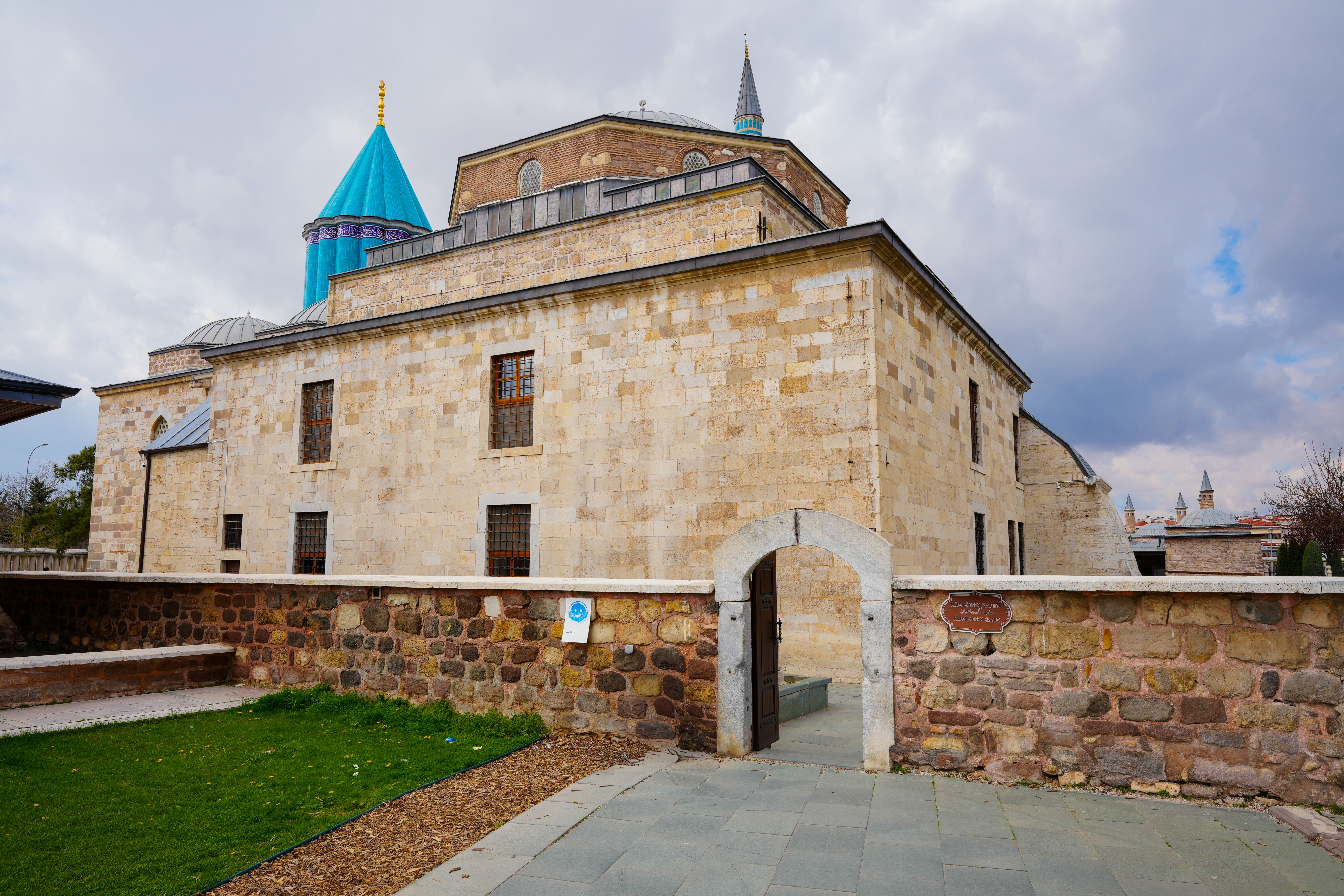
Konya Mevlana Museum: Where Spiritual Whirling Meets Anatolian Soul
Golden afternoon light spills across the iconic turquoise dome as you approach Konya Mevlana Museum—a sanctuary where the soul-stirring poetry of Jalaluddin Rumi echoes through courtyards that have welcomed seekers for over seven centuries. The air carries the scent of rosewater and aged parchment, while the distant call to prayer mingles with the soft murmur of visitors tracing verses carved in Persian script along marble walls. You stand before a complex that spans approximately eight thousand square meters, where the fluted turquoise dome rises forty-two meters above the tomb of the thirteenth-century mystic whose words continue to bridge cultures and continents. This place matters because it preserves one of humanity's most profound encounters with spiritual wisdom—a museum where you can touch the same sarcophagus draped in embroidered silk that has drawn pilgrims since 1273, wander through chambers filled with whirling dervish artifacts, and feel the quiet power of a philosophy that teaches love as the ultimate language, reminding us that some journeys begin not with steps but with the turning of a heart.
Why Konya Mevlana Museum Embodies Spiritual Heritage
Konya Mevlana Museum represents one of Turkey's most significant cultural and spiritual landmarks, solving the ancient human need for a tangible connection to transcendent wisdom through art, architecture, and ritual. Originally established as a dervish lodge in 1273 following the death of Jalaluddin Rumi—known reverently as Mevlana ("Our Master")—the complex evolved over centuries into a museum that preserves the legacy of the Mevlevi Sufi order, whose whirling dervishes perform the sema ceremony as a form of active meditation. The museum's architecture reflects Seljuk and Ottoman craftsmanship: the iconic fluted dome, covered in turquoise tiles that shimmer like the heavens, was completed in 1274 and rises forty-two meters above the tomb chamber, while the surrounding courtyards feature intricate çini tilework, carved wooden minbars, and calligraphic panels bearing verses from Rumi's Masnavi.
The engineering behind the museum reveals sophisticated understanding of sacred space: the tomb chamber maintains a constant temperature of 18–20°C (64–68°F) through thick stone walls and strategic ventilation, preserving the silk drapes and wooden sarcophagi that have adorned Rumi's resting place for centuries. The museum houses over six thousand artifacts, including illuminated manuscripts of Rumi's poetry, ceremonial dervish garments, and musical instruments used in sema rituals. Conservation efforts by the Turkish Ministry of Culture since 1954 have implemented climate-controlled display cases, humidity monitoring, and restricted lighting to protect fragile textiles and manuscripts while allowing public access.
Beyond its aesthetic grandeur, the museum fulfills critical cultural functions: it serves as a pilgrimage site for seekers of spiritual wisdom, a center for scholarly research on Sufism and Persian literature, and a symbol of Turkey's commitment to preserving intangible cultural heritage. UNESCO inscribed the Mevlevi sema ceremony on its Representative List of the Intangible Cultural Heritage of Humanity in 2008, recognizing the ritual's profound contribution to global cultural diversity. Today, Konya Mevlana Museum welcomes over two million visitors annually while maintaining its spiritual atmosphere through respectful visitor guidelines, guided educational programs, and seasonal sema performances that connect contemporary audiences to a tradition of love, tolerance, and inner transformation that transcends time and geography.
The Best Time to Experience Konya Mevlana Museum
Timing your visit to Konya Mevlana Museum dramatically affects atmosphere, crowd levels, and opportunities for contemplative experience. The optimal window stretches from April 20–May 28 and September 15–October 22, when air temperatures range between 16–24°C (61–75°F) and the Anatolian plateau's dry climate keeps humidity comfortable. During these shoulder seasons, the museum's courtyards bloom with roses and jasmine, photographic lighting is spectacular, and visitor numbers stay manageable at approximately eight hundred to twelve hundred daily rather than the three thousand to five thousand seen during the December Şeb-i Arus (Rumi's wedding night with the Divine) commemoration. Arrive at the museum between 8:30–10:00 AM when morning light illuminates the turquoise dome beautifully and before tour groups arrive from Istanbul and Ankara.
Avoid December 10–17 absolutely: this period marks the anniversary of Rumi's death, drawing over fifty thousand pilgrims for the Şeb-i Arus festival, creating extreme crowds, lengthy queues, and limited access to the tomb chamber. Midday visits between 12:00–4:00 PM during peak season prove challenging—the intense Anatolian sun creates glare on the museum's white marble surfaces, and finding quiet moments for reflection becomes difficult. Winter months (November through February) bring cooler air temperatures of 2–8°C (36–46°F) and occasional snow that can make courtyard pathways slippery, though the museum's interior remains climate-controlled and offers solitary exploration opportunities with dramatic winter light filtering through stained-glass windows.
The museum operates daily with seasonal hour adjustments. For current opening times, admission fees, and sema performance schedules, consult the official resource: https://mevlanamuzesi.com/—Turkey's Ministry of Culture and Tourism portal provides verified information about Mevlana Museum accessibility, ticket prices, and cultural event calendars. Note that admission typically costs €5–€7, and photography inside the tomb chamber is prohibited to preserve the sacred atmosphere and protect fragile textiles.
Approximate Budget for a 7-Day Trip
Exploring Konya Mevlana Museum and the surrounding Central Anatolia region offers exceptional value for cultural travelers and spiritual seekers. This budget assumes moderate comfort—mid-range accommodation near the museum, traditional Turkish and Anatolian cuisine, local transportation, museum entrance fees, and selective guided experiences. Prices reflect 2026 rates for travelers seeking authentic cultural immersion without luxury resort pricing.
- Accommodation: €36–€68 per night in Konya city center near Mevlana Museum (boutique hotels with traditional decor and Turkish breakfast; budget pensions from €18, upscale heritage hotels from €105)
- Food: €20–€34 per day (breakfast €3—Turkish kahvaltı with cheeses, olives, honey, börek; lunch €6–€9—etli ekmek (Konya's specialty flatbread), lentil soup, or meze platter; dinner €11–€22—slow-cooked lamb, stuffed eggplant, or vegetarian options with local ayran)
- Transportation: €52 total (Konya Airport to city center via shuttle: €3 each way; local tram to Mevlana Museum: €1 per ride; taxi to nearby sites: €8; bicycle rental: €6/day; optional car rental for exploring: €26/day)
- Attractions: €68 total (Mevlana Museum entrance: €7; Sema ceremony performance: €15; Konya Archaeological Museum: €4; Alaeddin Hill tour: €6; guided spiritual walking tour: €18; day trip to Çatalhöyük: €18)
- Miscellaneous: €36 (Rumi poetry book €10, Turkish prayer beads €5, local saffron and honey €12, travel insurance prorated €9)
Total: €390–€560 for 7 days (excluding international flights to Konya)
7 Essential Konya Mevlana Museum Experiences
- Enter the tomb chamber with reverence: Remove your shoes before stepping into the sacred tomb chamber where Rumi and other Mevlevi masters rest beneath ornate sarcophagi draped in embroidered silk. The air feels cooler and still, carrying the faint scent of rosewater used to preserve the textiles. Walk slowly around the central sarcophagus, reading the Persian inscriptions that quote Rumi's poetry: "Come, come, whoever you are…" Allow ten minutes for quiet reflection in this space that has drawn seekers for seven centuries.
- Explore the dervish artifacts collection: Visit the museum's exhibition halls to view ceremonial garments, musical instruments, and manuscripts used in Mevlevi rituals. Look for the ney (reed flute) whose mournful sound symbolizes the soul's longing for divine union, and the tennure (white woolen skirt) worn by whirling dervishes. The collection includes illuminated copies of Rumi's Masnavi with gold-leaf illumination. Visit between 9:00–11:00 AM when natural light enhances manuscript details without harsh artificial lighting.
- Walk the courtyard of contemplation: Stroll through the museum's central courtyard, where cypress trees and rose bushes create a serene atmosphere for reflection. The courtyard features a şadırvan (ablution fountain) with intricate stone carving, and arcades lined with calligraphic panels bearing verses from Rumi's poetry. Sit on a stone bench beneath the arcade and read the inscriptions aloud—many visitors find the rhythmic Persian verses meditative even without understanding the language.
- Attend a Sema ceremony performance: If visiting during cultural festival season (typically May, September, or December), book tickets for a sema ceremony (€15) performed in the museum's ceremonial hall. The ritual begins with a flute solo, followed by dervishes in white robes who whirl in precise, meditative patterns symbolizing the soul's journey toward divine love. Arrive thirty minutes early to secure seating and absorb the pre-ceremony atmosphere of quiet anticipation.
- Photograph the turquoise dome at golden hour: Return to the museum's exterior approximately one hour before sunset to capture the iconic fluted dome bathed in warm amber light. The best lighting occurs during golden hour (5:00–7:00 PM in summer) when the turquoise tiles shimmer against the Anatolian sky. Bring a polarizing filter to enhance color saturation and reduce glare on the glazed tilework. This view has defined Konya's skyline for centuries and remains the city's most photographed landmark.
- Read Rumi's poetry in the library: Visit the museum's small library, which houses translations of Rumi's works in multiple languages. Sit at a wooden desk and read a few verses from the Masnavi or Divan-e Shams-e Tabrizi. Many visitors find that reading Rumi's words within the walls that once echoed with his teachings creates a profound sense of connection across time. Allow fifteen minutes for this contemplative experience.
- Reflect at the museum's exit garden: Before departing, pause in the small garden near the museum's exit, where a fountain and rose bushes create a peaceful space for processing your visit. Many travelers report feeling a sense of calm and clarity after spending time at the Mevlana Museum. Use this moment to journal thoughts, sketch the dome, or simply breathe deeply before returning to the bustling city.
3 Hidden Gems Most Travelers Miss
- The Mevlevihane kitchen museum: Tucked behind the main exhibition halls, a small room displays the original kitchen equipment used to prepare meals for dervishes and visitors to the lodge. Most tourists overlook this space because signage is minimal and access requires asking staff for "mutfak müzesi" (kitchen museum) directions. The collection includes copper pots, wooden spoons, and stone grinding tools that reveal the communal, humble lifestyle of the Mevlevi order. Visit between 2:00–4:00 PM when fewer visitors are present and staff have time to share stories about dervish culinary traditions.
- The semahane practice room: Adjacent to the main ceremonial hall, a smaller room where dervishes practice their whirling remains accessible during non-performance hours. This spot is often overlooked because it lacks prominent signage and requires asking guides for "çalışma odası" (practice room) directions. The room features wooden floors worn smooth by centuries of whirling, and mirrors along one wall that helped dervishes maintain spatial awareness during practice. Visit during weekday mornings when the space is quiet and you can imagine the rhythmic turning that has defined this tradition for seven hundred years.
- The rooftop viewpoint: A discreet staircase near the museum's administrative wing leads to a small rooftop terrace offering panoramic views of Konya's old city with the turquoise dome as foreground. This spot remains overlooked because it lacks formal signage and requires asking staff for "çatı manzarası" (rooftop view) directions. Visit at sunset when you can photograph the dome framed by the city's minarets and modern buildings. This secluded perch rewards with photography opportunities and a profound sense of how the Mevlana Museum anchors Konya's spiritual and cultural identity.
Cultural & Practical Tips
- Respect sacred space etiquette: Konya Mevlana Museum is an active spiritual site as well as a museum. Speak in hushed tones inside the tomb chamber, avoid pointing feet toward sarcophagi (considered disrespectful in Islamic tradition), and follow all posted photography restrictions. Violations may result in gentle correction by staff or, in rare cases, removal from the premises.
- Dress modestly for entry: While Konya is more conservative than coastal Turkish cities, modest dress is appreciated at spiritual sites. Shoulders and knees should be covered for all visitors; scarves are available to borrow at the entrance if needed. This requirement honors the museum's sacred purpose and shows respect for pilgrims who visit for spiritual reasons.
- Carry cash in Turkish Lira: While the museum accepts credit cards for admission, small vendors selling prayer beads, poetry books, and traditional sweets prefer cash. Learn "Teşekkür ederim" (teh-shek-kür eh-deh-rim—thank you) and "Ne kadar?" (neh kah-dar—how much?) for polite interactions.
- Learn essential Turkish phrases: "Merhaba" (mehr-hah-bah—hello), "Lütfen" (lü-tfen—please), "Mevlana Müzesi nerede?" (mev-lah-nah mü-ze-see neh-reh-deh—where is the Mevlana Museum?), "Su nerede?" (soo neh-reh-deh—where is the water?), and "İyi günler" (iy-ee gün-ler—good day). Even basic efforts earn warm responses from museum staff and local residents.
- Photography guidelines: Photography is permitted in courtyards and most exhibition halls, but strictly prohibited inside the tomb chamber to preserve the sacred atmosphere and protect fragile textiles. Tripods require permission from museum administration. When photographing people—especially pilgrims in prayer—always ask permission first; Turkish culture values privacy in spiritual contexts.
- Plan for seasonal considerations: Spring (April–May) offers comfortable temperatures, blooming courtyards, and excellent photographic light but occasional rain showers. Autumn (September–October) provides stable weather, fewer crowds, and golden-hour lighting ideal for photography. Winter visits require warm layers for outdoor courtyards but offer solitary exploration opportunities. Avoid December 10–17 unless specifically attending the Şeb-i Arus festival, as extreme crowds limit access.
- Combine with Konya's cultural sites: The Mevlana Museum sits within walking distance of Alaeddin Hill (10 minutes), Konya Archaeological Museum (15 minutes), and the historic Karatay Medrese (5 minutes). Purchase a Konya Museum Card (€15) for discounted entry to multiple sites. This allows you to experience the city's layered heritage—Seljuk, Ottoman, and Republican—in one visit while optimizing time and costs.
Conclusion: Travel with Reverence, Not Just Checklists
Konya Mevlana Museum doesn't yield its deepest magic to hurried visitors ticking boxes on an itinerary. It rewards those who pause to read a verse of Rumi's poetry carved in stone, who feel the cool stillness of the tomb chamber, who understand that this sanctuary represents a dialogue between human longing and divine love that transcends time. When you stand where whirling dervishes have spun in meditation for seven centuries, where Persian poetry echoes through turquoise-domed halls, and where seekers from every continent gather in shared silence, you're participating in an experience that transcends ordinary tourism.
Responsible travel here means honoring the museum's spiritual purpose—respecting quiet zones, supporting local artisans who preserve traditional crafts, leaving no trace beyond footprints on ancient stone, and recognizing that your presence is a privilege granted by a tradition of radical hospitality. This museum has welcomed seekers for centuries while maintaining its sacred character—a balance worth preserving through mindful choices. Come not just to capture the perfect photograph, but to understand that wisdom isn't consumed—it's cultivated, one respectful step, one moment of pure presence, one turning of the heart toward love at a time.