
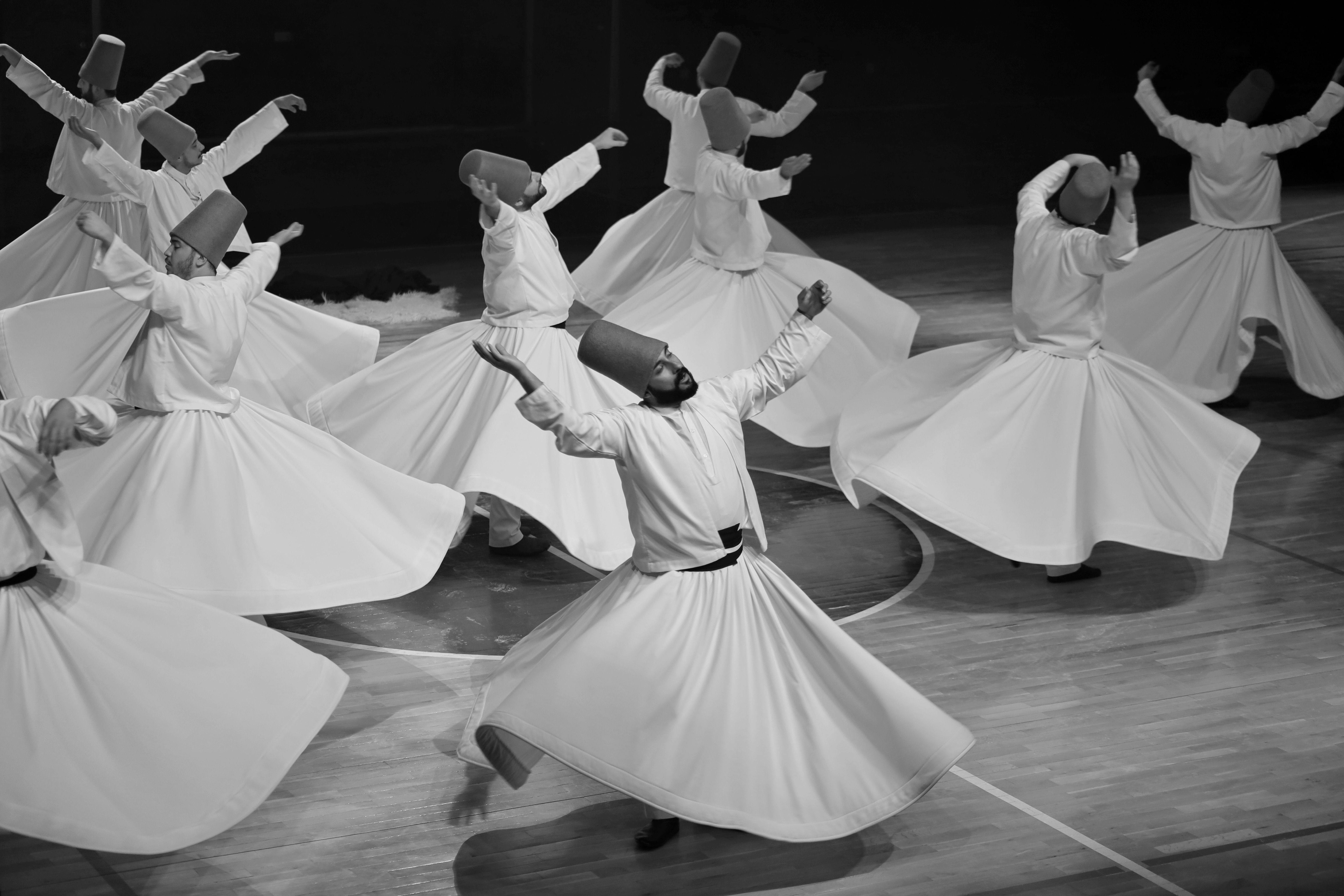
Whirling Dervishes: Where Sacred Spinning Meets Eternal Devotion
Soft candlelight flickers across ancient stone walls as you enter a dimly lit hall where white-robed figures begin their sacred turning—a mesmerizing dance of devotion that has spun unchanged for over seven centuries. The air carries the scent of rosewater and aged wood, while the haunting melody of the ney (reed flute) weaves through the silence, its mournful notes echoing the soul's longing for divine union. You stand in a semahane (ceremonial hall) where dervishes in flowing white robes and tall conical hats begin their counterclockwise rotation, arms outstretched—one palm reaching toward heaven to receive divine grace, the other turned earthward to transmit blessings to humanity. This ancient ritual, known as sema, represents one of humanity's most profound expressions of spiritual surrender, where each revolution strips away the ego until only pure love remains. This place matters because it preserves a living tradition that transcends time and geography—a sacred practice where you can witness the physical manifestation of Rumi's timeless wisdom, feel the meditative power of rhythmic movement, and understand that some truths are best expressed not through words but through the eternal turning of a heart opened to the divine.
Why Whirling Dervishes Embody Spiritual Transcendence
Whirling Dervishes represent one of the world's most distinctive forms of active meditation, solving the ancient human need to transcend the limitations of the physical body through rhythmic movement and spiritual focus. Founded in the thirteenth century by followers of Jalaluddin Rumi—the Persian poet and mystic whose teachings continue to inspire millions worldwide—the Mevlevi Order developed the sema ceremony as a form of zikr (remembrance of God) that engages the entire being: body, mind, and soul. The ritual's precise choreography, passed down through generations of dervishes, transforms spinning into a form of prayer that dissolves the boundary between the material and the divine.
The engineering behind the sema reveals sophisticated understanding of human physiology and spiritual psychology: dervishes train for years to master the technique of spinning on the left foot while keeping the right foot stationary, maintaining perfect balance for up to ninety minutes without dizziness. The white woolen skirt (tennure) worn by dervishes weighs approximately four kilograms and flares outward during rotation, creating a visual representation of the soul's expansion. The conical hat (sikke) symbolizes the tombstone of the ego, which must be "buried" for spiritual rebirth to occur. Each element of the costume carries symbolic meaning, transforming the dervish into a living metaphor for the spiritual journey.
Beyond its aesthetic beauty, the sema fulfills critical cultural and spiritual functions: it serves as a bridge between Islamic mysticism and universal human values, attracts seekers from all faiths to experience transcendent consciousness, and preserves intangible cultural heritage recognized by UNESCO in 2008. The Turkish Ministry of Culture and Tourism supports authentic sema performances while protecting the ritual from commercialization, ensuring that this sacred practice maintains its spiritual integrity. Scientific studies have documented the meditative state achieved by whirling dervishes, showing reduced heart rates and altered brain wave patterns similar to deep meditation. Today, Whirling Dervishes continue their eternal turning in cities across Turkey and around the world, offering contemporary seekers a glimpse of timeless wisdom and a reminder that the path to inner peace requires only the courage to let go and spin.
The Best Time to Experience Whirling Dervishes
Timing your visit to witness Whirling Dervishes dramatically affects the authenticity of the experience, crowd levels, and opportunities for meaningful engagement. The optimal window stretches from April 15–May 30 and September 10–October 25, when temperatures in Konya (the spiritual home of the Mevlevi Order) range between 16–24°C (61–75°F) and the Anatolian climate remains comfortable for travel. During these shoulder seasons, cultural centers host regular sema performances with smaller, more contemplative audiences, and you can often engage in post-ceremony discussions with dervishes or cultural guides. Arrive at performance venues between 6:30–7:30 PM when evening ceremonies begin, allowing time to settle into the meditative atmosphere before the ritual commences.
Avoid December 10–17 absolutely: this period marks the Şeb-i Arus (Rumi's "Wedding Night" with the Divine), drawing over fifty thousand pilgrims to Konya for commemorative ceremonies. While spiritually significant, the extreme crowds, lengthy queues, and commercial atmosphere diminish the intimate, contemplative experience that makes sema so powerful. Midday performances during peak tourist season (July–August) prove challenging—venues fill with tour groups, photography restrictions are strictly enforced, and the meditative atmosphere can feel compromised by constant movement and noise. Winter months (November through February) bring cooler temperatures of 2–8°C (36–46°F) to Central Anatolia, though indoor ceremonies remain comfortable; however, some cultural centers reduce performance schedules during this period.
Regular sema performances occur year-round in Konya, Istanbul, and Cappadocia. Note that admission to cultural performances typically costs €12–€20, while religious ceremonies in Konya's Mevlana Cultural Center are free but require respectful behavior and advance registration.
Approximate Budget for a 7-Day Trip
Experiencing Whirling Dervishes ceremonies and exploring Turkey's spiritual heritage offers exceptional value for cultural travelers and spiritual seekers. This budget assumes moderate comfort—mid-range accommodation in cultural centers, traditional Turkish cuisine, local transportation, ceremony admission fees, and selective guided experiences. Prices reflect 2026 rates for travelers seeking authentic cultural immersion without luxury resort pricing.
- Accommodation: €38–€72 per night in Konya or Istanbul historic districts (boutique hotels with traditional decor and Turkish breakfast; budget pensions from €20, upscale heritage hotels from €110)
- Food: €22–€36 per day (breakfast €4—Turkish kahvaltı with cheeses, olives, honey, börek; lunch €7–€10—lentil soup, etli ekmek, or meze platter; dinner €11–€22—slow-cooked lamb, stuffed vegetables, or vegetarian options with ayran)
- Transportation: €56 total (Istanbul to Konya via high-speed train: €18 each way; local tram/metro: €1.50 per ride; taxi to cultural centers: €8; optional car rental for exploring: €28/day)
- Attractions: €78 total (Sema ceremony performance: €15; Mevlana Museum entrance: €7; Konya Archaeological Museum: €4; guided spiritual walking tour: €18; traditional music concert: €12; day trip to Çatalhöyük: €22)
- Miscellaneous: €40 (Rumi poetry book €10, Turkish prayer beads €6, local saffron and honey €12, travel insurance prorated €12)
Total: €410–€580 for 7 days (excluding international flights to Turkey)
7 Essential Whirling Dervishes Experiences
- Attend an authentic Sema ceremony: Book tickets for a traditional sema performance at Konya's Mevlana Cultural Center or Istanbul's Hodjapasha Cultural Center. Arrive thirty minutes early to settle into the meditative atmosphere. The ceremony begins with a ney (reed flute) solo, followed by dervishes entering in procession, removing their black cloaks to reveal white robes, and beginning their sacred turning. The ritual lasts approximately sixty to ninety minutes. Sit quietly, breathe deeply, and allow the rhythmic spinning to induce a meditative state. Photography is typically prohibited during authentic religious ceremonies to preserve the sacred atmosphere.
- Visit the Mevlana Museum in Konya: Explore the tomb of Rumi and the museum housing Mevlevi artifacts, including ceremonial garments, musical instruments, and illuminated manuscripts. The museum's turquoise dome and serene courtyards provide context for understanding the sema's spiritual significance. Visit between 9:00–11:00 AM when morning light illuminates the intricate tilework and calligraphy. Allow two hours to absorb the museum's collections and read Rumi's poetry displayed throughout the complex.
- Experience a cultural Sema performance: For first-time visitors, cultural performances in Istanbul or Cappadocia offer an accessible introduction to the sema with English explanations of the ritual's symbolism. These performances occur in historic venues like the Hodjapasha Cultural Center (Istanbul) or cave venues in Göreme (Cappadocia). While less spiritually intense than religious ceremonies, they provide educational value and photographic opportunities. Book evening performances (7:00–8:30 PM) for the most atmospheric experience.
- Listen to traditional Mevlevi music: Attend a concert featuring the ney and classical Ottoman music that accompanies sema ceremonies. The mournful sound of the reed flute symbolizes the soul's separation from the divine and its longing for reunion. These concerts often occur in historic medreses (Islamic schools) or cultural centers. Visit between 6:00–8:00 PM when the acoustic properties of ancient stone architecture enhance the music's meditative quality.
- Walk the dervish lodge ruins: Explore the remains of historic tekkes (dervish lodges) in Istanbul's Fatih district or Konya's old city. These sites reveal how dervishes lived, trained, and practiced their rituals for centuries. Look for the semahane (ceremonial hall), hücre (meditation cells), and communal kitchens. Visit during mid-morning when natural light illuminates architectural details and few tourists are present.
- Read Rumi's poetry in context: Purchase a translation of Rumi's Masnavi or Divan-e Shams and read verses in the Mevlana Museum's library or a quiet café near the cultural center. Many visitors find that reading Rumi's words before or after witnessing the sema creates profound connections between text and movement. Allow thirty minutes for this contemplative experience.
- Participate in a whirling workshop: Some cultural centers offer introductory workshops where visitors can learn basic sema techniques under the guidance of experienced practitioners. These workshops teach the proper posture, breathing, and turning methods while explaining the ritual's spiritual significance. Book in advance and wear comfortable clothing. These experiences typically last ninety minutes and cost €25–€35.
3 Hidden Gems Most Travelers Miss
- The Galata Mevlevi Lodge Museum: Tucked in Istanbul's Beyoğlu district, this historic tekke (dervish lodge) offers intimate sema performances in the original ceremonial hall where dervishes practiced for over two centuries. Most tourists overlook this venue because it lacks the prominence of Konya's Mevlana Museum, yet it provides an authentic experience in a beautifully preserved Ottoman building. The museum houses original dervish garments and musical instruments. Visit on Sunday afternoons at 3:00 PM for regular performances. Contact: +90 212 244 1747 for performance schedules.
- The Sirkeci Sema performances: In Istanbul's historic Sirkeci district, a small cultural center hosts weekly sema ceremonies in an intimate setting with fewer than fifty spectators. This venue remains overlooked because it lacks tourist-oriented marketing, yet it offers one of the most authentic experiences outside Konya. The performers are often practicing dervishes who maintain the spiritual tradition. Visit on Thursday evenings at 7:00 PM. No advance booking required, but arrive early to secure seating.
- The Konya dervish training sessions: Behind the Mevlana Cultural Center, serious students of the Mevlevi path practice sema techniques under the guidance of experienced masters. While not open to casual tourists, visitors with genuine spiritual interest can request permission to observe training sessions by contacting the center's cultural affairs office. These sessions reveal the discipline and dedication required to master the whirling technique. Visit on weekday mornings between 9:00–11:00 AM. Contact the Mevlana Cultural Center at least one week in advance to request permission.
Cultural & Practical Tips
- Respect sacred space etiquette: Whirling Dervishes ceremonies are spiritual practices, not entertainment. Maintain silence during performances, turn off mobile phones, and avoid talking or moving during the ritual. In religious ceremonies, photography is strictly prohibited; in cultural performances, photography may be allowed but never use flash. Dress modestly—shoulders and knees should be covered for all visitors.
- Understand the symbolism: Before attending a sema, learn the ritual's symbolism: the dervish's tall hat (sikke) represents the ego's tombstone; the black cloak (hırka) symbolizes the worldly self, removed to reveal spiritual purity; the white skirt (tennure) represents the shroud of the ego. The right hand receives divine grace; the left hand transmits it to humanity. Understanding these symbols enhances the experience exponentially.
- Carry cash in Turkish Lira: While cultural centers accept credit cards, small vendors selling prayer beads, poetry books, and traditional sweets prefer cash. Learn "Teşekkür ederim" (teh-shek-kür eh-deh-rim—thank you) and "Ne kadar?" (neh kah-dar—how much?) for polite interactions.
- Learn essential Turkish phrases: "Merhaba" (mehr-hah-bah—hello), "Lütfen" (lü-tfen—please), "Sema nerede?" (seh-mah neh-reh-deh—where is the sema?), "Su nerede?" (soo neh-reh-deh—where is the water?), and "İyi günler" (iy-ee gün-ler—good day). Even basic efforts earn warm responses from cultural center staff and local residents.
- Photography guidelines: Photography is prohibited during authentic religious sema ceremonies to preserve the sacred atmosphere and protect performers' concentration. Cultural performances may allow photography without flash, but always ask permission first. Never use video recording during religious ceremonies. Respect these restrictions as matters of spiritual dignity, not mere rules.
- Plan for seasonal considerations: Spring (April–May) and autumn (September–October) offer comfortable temperatures and regular performance schedules. Summer (June–August) brings extreme heat to Central Anatolia but increased performance frequency for tourists. Winter (November–February) sees reduced schedules but more intimate, contemplative atmospheres. Avoid December 10–17 unless specifically attending the Şeb-i Arus festival, as extreme crowds diminish the experience.
- Combine with cultural sites: Whirling Dervishes ceremonies in Konya can be combined with visits to the Mevlana Museum (5 minutes), Alaeddin Hill (10 minutes), and Karatay Medrese (15 minutes). In Istanbul, combine with the Blue Mosque (10 minutes), Hagia Sophia (15 minutes), and Topkapı Palace (20 minutes). This allows you to experience Turkey's spiritual and cultural heritage in one visit while optimizing time and costs.
Conclusion: Travel with Reverence, Not Just Checklists
Whirling Dervishes don't yield their deepest magic to hurried visitors ticking boxes on an itinerary. They reward those who sit in silence, who feel the meditative pull of rhythmic turning, who understand that this ancient practice represents a dialogue between human longing and divine love that transcends time. When you witness dervishes spinning in perfect harmony, their white robes creating a visual poem of surrender, you're participating in an experience that has transformed seekers for seven centuries.
Responsible travel here means honoring the sema's spiritual purpose—respecting silence, supporting authentic cultural centers that preserve the tradition, leaving no trace beyond footprints on ancient stone, and recognizing that your presence is a privilege granted by a tradition of radical hospitality. This ritual has survived empires, revolutions, and centuries of change while maintaining its sacred character—a balance worth preserving through mindful choices. Come not just to capture the perfect photograph, but to understand that wisdom isn't consumed—it's cultivated, one respectful breath, one moment of pure presence, one turning of the heart toward love at a time.