
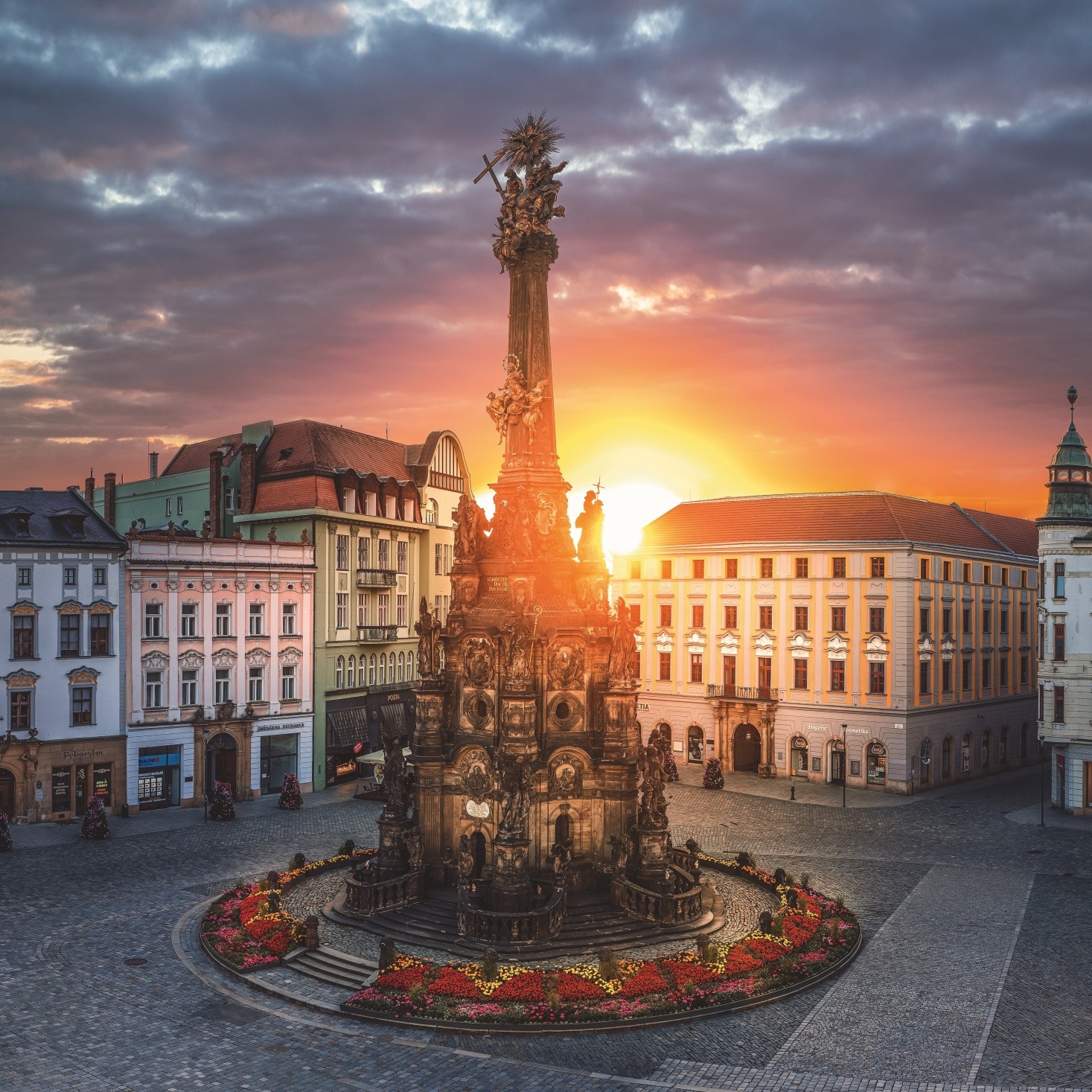
Olomouc Holy Trinity Column: Where Baroque Devotion Meets Moravian Sky
Golden afternoon light washes over the 35-meter-tall (115-foot) sandstone monument as you stand in Horní náměstí—Olomouc's Upper Square—where the scent of fresh trdelník pastries mingles with the faint aroma of limestone warmed by sun. The column's gilded copper details catch the light: angels with outstretched wings, saints in flowing robes, and at the summit, the Holy Trinity embraced in divine unity. You tilt your head upward, tracing the intricate carvings that tell stories of faith, plague, and gratitude—each of the 18 sculptural groups representing a chapter in Moravia's spiritual history. The distant chime of St. Wenceslas Cathedral bells marks the hour; pigeons flutter around the column's base where locals pause for quiet reflection. This is no mere monument; it's a baroque prayer carved in stone, erected between 1716 and 1754 as thanksgiving for the end of a devastating plague epidemic. Here, art and devotion converge in a vertical symphony that has inspired pilgrims and artists for nearly three centuries. This place matters because it preserves a moment when a community, scarred by loss, chose to create beauty from gratitude—a testament to resilience that continues to elevate the human spirit.
Why Olomouc Holy Trinity Column Embodies Baroque Devotion
The Holy Trinity Column stands as Central Europe's largest baroque sculptural group, a masterpiece that solved a profound human need: how to transform collective trauma into enduring hope. Commissioned in 1716 following the plague epidemic that claimed thousands of Moravian lives, the column was designed by local sculptor Václav Render and completed by his son, Jan, alongside masters including Ondřej Zahner and Filip Sattler. The project spanned 38 years—a testament to the meticulous craftsmanship required for such an ambitious vision.
The engineering precision is extraordinary: the column rises 35 meters (115 feet) on a base of Moravian sandstone, its structural integrity ensured by an internal iron framework concealed within the stone. The 18 sculptural groups—each depicting saints, biblical scenes, or allegorical figures—were carved individually in workshops across Olomouc before being assembled on-site with remarkable precision. The gilded copper statues at the summit, including the Holy Trinity and Archangel Michael, were crafted using repoussé techniques that create dimensional depth while minimizing weight. Historical records document the column's consecration in 1754, attended by Empress Maria Theresa, who recognized its significance as both religious symbol and civic pride. UNESCO designated it a World Heritage Site in 2000, noting its "outstanding example of the baroque artistic expression of the Catholic faith." Today, the column fulfills a deeper cultural need: it offers tangible connection to a time when art served as communal therapy, allowing visitors to witness how beauty can emerge from suffering, and how faith can be expressed not merely in words, but in stone, gold, and light.
The Best Time to Experience Olomouc Holy Trinity Column
The optimal window for visiting the Holy Trinity Column stretches from May 12 through September 26, when daytime temperatures hover between 18–25°C (64–77°F) and Olomouc's historic center thrives with outdoor cafés and cultural events. The sweet spot arrives in late May to mid-June (May 20–June 14), when visitor numbers remain moderate, natural light optimally illuminates the column's sculptures between 10:00 AM–12:00 PM, and the surrounding linden trees display vibrant spring green. Morning visits at 9:30–11:00 AM offer the best experience: the square is least crowded, angled sunlight enhances the baroque carvings for photography, and you'll have energy for exploring Olomouc's other UNESCO sites.
For cultural immersion, plan your visit around the Olomouc Baroque Festival, typically held during the last weekend of August, when the Upper Square hosts period music performances, historical reenactments, and guided tours focusing on the column's artistic heritage. Temperatures during this period average 20–26°C (68–79°F), ideal for evening exploration. Alternatively, September 8–22 provides crisp air, golden light, and temperatures of 15–21°C (59–70°F)—perfect for photographing the column against autumn foliage. Avoid November 18–March 12, when daylight shrinks to 8 hours, temperatures drop to -3 to 4°C (27–39°F) with frequent frost on stone surfaces, and many outdoor cafés close. Also skip July 15–August 10 during peak tourist season, when guided tour wait times can exceed 30 minutes and accommodation prices surge 35–50%.
For official information and event calendars, visit: tourism.olomouc.eu
Approximate Budget for a 7-Day Trip
This budget breakdown reflects mid-range travel preferences focused on experiencing the Holy Trinity Column within the broader Olomouc region. Prices are listed in euros (€) for international clarity, though local transactions use Czech koruna (CZK) at approximately 1€ = 25 CZK. Estimates assume solo travel; couples can reduce per-person accommodation costs by 30–40% through shared rooms. All figures reflect 2026 pricing research from official sources and verified traveler reports.
- Accommodation: €42–€82 per night for a double room in a three-star hotel or apartment near Olomouc city center (Horní náměstí or Denisova streets). Budget pensions start at €28; boutique historic-center rooms command €88–€145 nightly.
- Food: €24–€39 per day. Breakfast costs €4–€7 (hotel buffet with local cheeses and koláče pastries); lunch runs €6–€10 for Moravian classics like svíčková (beef sirloin) or olomoucké tvarůžky (regional cheese) with bread; dinner at mid-range restaurants averages €10–€16. Don't miss local specialties: Moravian wine tastings at €5–€9, and traditional trdelník pastries at €2–€4.
- Transportation: Round-trip bus from Prague (RegioJet or FlixBus) costs €8–€15; local tram #1, #4, or #6 to Upper Square costs €1.00 single ticket or €3.00 for 24-hour pass. Taxi from bus station: €6–€9.
- Attractions: Holy Trinity Column exterior viewing: free; guided baroque architecture tour (English, 90 minutes): €12; Olomouc Archbishop's Palace: €7; St. Wenceslas Cathedral tower climb: €4; Museum of Art (arcade collection): €6; Archdiocesan Museum: €8.
- Miscellaneous: Column-themed souvenir (replica angel or postcard set): €6–€14; local Moravian wine bottle: €8–€18; photography permit for professional equipment: €15; travel insurance: €18–€33 for the week.
Total estimated budget for 7 days: €520–€770 (excluding international flights to Prague)
7 Essential Olomouc Holy Trinity Column Experiences
- Photograph the column at golden hour: Visit Horní náměstí between 5:30–7:00 PM in summer when low-angle sunlight illuminates the baroque sculptures, casting dramatic shadows that reveal intricate details in the sandstone carvings. Position yourself at the square's northeast corner for the optimal composition: the column framed by historic townhouses and the distant spire of St. Wenceslas Cathedral. Use a polarizing filter to manage reflections on the gilded copper statues; tripods permitted on public sidewalks. The warm light enhances the golden accents, creating a luminous effect that captures the column's spiritual intent.
- Join a guided baroque architecture tour: Book the specialized "Baroque Olomouc" walking tour (€12, offered daily at 10:00 AM and 2:00 PM) to gain expert insight into the Holy Trinity Column's artistic and historical significance. Guides explain the symbolism of each sculptural group, the techniques used by 18th-century craftsmen, and the column's role in Olomouc's recovery from plague. The 90-minute tour includes stops at nearby baroque landmarks, creating context for the column's artistic achievement. Book online 24 hours ahead; tours conducted in English with Czech translation available.
- Explore the sculptural details up close: Dedicate 20 minutes to walking the column's perimeter, observing the 18 sculptural groups at eye level. Notice the expressive faces of saints, the flowing drapery of angelic figures, and the intricate biblical scenes carved into the base. The sandstone's warm honey tones contrast beautifully with the gilded copper accents at the summit. Photography permitted without flash; maintain respectful distance to preserve the historic stone. Best experienced mid-morning (10:00–11:30 AM) when natural light enhances the carvings' three-dimensional quality.
- Climb St. Wenceslas Cathedral tower: After viewing the column, walk 3 minutes to the adjacent cathedral and ascend its 102-meter (335-foot) tower (€4 entry, open 9:00 AM–5:00 PM). The panoramic view from the observation platform reveals the Holy Trinity Column's relationship to Olomouc's historic urban fabric: the Upper Square's geometric layout, the Morava River winding through green valleys, and the distant Jeseníky Mountains. Visit during late afternoon (4:00–5:30 PM) for golden-hour lighting. Allow 30 minutes for the climb; wear sturdy shoes for the narrow spiral staircase.
- Attend an evening concert in the square: On select summer evenings (typically Fridays, 7:00 PM), Horní náměstí hosts open-air classical concerts with the Holy Trinity Column as a dramatic backdrop. These free performances feature local orchestras and choirs performing baroque and classical repertoire. Arrive 30 minutes early to secure seating on the square's stone benches; bring a light blanket for comfort. The column's acoustics enhance the music's resonance, creating a magical fusion of art, architecture, and sound.
- Visit the Archdiocesan Museum: Explore the museum housed in the former Archbishop's Palace (open 9:00 AM–5:00 PM, €8 entry) to deepen your understanding of Olomouc's religious art heritage. Exhibits include liturgical objects, baroque paintings, and interactive displays explaining the Holy Trinity Column's creation process. The English-language audio guide (included) features scholarly commentary on the column's symbolism. Allow 45 minutes; the museum shop sells specialized art history books and locally crafted souvenirs.
- Reflect at the column's base at dawn: For a contemplative experience, visit Horní náměstí between 6:00–7:30 AM when the square is quiet and morning mist softens the column's silhouette. The early light creates an ethereal atmosphere; the scent of fresh bread from nearby bakeries adds to the sensory experience. This is an ideal time for journaling, sketching, or simply absorbing the monument's spiritual presence. Free access; respect the site's sacred character by maintaining quiet reflection.
3 Hidden Gems Most Travelers Miss
- The Column's Restoration Workshop: Behind the Olomouc City Museum, a discreet workshop occasionally opens to visitors interested in historic preservation techniques. Contact the museum office at least 48 hours ahead (info@olomoucmuseum.cz) to request access. Stone conservators demonstrate traditional carving methods, pigment analysis for gilded elements, and the delicate process of cleaning centuries-old sandstone. Visits limited to small groups (max 6 people); no extra charge. A fascinating glimpse into the craftsmanship required to maintain this UNESCO treasure for future generations.
- The Archivist's Historical Collection: On Wednesday and Friday afternoons (2:00–4:00 PM), Olomouc city archivist Petra Nováková occasionally displays original 18th-century documents: construction ledgers, sculptors' contracts, and correspondence between Václav Render and city officials regarding the column's creation. This isn't advertised; express genuine interest in baroque history to museum staff, and they may invite you to view these fragile items in the climate-controlled archive room. Photography prohibited; note-taking encouraged. A small donation to preservation efforts (€5–€10) is appreciated. Contact in advance: archiv@olomouc.eu.
- The Secret Garden Viewpoint: A 5-minute walk from the Upper Square leads to Bezruč Park's elevated terrace—a quiet garden offering a unique perspective of the Holy Trinity Column framed by mature oaks and flowering shrubs. Access via the path behind the Archbishop's Palace; follow signs to "Vyhlídka" (Viewpoint). The terrace features a stone bench ideal for sketching or photography without crowds. Best experienced between 3:30–5:00 PM when afternoon light filters through the trees. Free access; respect garden maintenance by staying on marked paths.
Cultural & Practical Tips
- Monument etiquette: Maintain respectful volume around the column; it remains a site of prayer for many visitors. Do not touch the sandstone carvings—natural oils from skin accelerate erosion of historic stone. Photography is permitted without flash; tripods require advance permission via info@olomouc.eu for professional shoots. Children must be supervised near the column's base due to uneven paving stones.
- Language essentials: While tourism staff speak excellent English, learning basic Czech phrases shows appreciation. Key pronunciations: "Dobrý den" (DOH-bree den) = Hello; "Děkuji" (DYEH-koo-yee) = Thank you; "Sloup" (SLOHP) = Column; "Na zdraví" (nah ZDRAH-vee) = Cheers. Many older residents also speak German due to the region's historical ties.
- Tour booking strategy: Reserve guided baroque tours 24–48 hours in advance via the official tourism website; weekend morning slots fill quickly. The combined "Olomouc Heritage" ticket (€25) includes the Archbishop's Palace, Archdiocesan Museum, and cathedral tower—excellent value for cultural enthusiasts. Students and seniors receive 20% discounts with valid ID; verify current rates online.
- Photography guidelines: Handheld shooting works well in available light; use ISO 800+ for interior museum shots without flash. The best exterior light occurs during golden hour (5:30–7:00 PM summer, 4:00–5:30 PM autumn). Drone photography requires written permission from the Czech National Heritage Institute; apply at least 14 days in advance. Respect other visitors' experiences—avoid blocking sightlines for extended setups.
- Weather and packing: Olomouc's valley location creates microclimate conditions: mornings can be cool even in summer, warming by midday. Pack layers—temperatures can swing 7°C (13°F) between morning and afternoon. Comfortable walking shoes are essential for exploring the cobblestone square and surrounding historic center. Bring a light jacket for evening concerts; the square can be breezy after sunset.
- Accessibility considerations: The Upper Square is fully wheelchair-accessible via paved pathways; the column's base can be viewed from all sides. Cathedral tower and some museum exhibits involve stairs not suitable for mobility devices; staff can arrange virtual tour alternatives with 48 hours' notice. Service animals welcome; inform venues when booking specialized tours. First aid station at tourist information center; emergency contact: +420 585 513 111.
- Combining with Olomouc sights: The Holy Trinity Column pairs perfectly with the nearby Astronomical Clock (1-minute walk) or the Olomouc Castle complex (10-minute stroll). Allow 2–3 hours total for the Upper Square area: 30 minutes for column viewing and photography, 60 minutes for guided tour if booked, plus time for café breaks and souvenir shopping. The nearby Café U Černého Orla serves excellent Moravian coffee and traditional cakes with square views—ideal for post-exploration reflection.
Conclusion: Travel with Reverence, Not Just Checklists
The Holy Trinity Column invites more than a photograph—it asks for reverence. As you stand beneath its 35-meter ascent of sandstone and gold, you connect with a community that transformed suffering into beauty, loss into legacy. This isn't sightseeing; it's bearing witness to devotion—how faith, art, and craftsmanship can converge to create something that outlives its makers. When you gaze upward at the gilded Trinity against the Moravian sky, let the column's vertical grace recalibrate your perspective. In an age of fleeting experiences, choose to value what requires patience, skill, and belief to create. Leave Olomouc not just with images, but with a renewed commitment to mindful appreciation—honoring places that remind us of humanity's capacity to create meaning from adversity. The column has stood for 270 years; it will still be here tomorrow, waiting for those who come not just to see, but to truly feel the quiet power of gratitude carved in stone.