
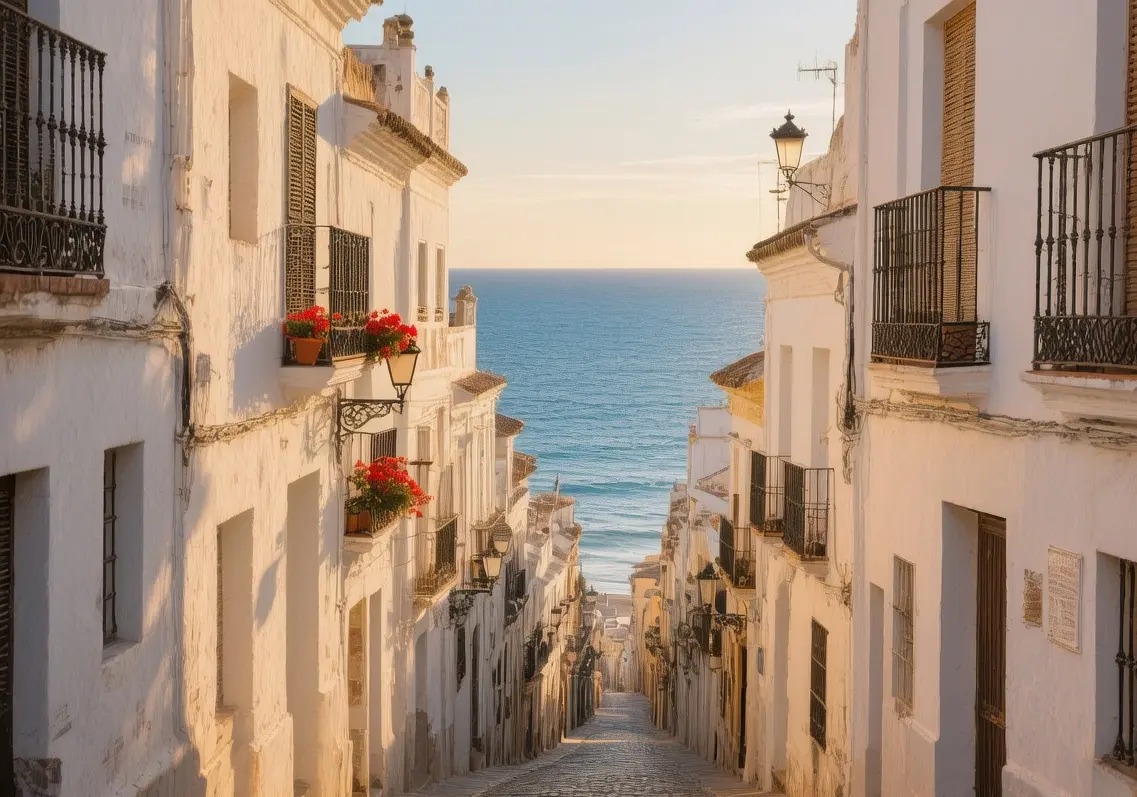
Cádiz Old Town Atlantic Breezes Meet Ancient Stone
The salt air hits you first—a sharp, briny tang that has scoured the Cádiz old town for three millennia. You stand on the corner of Calle de la Verónica, where the narrow pavement glows white under the Andalusian sun, and the Atlantic Ocean laps just 200 meters beyond the sea walls. The sound of seagulls mixes with the distant clatter of tapas plates from a hidden bodega; the light reflects off the golden dome of the Cathedral, visible from every vantage point in this compact peninsula. This is not merely a city but a living artifact, founded by Phoenician traders in 1100 BC, making it the oldest continuously inhabited settlement in Western Europe. You trace the 18th-century fortifications that encircle the historic core, measuring 3 kilometers in perimeter, feeling the weight of history in every limestone block. In 2026, as coastal destinations face the pressures of modernization, the Cádiz old town remains a sanctuary of authenticity—a place where the rhythm of life is dictated by the tides and the siesta, demanding you slow down to truly hear the echoes of the past.
Why Cádiz Old Town Embodies Maritime Heritage
The Cádiz old town represents the ultimate maritime fortress, solving the critical need for a defensible trading port on the edge of the known world. Founded as Gadir by Phoenicians from Tyre around 1100 BC, the city's geography dictated its evolution: a narrow peninsula barely 500 meters wide at its broadest point, surrounded by the Atlantic Ocean on three sides and the Bay of Cádiz on the fourth. This isolation created a natural moat, allowing the city to withstand sieges that destroyed mainland settlements, including a famous three-year siege by Napoleon's forces from 1810 to 1812.
The architecture reflects this defensive necessity: the 18th-century sea walls rise 15 meters above the water, constructed from sandstone quarried from nearby Puerto de Santa María to withstand Atlantic storms. Within the walls, the urban layout features narrow, winding streets designed to channel cooling sea breezes through the dense urban fabric, a passive cooling system that keeps temperatures 3–5°C lower than the inland countryside. The city boasts over 120 watchtowers (miradores), built by merchant families to spot incoming ships from the Americas, with the Torre Tavira standing 45 meters high as the highest point. This integration of military engineering, maritime commerce, and climate adaptation makes the Cádiz old town not merely a historic site but a functional organism, where every stone tells a story of survival against the sea and successive empires.
The Best Time to Experience Cádiz Old Town
For the optimal Cádiz old town visit, target March 15–May 20 or September 10–October 25, when temperatures range between 18–25°C (64–77°F) and the Atlantic breezes are gentle. The city is accessible 24 hours, but the ideal viewing window is 8:00–9:30 AM when the light hits the white facades directly, illuminating the architectural details without harsh shadows. Sunset at La Caleta beach—specifically 7:30–9:00 PM in summer—offers magical lighting as the sun dips into the ocean, though the promenade remains busy until late. Spring coincides with the Carnival of Cádiz in February or March (dates vary), causing accommodation prices to increase 100–200%; book lodging six months in advance if visiting during this period.
Avoid July 15–August 25 unless you tolerate extreme heat and humidity; temperatures regularly exceed 32°C (90°F), and the terral wind can push temperatures to 40°C (104°F). The lack of shade in the plazas exacerbates the heat. Winter months (December–February) bring mild weather (12–18°C / 54–64°F) but increased rainfall and stronger winds. Some beach facilities close during low season; verify current status at www.turismocadiz.com or contact the tourist office at info@turismocadiz.com (+34 956 210 391). Weekday mornings typically see the lowest visitor density, allowing for clearer photography of the Cathedral and plazas without obstruction from cruise ship excursions.
Approximate Budget for a 7-Day Trip (2026)
Cádiz offers excellent value for cultural travelers, with costs generally 20–30% lower than Seville or Málaga. The following budget assumes mid-range comfort with a focus on local seafood and historic exploration, based on 2026 pricing with approximately 3.5% inflation from 2025 figures. Estimates include stays in the historic center for easy access to the Cádiz old town attractions.
- Accommodation: €80–€150 per night for a double room in a boutique hotel or apartment in Centro or La Viña neighborhoods; luxury options with sea views command €200–€400 per night
- Food: €45–€70 per day—breakfast €6–€10 (café con leche and pan con tomate), lunch €15–€25 (menú del día including pescaíto frito, salad, and local wine), dinner €25–€40 (seafood tapas including gambas blancas and ortiguillas)
- Transportation: Train from Seville Santa Justa to Cádiz: €18 high-speed AVANT (1 hour 45 minutes); local bus within Cádiz: €1.20 per ride or €3.50 daily pass; taxi from station: €12 fixed rate; bike rental: €15 per day
- Attractions: Cádiz Cathedral entry: €7; Torre Tavira: €10; Castle of San Sebastián: €3; Museum of Cádiz: €3; guided old town tour: €20
- Miscellaneous: Ceramic souvenirs from €12; local Sherry wine €8–€20 per bottle; horchata drink €3; artisan leather goods €30–€70; Carnival masks €15
Total estimated cost for 7 days: €950–€1,450 per person (based on double occupancy; solo travelers should add 35–45% for single supplements)
7 Essential Cádiz Old Town Experiences
- Climb the Cathedral Dome: Ascend the 176 steps to the top of the Cádiz Cathedral for panoramic views. The dome rises 56 meters above the old town. Visit at 10:00 AM opening time to experience the view before crowds obscure the photo opportunities. The view extends 30 kilometers across the bay. Allow 45 minutes for the climb and descent. This is the iconic Cádiz old town viewpoint; do not miss the golden tiles.
- Explore Torre Tavira: Visit the highest watchtower in the city for the Camera Obscura show. The tower stands 45 meters high, built in 1778. Visit between 11:00 AM–1:00 PM when the light is best for the projection. The show explains the city's layout and history in 25 minutes. Entry costs €10. It demonstrates the maritime surveillance system of the 18th century.
- Walk La Caleta Beach: Stroll the narrow strip of sand between two castles. The beach is only 400 meters long but historically significant. Visit at 6:00 PM when the temperature cools. The Castle of San Sebastián sits at the far end. Entry is free. It is the most atmospheric spot in the Cádiz old town; arrive early to secure a spot on the sand.
- Visit the Central Market: Explore the iron-and-glass market hall built in 1920. The architecture features Art Nouveau details. Visit at 12:00 PM when the vendors are most active. The seafood selection is exceptional. Entry is free. It reveals the culinary heart of the city. Purchase fresh fish to cook later.
- Walk the Sea Walls: Stroll the 3-kilometer promenade atop the 18th-century fortifications. The walls rise 15 meters above the Atlantic. Visit at 7:00 PM when the sun sets over the ocean. The breeze is strongest here. It provides a physical sense of the city's defense. This reveals the engineering heritage of Cádiz.
- Explore La Viña Neighborhood: Wander the narrow streets of the oldest quarter. The alleys are winding and steep, typical of medieval planning. Visit at 9:00 PM when the tapas bars open. The streets are only 3 meters wide; step aside to let locals pass. It is the most authentic spot in the Cádiz old town; arrive early to avoid crowds in your shot.
- Attend a Flamenco Show: Experience authentic flamenco in a small peña or tablao. The acoustics in the old buildings are exceptional. Events typically start at 9:00 PM. Tickets range €20–€40 depending on the venue. The atmosphere is intimate and passionate. Follow local listings for schedule updates. These events reveal the cultural soul of Andalusia.
3 Hidden Gems Most Travelers Miss
- Oratorio de la Santa Cueva: Located at Calle Sacramento, 6, this 18th-century chapel features frescoes by Francisco de Goya. Entry: €5; open 10:00 AM–6:00 PM. It is often overlooked as visitors focus on the Cathedral. The music room hosted Haydn's premiere. Contact: +34 956 210 391. Visit early morning for photography without crowds. The acoustics are exceptional.
- Plaza de las Flores: A 5-minute walk from the Cathedral, this square hosts a daily flower market. Entry is free; open 8:00 AM–2:00 PM. It is often overlooked by tourists rushing to the sea. The scent of jasmine and roses is intense. Contact: +34 956 210 391. Visit mid-morning when the stalls are fully stocked. The perspective allows you to see local life.
- Barrio del Pópulo: Located near the Cathedral, this is the oldest neighborhood in Cádiz, dating to the 13th century. Entry is free; open 24 hours. It is often overlooked as visitors focus on the 18th-century architecture. The narrow streets retain medieval layouts. Contact: N/A. Visit late afternoon when the light is soft. The perspective allows you to see the contrast of eras.
Cultural & Practical Tips
- Respect the siesta: The Cádiz old town maintains traditional hours; many shops close between 2:00–5:00 PM. Use this time to rest or visit indoor attractions. Evening activity resumes after 8:30 PM when locals return to the streets for dinner.
- Master these phrases: "Buenos días" (BWEH-nos DEE-as) for good morning; "Por favor" (por fah-BOR) for please; "¿Cuánto cuesta?" (KWAN-toh KWES-tah) to ask price; "La cuenta, por favor" (lah KWEN-tah) to request the bill.
- Photography guidelines: Tripods are allowed in public squares but not inside churches without permission. Drone usage is strictly prohibited over the historic center. Flash photography is discouraged inside religious sites. Respect privacy when photographing locals. Early morning offers the best light without crowds.
- Seafood safety: Cádiz is famous for fresh fish; ensure it is cooked thoroughly if you have a sensitive stomach. Ortiguillas (sea anemones) are a local delicacy but can cause reactions in some. Drink bottled water if unsure. Tap water is safe but heavily chlorinated.
- Footwear selection: The ground consists of cobblestones and uneven pavement. Wear sturdy walking shoes with good grip. The sea walls can be slippery when wet. Avoid high heels. Comfortable walking shoes essential for exploring the old town. The cobblestones can be uneven.
- Weather considerations: The coast enjoys 300 days of sunshine annually, but the terral wind can bring sudden heat in summer. Bring a light jacket for evening breezes even in summer. Winter temperatures rarely drop below 12°C (54°F). Rain is rare but possible in November; the stone surfaces become slick when wet.
- Security awareness: While the area is generally safe, pickpockets operate in crowded markets and beaches. Keep bags zipped and valuables secure. Do not leave phones on café tables. Allow an extra 15 minutes for security processing during Carnival season. Report suspicious activity to local police.
Conclusion: Travel with Reverence, Not Just Reverie
The Cádiz old town demands more than casual observation—it asks for contemplation of the layers of history embedded in every white wall, every sea wall stone, every tower built by hands long turned to dust. When you walk these streets in 2026, you're not merely visiting a destination; you're participating in a fragile ecosystem where Phoenician trade, Spanish resilience, and modern tourism intersect in delicate balance.
Choose to engage deeply: respect the local rhythms beyond the tourist hours, support authentic tapas bars alongside international brands, and understand that this peninsula is a living community, not just a backdrop. The Cádiz old town survives not as a theme park but as a genuine expression of Andalusian life—and its preservation depends on visitors who recognize the difference between appreciation and consumption.
Slow down. Sit on the sea walls after the cruise ships depart. Listen to the waves lapping against the fortifications. Watch the sunset paint the Atlantic in shades of gold and violet. The town rewards those who approach it not as a checklist item but as a conversation between old world and new—a dialogue between ancient Gadir and modern Cádiz that continues, like the tides, in perpetual motion.