
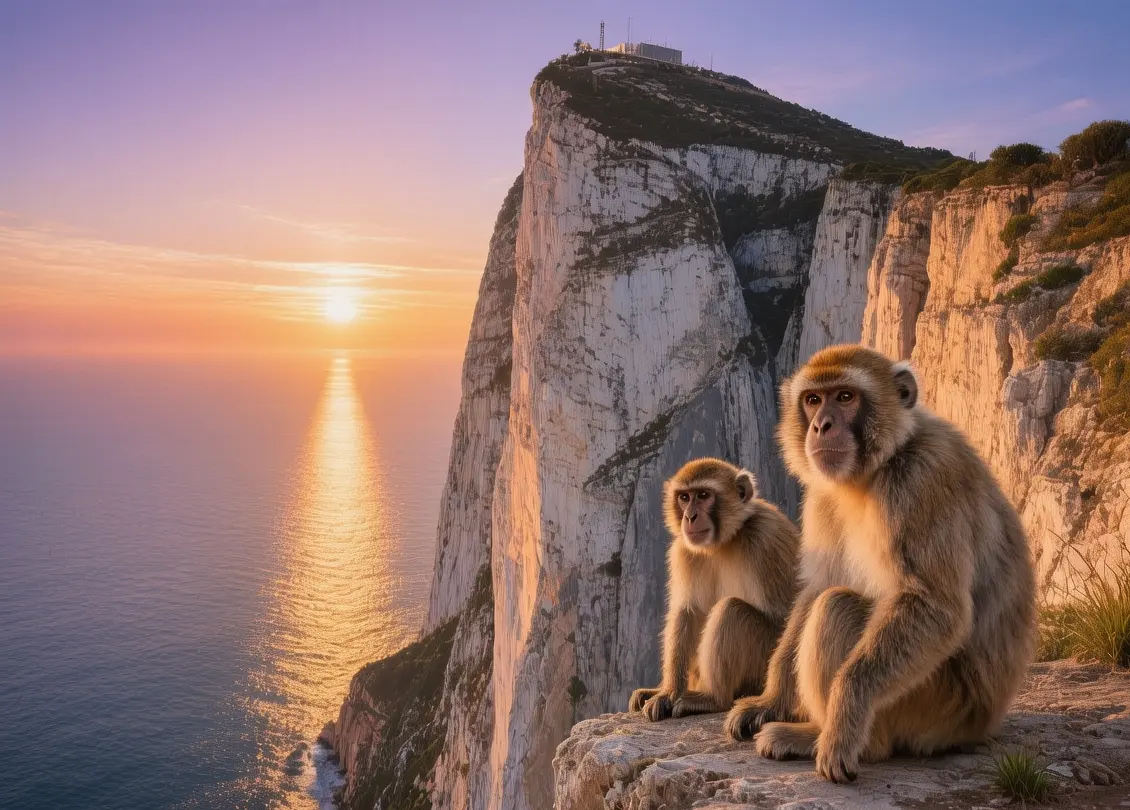
Gibraltar Rock Limestone Cliffs Meet Mediterranean Myth
The wind whistles through the limestone crags—a sharp, salty gust that has scoured the Gibraltar Rock since the dawn of navigation. You stand at the Apes' Den, 410 meters above sea level, watching the Mediterranean Sea stretch endlessly toward the African coast, visible just 24 kilometers away. The air smells of wild thyme and diesel from the port below; the distant sound of ship horns mixes with the chattering of Barbary macaques, the only wild monkeys in Europe. This is not merely a territory but a strategic fortress, rising 426 meters from the sea, where history is carved into the stone itself. You trace the entrance to the Great Siege Tunnels, blasted by hand between 1797 and 1804, feeling the cool dampness of the rock that has sheltered soldiers for centuries. In 2026, as global borders shift and tighten, the Gibraltar Rock remains a unique anomaly—a British Overseas Territory on Spanish soil, where cultures collide and coexist, demanding you present your passport to step into a slice of history that defies simple definition.
Why Gibraltar Rock Embodies Strategic Mastery
The Gibraltar Rock represents the ultimate geopolitical fortress, solving the critical need for naval control over the Strait of Gibraltar, the only maritime gateway between the Atlantic Ocean and the Mediterranean Sea. Captured by Anglo-Dutch forces in 1704 during the War of the Spanish Succession, the Rock has been British for over 320 years, surviving 14 sieges, the most famous being the Great Siege from 1779 to 1783. The engineering response to this vulnerability was extraordinary: over 52 kilometers of tunnels were excavated within the limestone core, creating an underground city capable of withstanding bombardment.
The geology itself is a defensive asset: the limestone is dense and durable, allowing for the construction of massive gun emplacements like O'Hara's Battery, which sits at the highest point (426 meters) and boasts a range of 40 kilometers. The Upper Rock Nature Reserve covers 40% of the territory's land area, protecting both the military heritage and the unique ecosystem, including the famous Barbary macaques. This integration of military engineering, natural geography, and political anomaly makes the Gibraltar Rock not merely a tourist destination but a living document of imperial history. The density of historical sites per square kilometer is unmatched in Europe, with every path revealing a layer of defense, from Moorish walls to Cold War monitoring stations. This concentration of strategic significance makes it a pilgrimage site for historians, where the evolution of warfare is traced through the very stone that defined the Mediterranean.
The Best Time to Experience Gibraltar Rock
For the optimal Gibraltar Rock visit, target April 15–June 10 or September 15–October 25, when temperatures range between 18–26°C (64–79°F) and the visibility across the Strait is clearest. The Nature Reserve opens at 9:30 AM daily; arrive at 9:15 AM to enter with the first cable car group before cruise ship crowds converge. Sunset views from Europa Point—specifically 7:30–9:00 PM in summer—offer dramatic lighting over the lighthouse, though the wind can be strong. Spring coincides with the Gibraltar Music Festival in September, causing accommodation prices to increase 40–60%; book lodging three months in advance if visiting during this period.
Avoid July 15–August 25 unless you tolerate extreme heat and crowds; temperatures regularly exceed 32°C (90°F), making the limestone surfaces radiate intense thermal energy. The lack of shade on the Upper Rock exacerbates the heat, and queue times for the cable car can exceed 90 minutes. Winter months (December–February) bring mild weather (12–18°C / 54–64°F) but increased rainfall and fog, which can obscure the views from the top. The cable car may close during high winds; verify current status at www.visitgibraltar.gi or contact the tourist office at info@visitgibraltar.gi (+350 200 41251). Weekday mornings typically see the lowest visitor density, allowing for clearer photography of the macaques without obstruction from tour groups.
Approximate Budget for a 7-Day Trip (2026)
Gibraltar uses the Gibraltar Pound (GIP), pegged 1:1 with the British Pound (£), though Euros are widely accepted. The following budget assumes mid-range comfort with a focus on history and nature, based on 2026 pricing with approximately 3.5% inflation from 2025 figures. Estimates include stays in Gibraltar or nearby La Línea for easy access to the Gibraltar Rock.
- Accommodation: £100–£200 per night for a double room in a hotel in Gibraltar; budget options in La Línea (Spain) command £50–£100 per night
- Food: £40–£65 per day—breakfast £8–£12 (full English breakfast), lunch £15–£25 (pub meal including fish and chips), dinner £20–£35 (international cuisine including tapas or curry)
- Transportation: Flight to Málaga or Jerez: £80–£200 round-trip; bus from Málaga to La Línea: £15; taxi border crossing: £10; cable car return: £25; local bus: £1.50 per ride
- Attractions: Gibraltar Rock Nature Reserve pass: £30; St. Michael's Cave: included in pass; Great Siege Tunnels: included in pass; Moorish Castle: included in pass; dolphin tour: £35
- Miscellaneous: Duty-free souvenirs from £10; local beer £4–£6 per pint; calentita snack £3; artisan ceramics £25–£60; guided tour £40
Total estimated cost for 7 days: £1,100–£1,700 per person (based on double occupancy; solo travelers should add 35–45% for single supplements)
7 Essential Gibraltar Rock Experiences
- Ride the Cable Car: Ascend to the Top of the Rock in the red cable cars. The journey takes 6 minutes and rises 410 meters. Visit at 9:30 AM opening time to experience the view before crowds obscure the photo opportunities. The view extends to Africa on clear days. Allow 45 minutes for the round trip. This is the iconic Gibraltar Rock experience; do not miss the summit.
- Meet the Barbary Macaques: Visit the Apes' Den near the cable car top station. The troop consists of over 200 monkeys, the only wild primates in Europe. Visit between 10:00 AM–12:00 PM when they are most active. Do not feed them; fines are £500. Keep bags zipped. It demonstrates the unique wildlife of the reserve.
- Explore St. Michael's Cave: Descend into the natural limestone caverns used since Neolithic times. The main chamber features a natural auditorium with exceptional acoustics. Visit at 2:00 PM when lighting accentuates the stalactites. The cave extends over 60 meters deep. Entry is included in the Nature Reserve pass. It reveals the geological history of the Rock.
- Walk the Great Siege Tunnels: Traverse the 18th-century tunnels blasted by hand during the Great Siege. The tunnels stretch 1 kilometer within the North Face. Visit at 11:30 AM when the guide explains the military strategy. The air is cool and damp. Audio guides available in six languages. Allow 30 minutes to appreciate the engineering.
- Visit Europa Point: Drive or bus to the southernmost tip of the peninsula. The Trinity Lighthouse stands 49 meters high. Visit at 6:00 PM when the sun sets over the Strait. The view includes the Mosque and the African coast. Entry is free. It marks the boundary of the Mediterranean.
- See the Moorish Castle: Climb to the Tower of Homage, built in the 14th century. The stone walls rise 25 meters high. Visit at 3:00 PM when the light illuminates the battlements. The view over the town is panoramic. Entry is included in the Nature Reserve pass. It demonstrates the Islamic heritage of the Rock.
- Take a Dolphin Tour: Board a rigid inflatable boat from the marina to see dolphins in the bay. The Strait is a migration corridor. Visit at 10:00 AM when the sea is calmest. Tours last 1 hour and cost £35. It adds a marine biology dimension to the trip.
3 Hidden Gems Most Travelers Miss
- Jews' Gate Cemetery: Located at the northern end of Main Street, this historic cemetery dates to the 18th century. Entry is free; open 9:00 AM–5:00 PM. It is often overlooked as visitors focus on the Rock. The gravestones tell the story of the merchant community. Contact: +350 200 41251. Visit early morning for photography without crowds. The inscriptions are in Hebrew, English, and Spanish.
- O'Hara's Battery: A 20-minute walk from the Top of the Rock, this gun emplacement sits at the highest point (426 meters). Entry included in Nature Reserve pass; open 9:30 AM–5:00 PM. It is often overlooked due to the steep walk. The gun has a range of 40 kilometers. Contact: +350 200 41251. Visit mid-morning when visibility is best. The perspective allows you to see both Europe and Africa.
- Willis's Road: A steep footpath on the eastern side of the Rock, offering dramatic views over the Mediterranean. Entry is free; open daylight hours. It is often overlooked as visitors take the cable car. The path involves 258 steps carved into the rock. Contact: N/A. Visit late afternoon when the light is soft. The perspective allows you to see the Mediterranean from above.
Cultural & Practical Tips
- Passport control: The Gibraltar Rock is a British Overseas Territory; passport checks are mandatory at the border with Spain. Expect queues during peak hours. EU citizens can use ID cards. Allow an extra 30 minutes for border processing during cruise ship days.
- Master these phrases: English is the official language, but Spanish is widely spoken. "Buenos días" (BWEH-nos DEE-as) for good morning; "Thank you" for please; "How much?" to ask price; "Bill, please" to request the bill.
- Monkey etiquette: The Barbary macaques are wild animals. Do not touch or feed them. Keep a distance of 2 meters. Fines for feeding are £500. Secure loose items; they are known to steal bags. Report aggressive behavior to the Ape Care Officer.
- Currency: The Gibraltar Pound (£) is the official currency, pegged to the British Pound. Euros are widely accepted but change may be given in GIP. Credit cards are accepted everywhere. ATMs are available on Main Street.
- Driving side: Traffic drives on the right in Spain but on the left in Gibraltar. Be cautious when crossing the border on foot or by car. Pedestrian crossings are strictly enforced. Speed limits are low in the town center.
- Weather considerations: The Rock creates its own microclimate; fog (the Levanter) can cover the top while the town is sunny. Bring layers. Winter temperatures rarely drop below 12°C (54°F). Rain is rare but possible in November; the stone surfaces become slick when wet.
- Security awareness: While the area is safe, petty theft can occur in crowded areas. Keep bags zipped and valuables secure. Do not leave phones on café tables. Allow an extra 15 minutes for security checks at the airport or port. Report suspicious activity to the Royal Gibraltar Police.
Conclusion: Travel with Reverence, Not Just Reverie
The Gibraltar Rock demands more than casual observation—it asks for contemplation of the layers of history embedded in every limestone block, every tunnel, every gun emplacement carved by hands long turned to dust. When you walk this territory in 2026, you're not merely visiting a destination; you're participating in a fragile ecosystem where British tradition, Spanish influence, and Mediterranean culture intersect in delicate balance.
Choose to engage deeply: respect the border regulations that define this unique space, support local businesses alongside international chains, and understand that this Rock is a living community, not just a fortress. The Gibraltar Rock survives not as a museum exhibit but as a geopolitical anomaly—and its preservation depends on visitors who recognize the difference between appreciation and consumption.
Slow down. Sit at Europa Point after the tour buses depart. Listen to the waves lapping against the southern shore. Watch the sunset paint the Strait in shades of gold and violet. The Rock rewards those who approach it not as a checklist item but as a conversation between nations—a dialogue between Europe and Africa that continues, like the tides, in perpetual motion.