
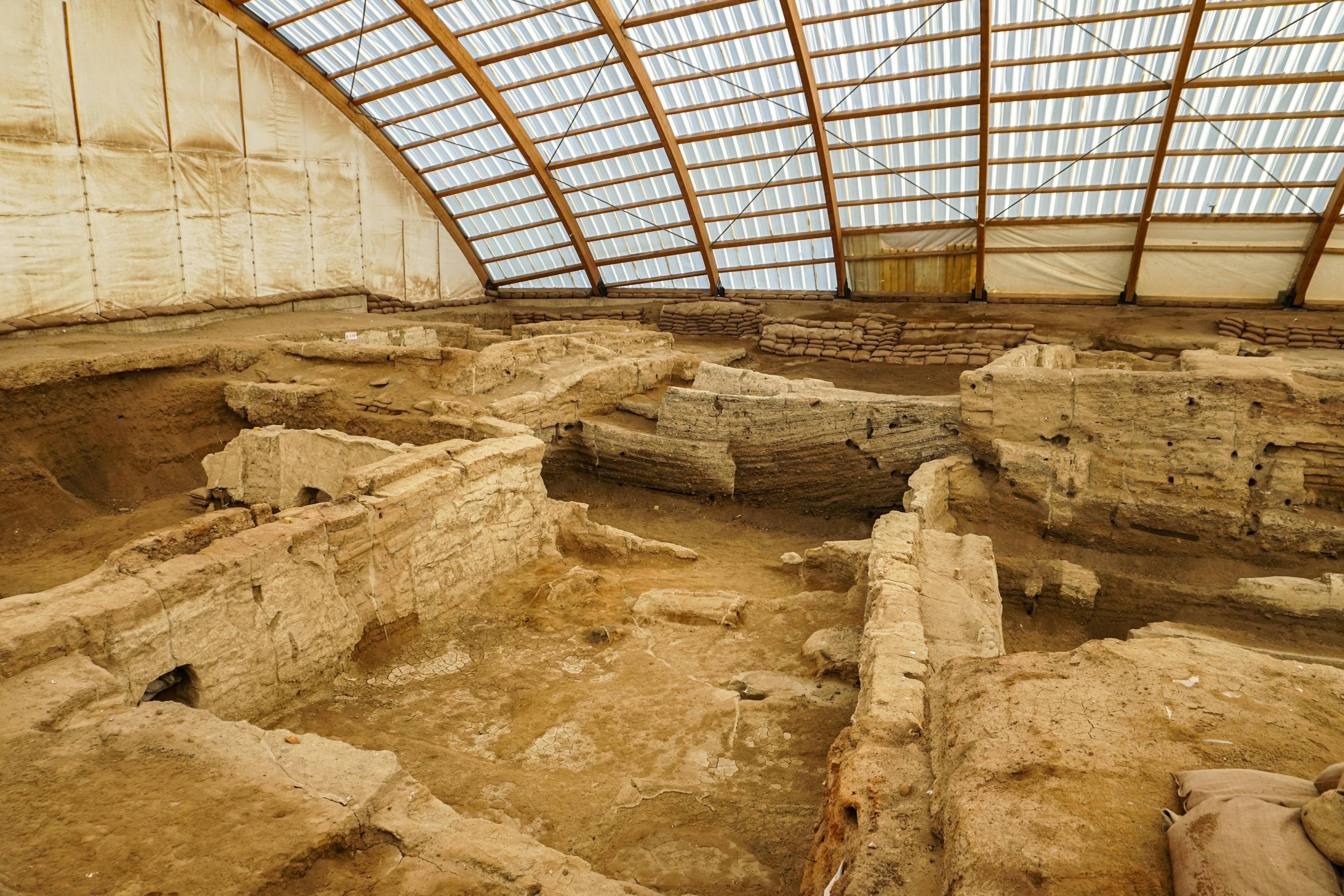
Çatalhöyük Neolithic Site: Where Ancient Settlement Meets Anatolian Earth
First light spills across the Anatolian plain as you stand before Çatalhöyük Neolithic site—a sprawling archaeological landscape where humanity's earliest urban experiment unfolded over nine thousand years ago. The air carries the scent of wild thyme and sun-baked earth, while the distant bleat of sheep mingles with the soft rustle of barley fields that still cover this ancient settlement. You walk among low earthen mounds marking the remains of mudbrick houses stacked like honeycombs, where families once entered through roof ladders and painted walls with ochre scenes of hunting and ceremony. This remarkable site spans approximately thirteen hectares and preserves evidence of one thousand to two thousand inhabitants who lived here between 7500 and 5700 BCE, creating one of the world's first large-scale human settlements. This place matters because it offers a rare encounter with humanity's deepest roots—a place where you can touch soil that witnessed the birth of agriculture, art, and community, and where every excavated wall whispers stories of ancestors who first imagined life beyond the nomadic trail, reminding us that the impulse to build, create, and connect runs through human history like an eternal thread.
Why Çatalhöyük Neolithic Site Embodies Human Origins
Çatalhöyük Neolithic site represents one of archaeology's most profound windows into humanity's transition from hunter-gatherer societies to settled agricultural communities, solving the fundamental question of how and why humans first chose to build permanent homes. Discovered in 1958 by British archaeologist James Mellaart and continuously excavated since 1993 by international teams led by Ian Hodder of Stanford University, Çatalhöyük reveals a densely packed settlement where approximately one thousand to two thousand people lived in interconnected mudbrick houses with no streets—residents moved across rooftops and entered homes through ceiling ladders, creating a unique urban fabric that prioritized community cohesion over individual privacy.
The engineering behind Çatalhöyük reveals sophisticated Neolithic innovation: houses were constructed using sun-dried mudbricks measuring approximately forty by twenty by ten centimeters, with timber frames supporting flat roofs that served as communal walkways. Walls were plastered with lime and decorated with vibrant frescoes depicting hunting scenes, geometric patterns, and symbolic imagery including the famous "goddess" figurines and bull horn installations. Archaeologists have documented over one hundred eighty occupation layers, revealing how the settlement evolved over nearly two millennia while maintaining consistent architectural principles. The site's preservation relies on careful excavation techniques that protect fragile wall paintings and organic materials, with climate-controlled shelters shielding key structures from Anatolia's harsh sun and wind.
Beyond its archaeological significance, Çatalhöyük fulfills critical cultural functions: it serves as a global reference point for understanding early urbanism, social organization, and symbolic expression; attracts scholars and students from around the world to study humanity's shared origins; and inspires contemporary reflections on sustainability, community, and human connection to place. UNESCO inscribed Çatalhöyük as a World Heritage Site in 2012, recognizing its outstanding universal value as "one of the best-preserved Neolithic settlements in the world." Today, Çatalhöyük Neolithic site welcomes visitors through carefully managed access that balances public education with conservation needs, offering a profound opportunity to stand where human civilization first took root and to contemplate the enduring questions of how we live together on this earth.
The Best Time to Experience Çatalhöyük Neolithic Site
Timing your visit to Çatalhöyük Neolithic site dramatically affects comfort, accessibility, and the quality of your archaeological experience. The optimal window stretches from April 20–May 28 and September 15–October 22, when air temperatures range between 18–26°C (64–79°F) and the Anatolian plateau's dry climate keeps humidity comfortable. During these shoulder seasons, wildflowers bloom across the surrounding plains, photographic lighting is spectacular, and visitor numbers stay manageable at approximately fifty to one hundred daily rather than the three hundred to five hundred seen during peak summer educational tours. Arrive at the site between 8:30–10:00 AM when morning light illuminates excavation areas beautifully and before afternoon winds pick up across the open plain.
Avoid July 15 through August 25 absolutely: temperatures soar to 32–39°C (90–102°F) on the exposed archaeological mound, minimal shade exists across the excavation areas, and the intense sun can make extended exploration uncomfortable and potentially hazardous. Midday visits between 11:00 AM and 3:00 PM during peak season prove particularly punishing—the light-colored soil reflects heat intensely, and finding respite from the sun becomes difficult despite the site's protective shelters. Winter months (November through March) bring cooler air temperatures of 3–10°C (37–50°F) and occasional rain or snow that can make earthen pathways muddy and slippery, though the site remains accessible and offers solitary exploration opportunities with dramatic cloud formations over the ancient settlement.
The site operates daily with seasonal hour adjustments and requires advance booking for guided tours. For current opening times, admission fees, and excavation updates, consult the official resource: www.kulturportali.gov.tr—Turkey's Ministry of Culture and Tourism portal provides verified information about Çatalhöyük accessibility, ticket prices, and ongoing research projects. Note that admission typically costs €4–€6, and all visitors must be accompanied by authorized guides to protect fragile archaeological deposits; advance reservation through the Çatalhöyük Research Project website is strongly recommended.
Approximate Budget for a 7-Day Trip
Exploring Çatalhöyük Neolithic site and the surrounding Central Anatolia region offers exceptional value for history enthusiasts and cultural travelers. This budget assumes moderate comfort—mid-range accommodation in nearby Konya or Çumra, traditional Turkish and Anatolian cuisine, local transportation, site entrance fees, and selective guided experiences. Prices reflect 2026 rates for travelers seeking authentic archaeological experiences without luxury resort pricing.
- Accommodation: €34–€66 per night in Konya or Çumra (boutique hotels with traditional decor and Turkish breakfast; budget pensions from €18, upscale heritage hotels from €100)
- Food: €19–€32 per day (breakfast €3—Turkish kahvaltı with cheeses, olives, honey, börek; lunch €6–€9—etli ekmek (Konya's specialty flatbread), lentil soup, or meze platter; dinner €10–€20—slow-cooked lamb, stuffed vegetables, or vegetarian options with local ayran)
- Transportation: €50 total (Konya Airport to city center via shuttle: €3 each way; local bus to Çatalhöyük: €4 per ride round-trip; taxi from Konya: €15; optional car rental for exploring: €24/day)
- Attractions: €64 total (Çatalhöyük guided tour: €6; Mevlana Museum entrance: €7; Konya Archaeological Museum: €4; Alaeddin Hill tour: €5; guided Neolithic walking tour: €18; day trip to other archaeological sites: €24)
- Miscellaneous: €34 (archaeology guidebook €9, Turkish prayer beads €5, local honey and herbs €10, travel insurance prorated €10)
Total: €380–€540 for 7 days (excluding international flights to Turkey)
7 Essential Çatalhöyük Neolithic Site Experiences
- Walk the excavation pathways with a guide: Begin your visit with an authorized guide who will lead you along designated pathways through the archaeological mound. The guide will explain how houses were built roof-to-roof, point out reconstructed wall paintings, and share insights about daily Neolithic life. Allow one hour for this foundational experience that provides essential context for understanding the site's significance. Visit between 9:00–10:30 AM when morning light enhances visibility of excavation details without harsh glare.
- Observe the reconstructed house interior: Enter a carefully reconstructed Neolithic house to experience the intimate scale of ancient domestic life. Notice the low ceiling (approximately two meters high), the central hearth, and the platforms where families slept and worked. Look for replicas of wall paintings depicting hunting scenes and symbolic imagery. This immersive experience helps you imagine the sensory world of Çatalhöyük's residents—the smell of cooking fires, the texture of plastered walls, the sound of families moving across rooftops.
- Examine the famous "goddess" figurines: Visit the on-site exhibition shelter to view replicas of Çatalhöyük's most iconic artifacts: the seated "goddess" figurine giving birth, bull horn installations, and intricate wall paintings. These objects reveal the symbolic and spiritual life of Neolithic communities. Look for the careful craftsmanship in figurines made from clay and stone, and notice how artistic expression served both decorative and ritual purposes. Allow twenty minutes to appreciate these remarkable survivals from nine millennia ago.
- Photograph the archaeological landscape: Position yourself at the designated viewpoint to capture Çatalhöyük's distinctive silhouette against the Anatolian plain. The best lighting occurs during golden hour (5:00–7:00 PM in summer) when warm light enhances the contrast between earthen mounds and surrounding fields. Bring a polarizing filter to reduce haze and deepen sky tones. This panoramic view reveals the settlement's scale and its harmonious integration with the agricultural landscape that sustained it.
- Learn about excavation techniques: Engage your guide in conversation about archaeological methods used at Çatalhöyük: stratigraphic excavation, 3D recording of finds, and conservation of fragile organic materials. Understanding how archaeologists carefully uncover and document each layer adds profound perspective to the visible remains. Look for excavation grids, screening stations, and conservation labs that demonstrate the meticulous work of preserving humanity's shared heritage.
- Reflect at the site's contemplation area: After exploring the excavations, pause in the designated quiet area where benches overlook the archaeological mound. Use this moment to contemplate the thousands of years of human history beneath your feet and the enduring questions about community, sustainability, and human connection that Çatalhöyük raises. Many visitors find that this reflective pause deepens their appreciation for the site's significance. Allow fifteen minutes for this meditative experience.
- Visit the Çatalhöyük Research Center: Before departing, explore the small visitor center that houses educational exhibits about Neolithic life, archaeological methodology, and ongoing research. Interactive displays, replica artifacts, and multilingual information panels provide valuable context for your visit. Allow thirty minutes to absorb exhibits that connect Çatalhöyük to broader narratives of human development and cultural evolution.
3 Hidden Gems Most Travelers Miss
- The experimental archaeology area: Behind the main visitor facilities, a small demonstration area showcases Neolithic technologies through hands-on exhibits: flint knapping, pottery making, and mudbrick construction. Most tourists overlook this space because it lacks prominent signage and requires asking staff for "deney alanı" (experimental area) directions. Watch skilled artisans demonstrate ancient techniques using authentic materials and methods. Visit during weekday mornings when demonstrations are most active and guides have time to explain the significance of each craft.
- The seasonal excavation observation point: During active excavation seasons (typically June–August), a designated viewing area allows visitors to observe archaeologists at work from a respectful distance. This spot remains overlooked because access is limited to specific times and requires advance inquiry. Ask at the visitor center about "kazı gözlem" (excavation observation) opportunities. Watching careful excavation in progress reveals the meticulous process of uncovering history and connects you to the living practice of archaeology. Visit during mid-morning when archaeological teams are most active.
- The surrounding Neolithic landscape walk: A marked trail extends from the main site into the surrounding plains where Neolithic farmers once cultivated wheat and barley. This path remains overlooked because it lacks formal promotion and requires asking guides for "çevre yürüyüşü" (surrounding walk) directions. The fifteen-minute walk reveals how Çatalhöyük's residents interacted with their environment—ancient field boundaries, water sources, and resource areas. Visit between 4:00–6:00 PM when cooler temperatures and golden light enhance the experience. Bring water and wear sturdy shoes; the path includes uneven terrain.
Cultural & Practical Tips
- Respect archaeological preservation: Çatalhöyük Neolithic site is a protected UNESCO World Heritage Site. Never touch excavation areas, remove soil or artifacts, or step outside designated pathways—violations carry fines up to ₺2,000 (approximately €60) and damage irreplaceable heritage. Stay behind barriers and follow all guide instructions.
- Wear appropriate footwear: The site features uneven earthen surfaces, loose gravel, and occasional mud. Sturdy walking shoes or hiking sandals with grip are essential; avoid flip-flops or smooth-soled shoes. The terrain includes gentle slopes and occasional steps between excavation levels.
- Carry sun and weather protection: Minimal shade exists across the open archaeological mound, and light-colored soil reflects UV rays intensely. Bring a wide-brimmed hat, sunscreen (SPF 30+), and at least one liter of water per person. In spring and autumn, pack a light jacket for cool mornings and evenings.
- Learn essential Turkish phrases: "Merhaba" (mehr-hah-bah—hello), "Teşekkür ederim" (teh-shek-kür eh-deh-rim—thank you), "Çatalhöyük nerede?" (cha-tal-hö-yük neh-reh-deh—where is Çatalhöyük?), "Su nerede?" (soo neh-reh-deh—where is the water?), and "İyi günler" (iy-ee gün-ler—good day). Even basic efforts earn warm responses from site staff and local residents.
- Photography guidelines: General photography is permitted throughout Çatalhöyük, but flash photography is prohibited inside reconstructed houses to protect replica wall paintings. Tripods require permission from site staff. When photographing archaeological staff or other visitors, always ask permission first—"Fotoğraf çekebilir miyim?" (foh-toh-raf cheh-keh-bee-leer mee-yim—may I take a photo?).
- Plan for accessibility: The site involves walking on uneven earthen surfaces; visitors with mobility challenges may find access difficult. Staff can provide assistance upon request, and the visitor center is fully accessible. Consider visiting during weekday mornings when crowds are lighter and staff have more time to assist.
- Combine with Konya's cultural sites: Çatalhöyük sits within forty minutes of Konya, home to the Mevlana Museum, Alaeddin Hill, and traditional Anatolian cuisine. Purchase combined tickets where available to maximize value. This allows you to experience Neolithic heritage alongside Seljuk and Ottoman culture in one trip while optimizing travel time and costs.
Conclusion: Travel with Wonder, Not Just Checklists
Çatalhöyük Neolithic site doesn't yield its deepest magic to hurried visitors ticking boxes on an itinerary. It rewards those who pause to imagine the families who once moved across these rooftops, who feel the weight of nine millennia beneath their feet, who understand that this mound represents humanity's first great experiment in living together. When you stand where agriculture, art, and community first took root, where ancestors painted walls with stories we still struggle to fully understand, you're participating in an experience that transcends ordinary tourism.
Responsible travel here means honoring Çatalhöyük's fragility—these earthen walls have survived millennia of natural processes only to face modern threats from weathering and human impact. Support preservation by following all posted guidelines, supporting local guides who share archaeological knowledge, leaving no trace beyond footprints on designated paths, and recognizing that your presence is a privilege granted by humanity's shared heritage. This site has shaped our understanding of human origins for decades—a balance worth preserving through mindful choices. Come not just to capture the perfect photograph, but to understand that wonder isn't consumed—it's cultivated, one respectful step, one moment of pure presence, one connection to Earth's deepest stories at a time.