
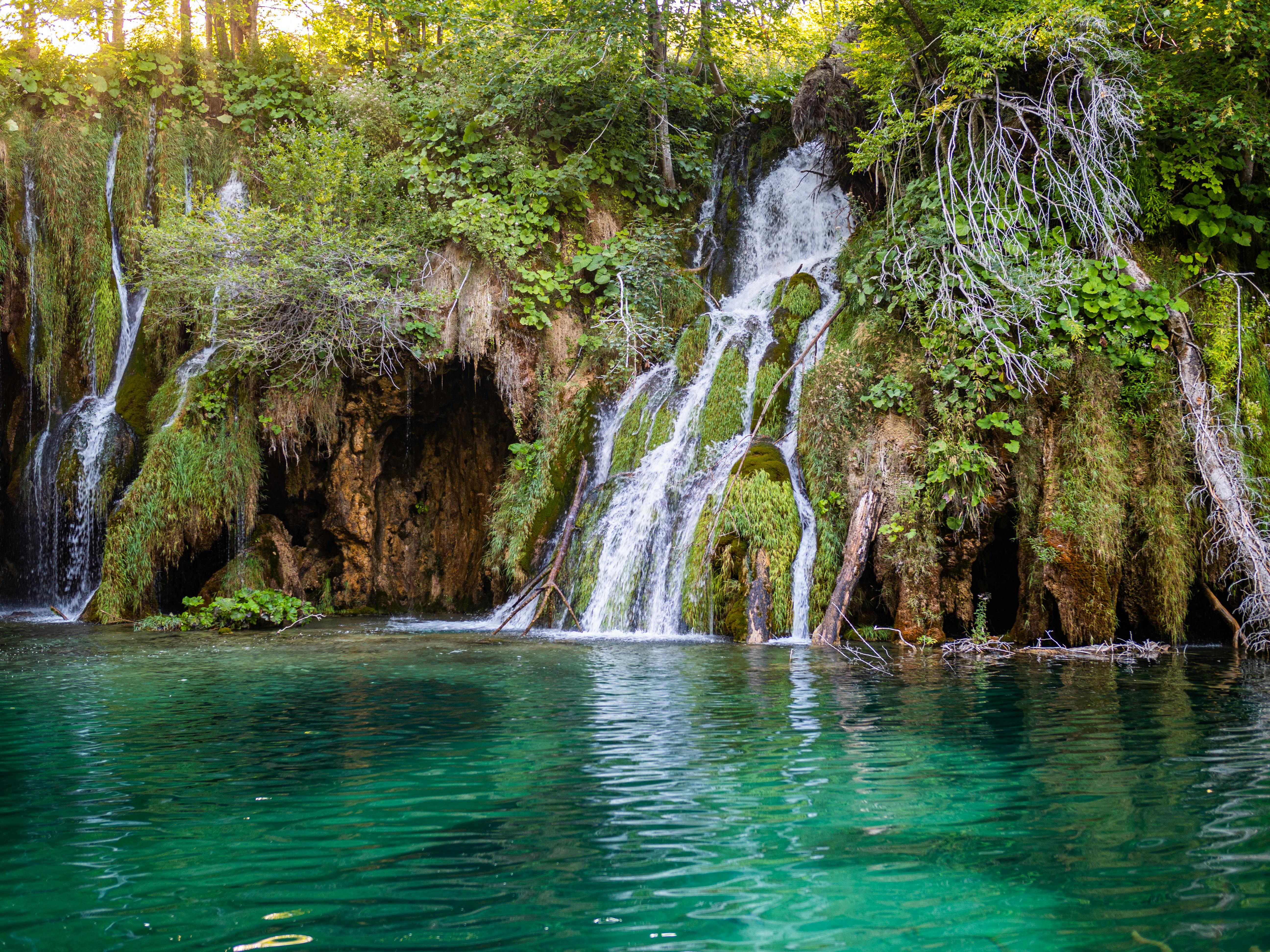
Plitvice Lakes Waterfalls: Where Travertine Terraces Meet Croatian Wilderness
The morning mist rises from turquoise pools as you step onto wooden boardwalks suspended over water that tumbles in silver ribbons over moss-covered travertine barriers, each cascade creating a gentle symphony of splashes and whispers. The air carries the damp perfume of beech forest, the mineral scent of limestone, and the faint sweetness of wildflowers blooming along the lakeshore. You hear the constant murmur of water flowing between sixteen interconnected lakes, the soft chirp of birds hidden in dense foliage, and the distant echo of footsteps on weathered planks. These waterfalls—formed over thousands of years as calcium carbonate deposits built natural dams that rise approximately 130 meters (427 feet) from the lowest to highest lake—solve a geological puzzle: how to transform ordinary river water into one of Europe's most spectacular aquatic landscapes. Plitvice Lakes matters because it preserves something increasingly rare: a living laboratory of natural formation where water, rock, and life collaborate in continuous creation, inviting visitors to witness not just beauty, but the very process of planetary artistry unfolding before their eyes.
Why Plitvice Lakes Waterfalls Embody Croatian Natural Heritage
The Plitvice Lakes cascading waterfalls represent one of Europe's most dynamic examples of ongoing geological formation, where the interaction of water, limestone, and vegetation creates travertine (tufa) barriers that continuously reshape the landscape. The process begins when water from the Black and White Rivers, enriched with dissolved calcium carbonate from surrounding dolomite and limestone bedrock, flows over moss and algae; as the water releases carbon dioxide, calcium carbonate precipitates onto plant surfaces, gradually building porous limestone dams that grow approximately 1-2 centimeters annually. This natural engineering—active for at least 7,000 years—has created sixteen terraced lakes connected by 92 distinct waterfalls, ranging from gentle cascades to the dramatic Veliki Slap (Big Waterfall), which plunges 78 meters (256 feet) into a deep canyon.
The park's infrastructure balances accessibility with preservation. Over 18 kilometers of wooden boardwalks and trails, constructed using sustainable forestry practices, hover above sensitive travertine formations to prevent soil compaction and protect endemic plant species. Electric boats shuttle visitors across Kozjak Lake—the largest at 80 hectares—while silent operation minimizes disturbance to wildlife. The Croatian Ministry of Environment and Energy manages Plitvice as a UNESCO World Heritage site (designated 1979) and part of the Natura 2000 network, ensuring that visitor capacity remains within ecological limits: daily entries capped at approximately 8,000 during peak season to preserve water quality and vegetation integrity.
Today, approximately 1.5 million visitors annually experience Plitvice's waterfalls, generating revenue that funds ongoing conservation research and supports local communities. The lakes fulfill a deeper need: providing authentic connection to natural processes in an age where engineered attractions often replace wild wonder. When you walk boardways suspended over water that built its own path, surrounded by forests that thrive in mineral-rich mist, you participate in a tradition that honors the connection between planetary power and human humility—a philosophy increasingly valuable in an era of environmental uncertainty.
The Best Time to Experience Plitvice Lakes Waterfalls
Optimal conditions for visiting Plitvice Lakes waterfalls occur during two distinct windows: May 15 through June 25 and September 8 to October 18. During these periods, temperatures range between 16-24°C (61-75°F), rainfall averages just 70-90mm monthly, and spring blooms or autumn colors frame the turquoise lakes in vibrant contrast. Visit between 7:30-8:30 AM when the park opens to experience soft morning light on cascading water, minimal crowds, and the magical spectacle of mist rising from warm pools into cool air.
Summer months (July-August) present significant challenges: temperatures reach 26-30°C (79-86°F), crowds peak with 8,000+ daily visitors, and afternoon humidity can make hiking uncomfortable despite the cooling effect of waterfall mist. Winter (November-February) brings cooler temperatures—2-8°C (36-46°F)—and occasional snow that creates stunning frozen waterfall formations, though some trails close for safety. Avoid visiting during midday in summer (11:00 AM-3:00 PM) when tour groups create congestion on narrow boardwalks and photography light becomes harsh.
For current trail conditions, water levels, and ticket availability, visit www.np-plitvicka-jezera.hr, the official tourism portal maintained by Plitvice Lakes National Park. The website provides real-time updates on park capacity, links to online ticket booking (essential during peak season), and detailed information about guided tours, photography workshops, and seasonal accessibility. The park operates daily from 7:00 AM to 8:00 PM (April-September) and 7:00 AM to 4:00 PM (October-March), with final entry two hours before closing.
Approximate Budget for a 7-Day Trip
Croatia offers exceptional value for a Central European destination, with costs approximately 25-35% lower than Western European countries. This breakdown assumes a mid-range travel style with comfortable accommodations, authentic local dining, and a rental car—recommended for accessing Plitvice and exploring Croatia's dispersed natural attractions.
- Accommodation: €55-€95 per night for a double room in a family-run pansion or three-star hotel in Plitvička Jezera village, Slunj, or nearby Karlovac
- Food: €28-38 per day total
- Breakfast: €5-8 (coffee, fresh burek, and local cheese at a pekara)
- Lunch: €9-12 (pašticada—beef stew with gnocchi, or grilled trout from local rivers)
- Dinner: €14-18 (slow-cooked lamb or freshwater fish with blitva—Swiss chard with potatoes)
- Transportation:
- Rental car (7 days, manual transmission): €165-225 total
- Fuel (approximately 400km for regional exploration): €55-65
- Public bus from Zagreb: €12-15 one-way
- Plitvice shuttle within park: Included with entrance ticket
- Attractions:
- Plitvice Lakes entrance: €40-70 adults (seasonal pricing), €10-20 children (7-18), free under 7
- Guided waterfall photography tour: €45-60 per person
- Rastoke watermill village visit: €8
- Kayaking on nearby lakes: €25-35
- Local museum entry: €5-8
- Miscellaneous:
- Rain jacket and waterproof bag rental: €10-15 per day
- Local honey and medenica pastries: €12
- Rakija fruit brandy tastings: €8-12
Total estimated cost for 7 days: €850-1,180 per person (excluding international flights)
7 Essential Plitvice Lakes Waterfall Experiences
- Sunrise Walk to Veliki Slap: Enter at 7:30 AM when the park opens and follow Route C (the most comprehensive circuit) to reach Veliki Slap, the park's tallest waterfall at 78 meters (256 feet). The morning light illuminates the cascade's silver curtain against dark canyon walls, while mist creates rainbows in the spray. Allow 90 minutes for the 4-kilometer hike; bring a waterproof jacket—the mist is constant and refreshing.
- Boardwalk Photography at Milanovac Waterfalls: Position yourself on the wooden walkways spanning the turquoise cascade between Milanovac and Galovac lakes around 9:00-10:00 AM for optimal light. The water's mineral content creates extraordinary shades of blue and green; use a polarizing filter to reduce surface glare and enhance color saturation. Tripods permitted in designated areas only; avoid blocking pedestrian flow during peak hours.
- Electric Boat Crossing of Kozjak Lake: Board the silent electric ferry at the mid-park dock for a 15-minute crossing of Croatia's largest natural lake. The boat glides through emerald water surrounded by forested slopes, offering unique perspectives of waterfalls that feed the lake from multiple directions. Visit at 2:00-3:00 PM when afternoon light filters through tree canopies onto the water's surface.
- Forest Trail Exploration on Route H: Hike the 8-kilometer upper lakes circuit that winds through ancient beech and fir forest, passing smaller cascades and tranquil pools rarely crowded with tour groups. The path gains 200 meters of elevation with wooden stairs and stone steps; allow 3-4 hours with stops for photography and wildlife observation. Start at 8:30 AM for birdwatching opportunities—look for kingfishers and dippers near waterfall pools.
- Traditional Lunch at Park Restaurant: After morning exploration, dine at the park's main restaurant near Entrance 2, which offers terrace seating with lake views and menus featuring regional specialties. Order freshwater trout grilled with herbs or štrukli (cheese-filled pastry) with local sour cream. Expect to pay €15-20 per person for a complete meal; reserve outdoor tables in advance during peak season.
- Sunset Return via Lower Lakes: Complete your circuit by walking the lower lakes trail at 5:00-6:30 PM in summer when golden light transforms turquoise water into liquid amber. The cascades between Novakovića Brod and Šupljara lakes create intimate photography opportunities with fewer crowds. Bring a wide-angle lens to capture the layered beauty of multiple waterfalls in a single frame.
- Guided Geological Tour: Join the park's expert-led walk (offered daily at 10:00 AM and 2:00 PM, €12 supplement) to understand the science behind travertine formation. Guides explain how moss, algae, and calcium carbonate collaborate to build natural dams, and point out active growth zones where new barriers emerge. The 90-minute tour deepens appreciation for the landscape's ongoing creation.
3 Hidden Gems Most Travelers Miss
- Čorkova Uvala Forest Reserve: This protected old-growth beech forest, accessible via a marked trail from the upper lakes circuit, features trees over 300 years old and a pristine ecosystem untouched by tourism development. The 2-kilometer loop takes 45 minutes and offers exceptional birdwatching—listen for the three-toed woodpecker and Eurasian pygmy owl. Visit weekday mornings for solitude; no facilities exist, so bring water and practice Leave No Trace principles.
- Rastoke Watermill Village: Located 3 kilometers from Plitvice's Entrance 2, this historic settlement features traditional watermills built on the Slunjčica River, where small cascades flow through stone channels beneath wooden structures dating to the 17th century. Open daily 9:00 AM-7:00 PM; entry €8 includes a guided tour of working mills and traditional craft demonstrations. Visit at 4:00 PM to avoid tour groups; the evening light creates magical reflections in the mill races.
- Plitvice Night Photography Workshop: During summer months, the park occasionally offers after-hours photography sessions (by reservation only, contact np-plitvicka-jezera.hr) that allow visitors to capture waterfalls under moonlight or twilight. These limited experiences—typically 2-3 per season—provide unique opportunities to photograph cascades without crowds and with dramatic low-light effects. Book 3-4 months in advance; sessions cost €75-95 including equipment guidance and park access.
Cultural & Practical Tips
- Trail etiquette: Stay on marked boardwalks and trails to protect fragile travertine formations—stepping on barriers damages active growth zones that took centuries to form. Walk single-file on narrow sections; step into designated pullouts to let others pass.
- Footwear essentials: Wear waterproof hiking shoes with excellent traction—the wooden boardwalks become slippery from constant waterfall mist. Avoid sandals or smooth-soled shoes; uneven stone steps require stable footing.
- Weather preparedness: Plitvice's microclimate creates sudden showers even on sunny days—pack a lightweight rain jacket and waterproof bag for electronics. Temperatures near waterfalls can feel 5-7°C cooler than surrounding areas; layer clothing for comfort.
- Essential Croatian phrases: "Dobar dan" (DOH-bar dahn = good day), "Hvala" (HVAH-lah = thank you), "Oprostite" (oh-PROH-stee-teh = excuse me), "Gdje je...?" (gdyeh yeh = where is...?). Locals appreciate even basic efforts to speak Croatian.
- Photography guidelines: Drones require special permission from the Croatian Ministry of Environment—contact np-plitvicka-jezera.hr at least 72 hours in advance. Respect other visitors' experiences; avoid blocking viewpoints for extended shots during peak hours. Golden hour (7:30-8:30 AM, 5:00-6:30 PM summer) offers optimal light for waterfall photography.
- Hydration strategy: Carry at least 1.5 liters of water per person; while the park has drinking fountains at entrances, trails between lakes have limited facilities. Refill bottles at designated stations to reduce plastic waste.
- Accessibility information: The lower lakes circuit features paved pathways suitable for most mobility levels, though upper lakes trails involve stairs and uneven terrain. Electric shuttle buses connect entrances; contact +385 53 751 015 for accessibility guidance and adapted route suggestions.
Conclusion: Travel with Wonder, Not Just Wanderlust
Plitvice Lakes asks something deeper than your camera lens—it invites your wonder at forces that shape a planet through patient collaboration between water, stone, and life. As you walk boardways suspended over cascades that built their own path, remember that you're experiencing not just scenery but a process: the continuous creation of beauty through geological time. The waterfalls matter because they remind us that the most powerful travel experiences emerge when we witness nature's artistry without imposing our will upon it.
Responsible travel here means recognizing that these formations belong first to the ecosystems that created them. It means staying on trails to protect active travertine growth, carrying out all waste, and understanding that your visit supports conservation efforts keeping this heritage intact. The rangers, guides, and communities who steward Plitvice aren't service providers—they're custodians of a story written in water, limestone, and light.
Slow down. Feel the mist on your skin. Listen to the symphony of cascades echoing through forest valleys. When you leave Plitvice, carry not just photographs of turquoise water and emerald forest but a commitment to value places where earth's creativity remains uncompromised. That's the difference between seeing a waterfall and truly witnessing a miracle of natural engineering.