
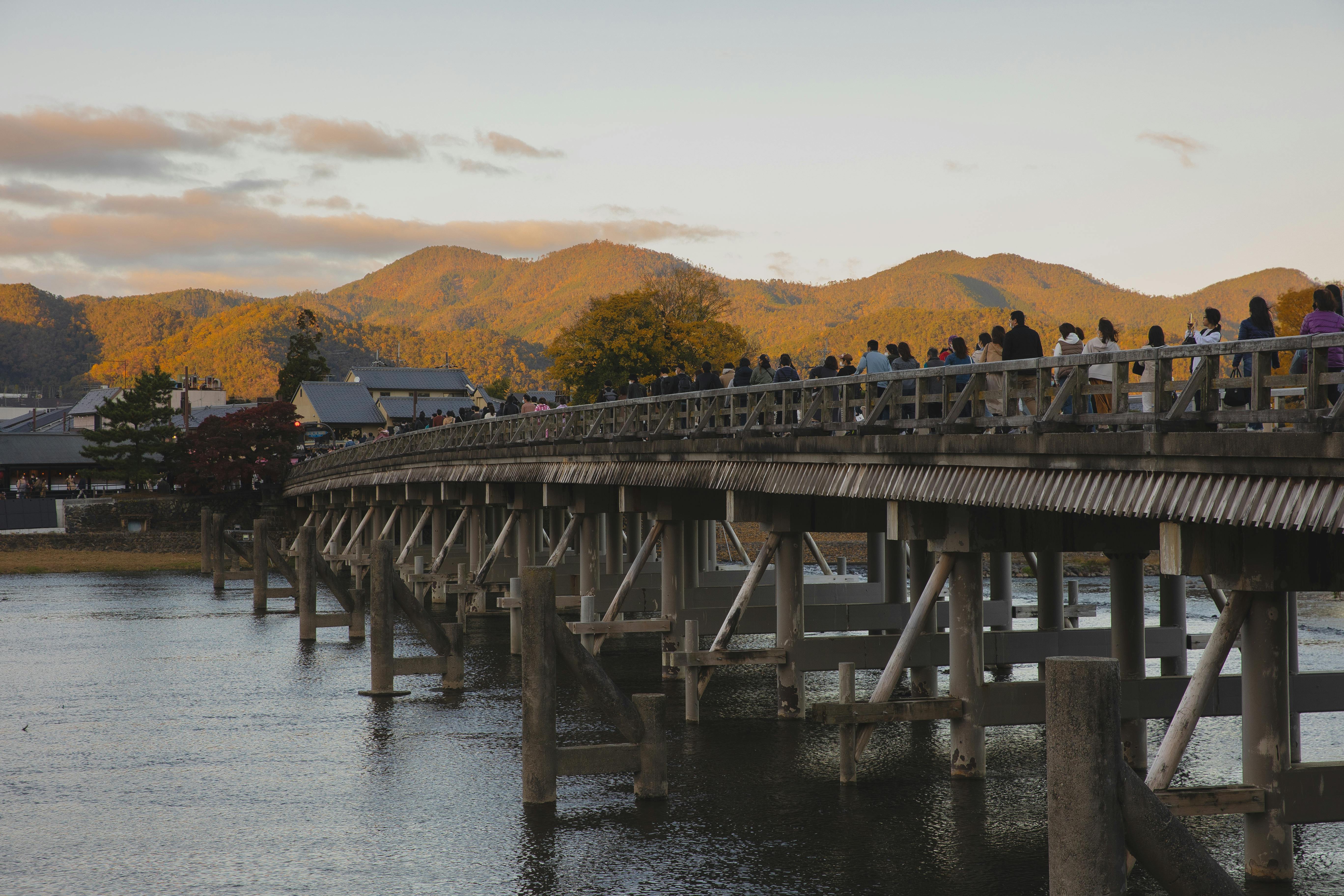
Togetsukyo Bridge: Where Tranquil Waters Meet Seasonal Splendor
Golden afternoon light spills across the weathered wooden planks of Togetsukyo Bridge—a timeless icon where the scent of pine mingles with the faint aroma of river mist carried by a gentle breeze. The air carries the soft rustle of leaves, the distant chirp of crickets flitting between trees, and the occasional splash of koi fish breaking the still surface of the Katsura River. You hear the rhythmic crunch of gravel beneath your sandals as you approach the bridge—each step revealing a new angle of Japan’s iconic structure framed by centuries-old maple trees ablaze with autumn hues. This isn't merely a place to marvel at architectural brilliance—it's a living sanctuary where art meets nature, where every reflection connects you to centuries of reverence for this sacred space. Standing on the wooden deck with panoramic views of the river bathed in amber light, you connect with the same timeless tranquility that has drawn travelers since the Heian period—a testament to humanity's enduring quest for harmony with nature.
Why Togetsukyo Embodies Serene Simplicity
Togetsukyo Bridge embodies far more than architectural restraint—it stands as one of Japan’s most profound symbols of Zen philosophy and artistic humility. Spanning 155 meters (509 feet) over the Katsura River, this historic bridge features two distinct sections: the original stone foundation dating back to 1634 and the reconstructed wooden upper section added in 1934 after a flood. Originally built under the patronage of Emperor Go-Daigo, it solved a fundamental challenge: how to create a unified space for meditation while celebrating the aesthetic beauty of Japanese design. What makes Togetsukyo unique is its dual identity: it serves as both a spiritual retreat and an artistic masterpiece, guiding visitors through layers of history and symbolism. Today, the bridge attracts millions of visitors annually, blending traditional rituals with modern tourism. Its intricate designs and meticulously preserved landscapes create a dynamic space that continues to shape our understanding of harmony between humans and nature—a testament to the enduring power of vision when nurtured with passion and precision.
The Best Time to Experience Togetsukyo Bridge
To experience Togetsukyo Bridge at its most atmospheric, plan your visit between March 20–April 30 or October 10–November 20, when daytime temperatures range from 12–20°C (54–68°F) and the surrounding landscape blooms with cherry blossoms or glows with autumn colors. During these windows, you'll enjoy comfortable conditions for exploring the gardens, photography, and hiking without summer's humidity or winter's biting cold. For optimal photography of the bridge’s reflection in the river, arrive at 6:00–7:30 AM when morning light casts soft reflections with directional illumination while the plateau remains relatively quiet. Alternatively, visit at 5:00–6:30 PMJuly 15–August 25 when temperatures can exceed 30°C (86°F), the plateau becomes congested with tour groups, and the intense midday sun diminishes the visual impact of delicate details. .
Approximate Budget for a 7-Day Trip
Visiting Togetsukyo Bridge requires basing yourself in nearby neighborhoods like Arashiyama or Higashiyama, with easy access to the bridge, cultural venues, and dining options. The following budget assumes moderate travel style—comfortable boutique ryokans, authentic Japanese cuisine, and a mix of public transportation and occasional taxi rides. Prices are listed in Japanese Yen (¥) with USD equivalents for international travelers (1 USD ≈ 150 ¥ in 2026).
- Accommodation: ¥10,000–¥20,000 ($67–$133) per night in central neighborhoods like Gion or Kawaramachi. Budget hostels start at ¥5,000; mid-range boutique hotels run ¥20,000–¥40,000 ($133–$267).
- Food: ¥3,000–¥5,000 ($20–$33) per day total. Breakfast: ¥500–¥1,000 for traditional onigiri or miso soup. Lunch: ¥1,000–¥1,500 for ramen or bento boxes at local eateries. Dinner: ¥2,000–¥3,000 for sit-down meals featuring sushi, tempura, or izakaya dishes.
- Transportation: Local bus: ¥200–¥300 ($1.33–$2); train from Osaka: ~¥5,000 ($33); Kyoto City Bus Pass: ¥600 ($4).
- Attractions: Bridge entry: free; guided tours: ¥3,000 ($20); tea ceremony experiences: ¥2,500 ($17).
- Miscellaneous: Traditional Japanese crafts: ¥1,000–¥5,000 ($7–$33); anime merchandise: ¥500–¥2,000 ($3–$13); concert tickets: ¥3,000–¥5,000 ($20–$33).
Total 7-Day Budget: ¥100,000–¥150,000 ($667–$1,000) per person (excluding international flights)
7 Essential Togetsukyo Bridge Experiences
- Photograph the Reflection: Capture the iconic view of Togetsukyo mirrored in the Katsura River—the serene water designed to enhance the bridge's understated facade. The elevated vantage points offer perfect perspectives for both wide-angle landscapes and detailed close-ups. Visit during sunrise (5:30–6:30 AM) for optimal lighting; costs included with entry; allow 30 minutes; bring a tripod.
- Explore the Bamboo Grove: Wander through the nearby Arashiyama Bamboo Grove featuring towering stalks, moss-covered stones, and hidden pathways—a symbol of Japan's cultural fusion between nature and design. The preserved trails create a powerful connection to Japan's gardening tradition. Best experienced mid-day (12:00–2:00 PM) when lighting illuminates structural details; free; allow 60 minutes; wear sturdy shoes.
- Visit Tenryu-ji Temple: Marvel at the adjacent UNESCO World Heritage Site featuring Zen gardens and ancient architecture—a symbol of Japan's cultural heritage dating back centuries. The preserved structure creates a powerful connection to Japan's architectural tradition. Best experienced before dusk (5:00–6:00 PM) when lighting illuminates architectural details; free; allow 45 minutes.
- Taste Matcha at Shigetsu Teahouse: Sample freshly prepared matcha paired with wagashi sweets at this historic teahouse: try hoto noodles, soba, and other specialties that connect you to centuries of culinary tradition. Best experienced during lunch (12:00–2:00 PM); budget ¥1,000–¥2,000 per meal.
- Join a Guided Tour: Experience the specialized tour focusing on the bridge's role in Japanese spirituality, featuring explanations of the theological significance behind its design. Knowledgeable guides reveal details often overlooked by casual visitors. Tours typically begin at 9:00 AM; tickets ¥3,000; allow 120 minutes; book online to secure spots.
3 Hidden Gems Most Travelers Miss
- Ryōan-ji Rock Garden: Tucked away behind the main tourist pathway, this lesser-known Zen garden offers panoramic views of raked gravel and carefully placed stones that reveal the precise balance of simplicity and complexity often missed by visitors focused on the pavilion itself. Most visitors miss it because it's not prominently marked on standard tourist maps. Access: Located within walking distance; visit early morning (7:00–9:00 AM) when lighting enhances architectural details. Included with exterior views; allow 25 minutes; bring binoculars.
- Funaoka Onsen: Hidden along the western section of Kyoto, this lesser-known hot spring features intricate carvings often overlooked by visitors focused on the city's temples. Often overlooked because it's tucked away from primary viewing areas. Access: Included with exterior views; visit mid-morning (10:00 AM–12:00 PM) when lighting enhances shrine details. No additional fee; allow 20 minutes; bring a flashlight.
- Philosopher's Path Moonlight Walk: This lesser-known evening experience follows the canal lined with cherry trees where strategically placed lights create dramatic moonlight effects on the water’s surface. Most visitors leave before dusk, missing this serene experience. Access: Available during evening hours; best visited on clear nights with full moon. No additional fee; allow 45 minutes; bring a flashlight and wear quiet footwear.
Cultural & Practical Tips
- Respect Historical Significance: Togetsukyo represents decades of Japanese cultural heritage—speak thoughtfully about its historical context. Avoid making casual comparisons to other global landmarks without acknowledging its unique role as a symbol of national identity.
- Essential Japanese Phrases: "こんにちは" (konnichiwa) = Hello; "ありがとうございます" (arigatou gozaimasu) = Thank you; "すみません" (sumimasen) = Excuse me/Sorry; "はい" (hai) = Yes; "いいえ" (iie) = No. Locals appreciate respectful efforts.
- Building Strategy: Purchase tickets online to skip queues, especially during peak season. Morning slots (9:30–11:30 AM) offer the clearest views and fewest crowds. Consider the premium tour for access to restricted areas.
- Photography Guidelines: Photography is permitted throughout the exterior grounds. Inside buildings, flash is often prohibited to protect preserved artwork. Respect services by avoiding photography during official events or restoration work.
- Weather Preparedness: Togetsukyo experiences temperate climate: summer highs reach 25°C (77°F); winter lows drop to -10°C (14°F). The plateau can be windy year-round; carry a light layer even in summer.
- Accessibility Notes: Some hiking trails have limited accessibility due to uneven stone pathways and elevation changes. Some areas are accessible, but many require navigating stairs; request assistance at the entrance for alternative viewing options.
- Combine with Nearby Sites: Enhance your Togetsukyo visit with walking-distance attractions: Tenryu-ji Temple (15 minutes), Bamboo Grove (20 minutes), and Iwatayama Monkey Park (30 minutes). A regional perspective enriches understanding of Japan's historical layers.
Conclusion: Travel with Reverence, Not Just Observation
Togetsukyo invites you to do more than photograph its understated facade—it calls you to understand with profound responsibility. This is a place to stand where spiritual mastery transformed into national symbolism, where the rhythmic pulse of Japan’s identity has continued uninterrupted for over a millennium, where unity must triumph over division. When you walk the same paths trodden by generations of Japanese citizens through partitions and political transformation, when you gaze upon the preserved structure that has witnessed the nation's struggles and triumphs, when you experience the architectural harmony that has survived wars, revolutions, and political change, you participate in an act of historical understanding that transcends tourism. Travel to Togetsukyo with reverence for the engineers who created this masterpiece, for the preservationists who maintained it through turbulent times, for the community that cherishes this space as their living heritage. Respect the fragility of cultural continuity—every footprint off-trail, every careless touch on historic surfaces, disrupts a balance measured in decades rather than moments. Understand that the vibrant atmosphere you experience depends on the mindfulness of every visitor who comes after you. Let the building's intricate design humble your understanding, let its stories deepen your compassion, and let the convergence of artistic vision, national identity, and community remind you that the most profound journeys are those that transform observation into meaningful connection with the enduring power of historical spaces that teach us about our shared human experience.